January 5-8th
Nuku Hiva
Nuka Hiva is the largest of the islands in this archipelago. Only 6 of the 12 islands are inhabited. The population is about 3,000, and 1,000 of them live in the main city of Taiohae.
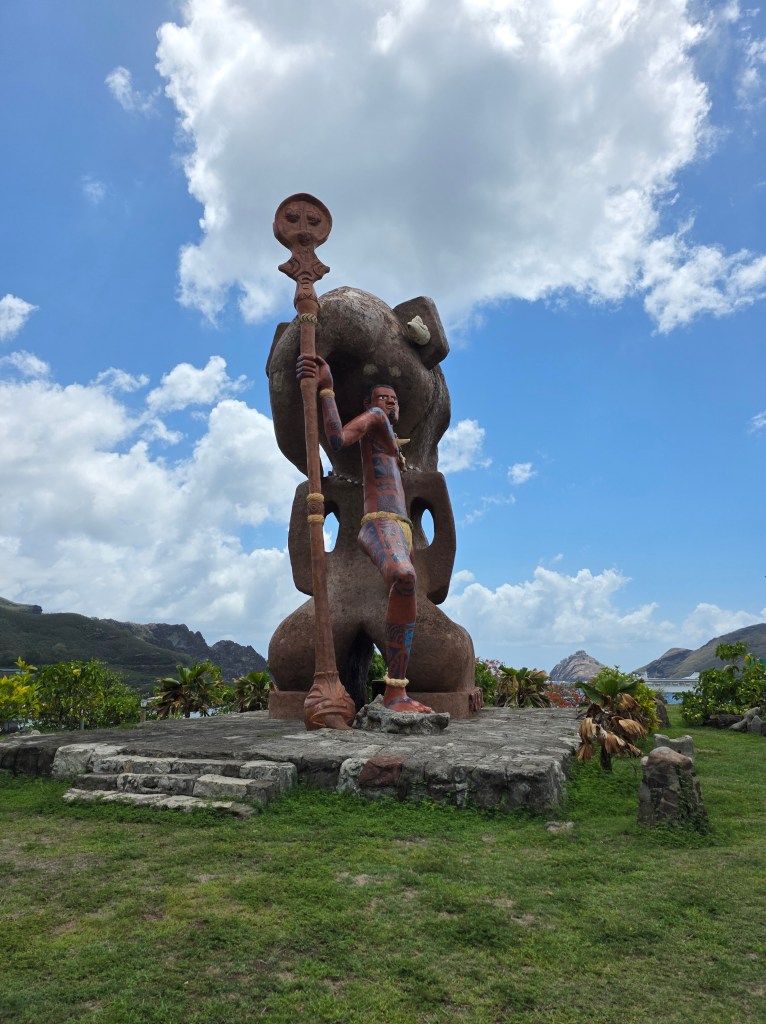
It is, of course, a tender port and we were again greeted with a traditional Haka dance upon arrival. The city has one main street that curves along the harbour, and walking from one end to the other takes about 30 minutes. But before even reaching the shore, I could see a statue on the hill above the pier. It is big enough (12m tall) to be spotted from quite a distance.
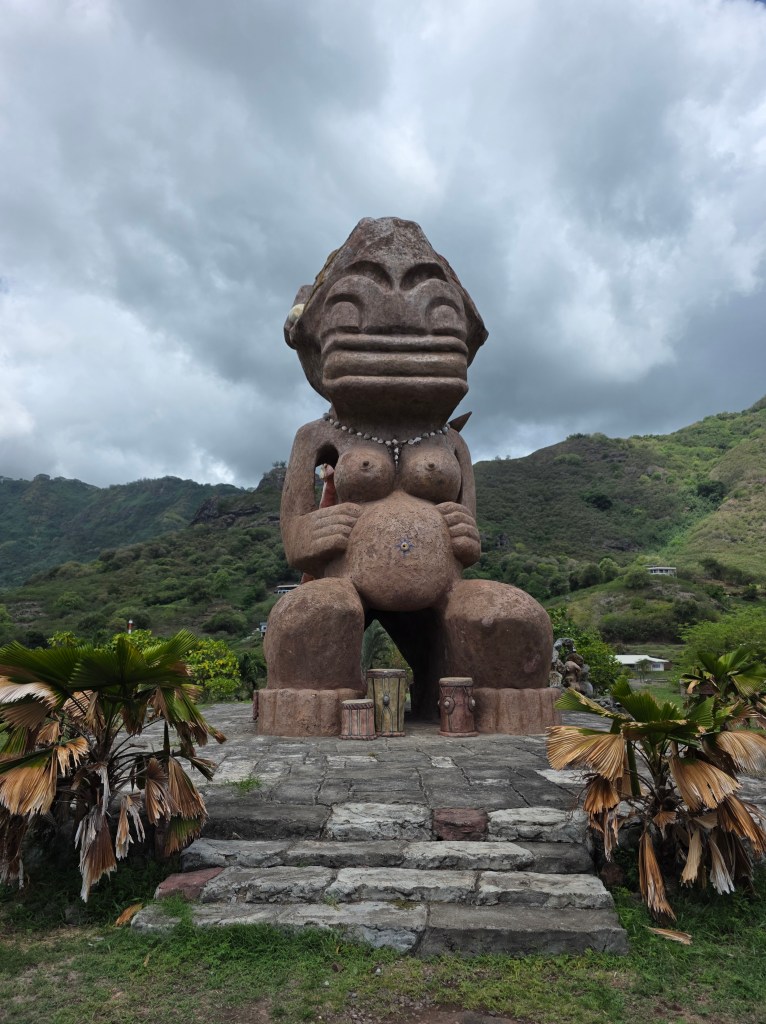
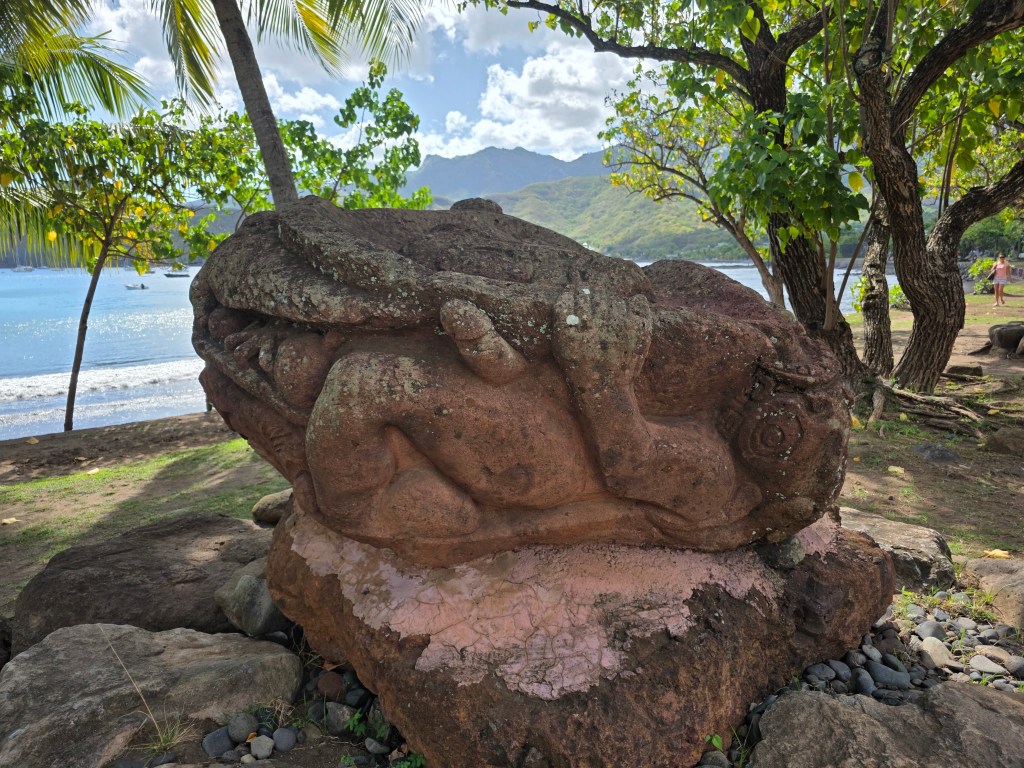
This Tiki Tuhiva is of two figures. The largest, a female, a guardian of tradition and knowledge. The smaller male is a warrior figure. Tiki figures are common here and can be found scattered throughout the island. Tikis are humanoid figures that represent deities, ancestors, or historical figures in Polynesian culture.
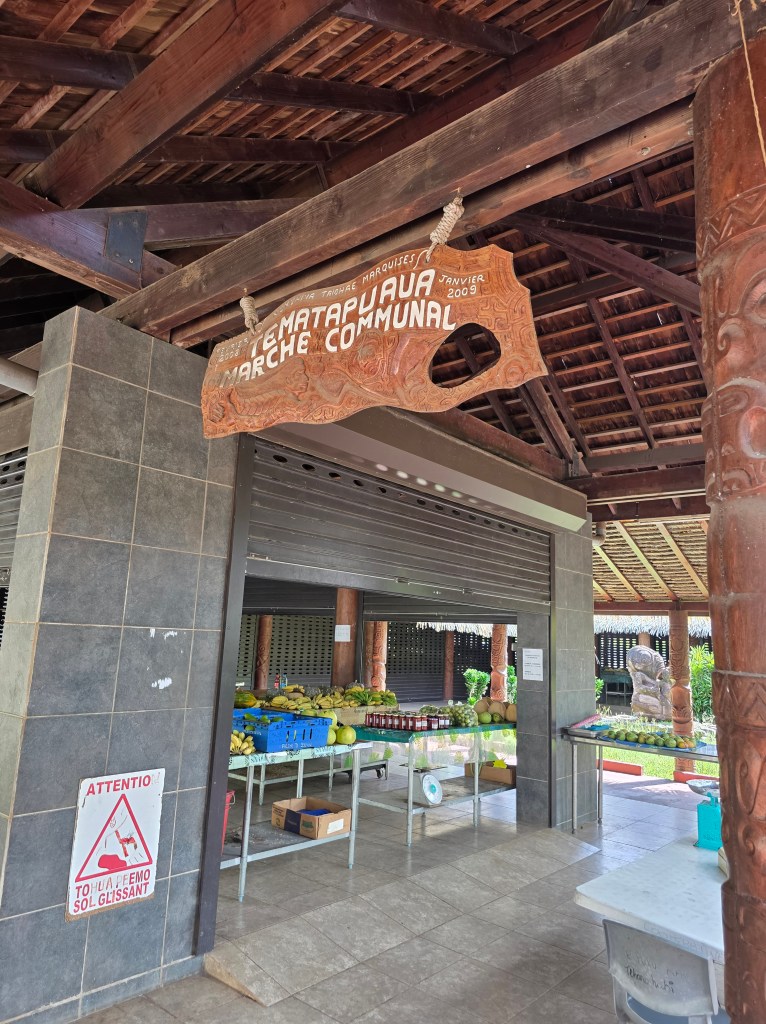
Main Street features the local market, a tourist information center, a bank, several stores, and a promenade along the black sand beaches. Along the promenade are benches, tikis, and a courtyard that fills up as the sun goes down.
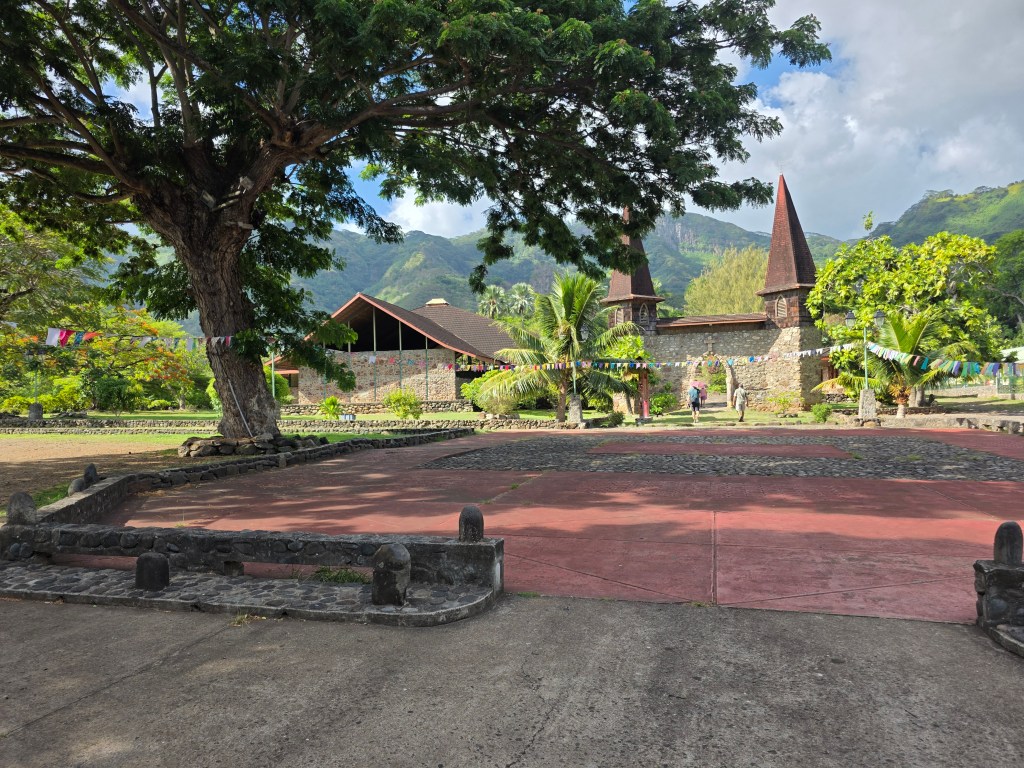
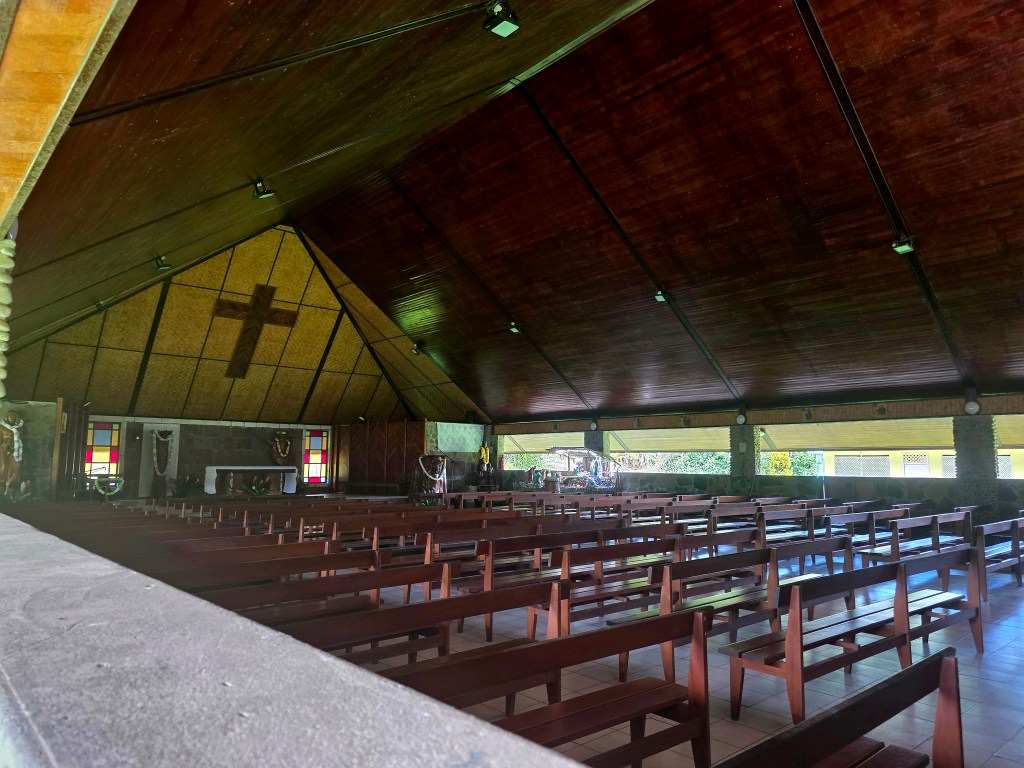
Off Main Street is Notre Dame. This cathedral looks like a fairy tale mated with Polynesian mythology. The grand courtyard and entrance are of European flair, but the woodwork everywhere is local.
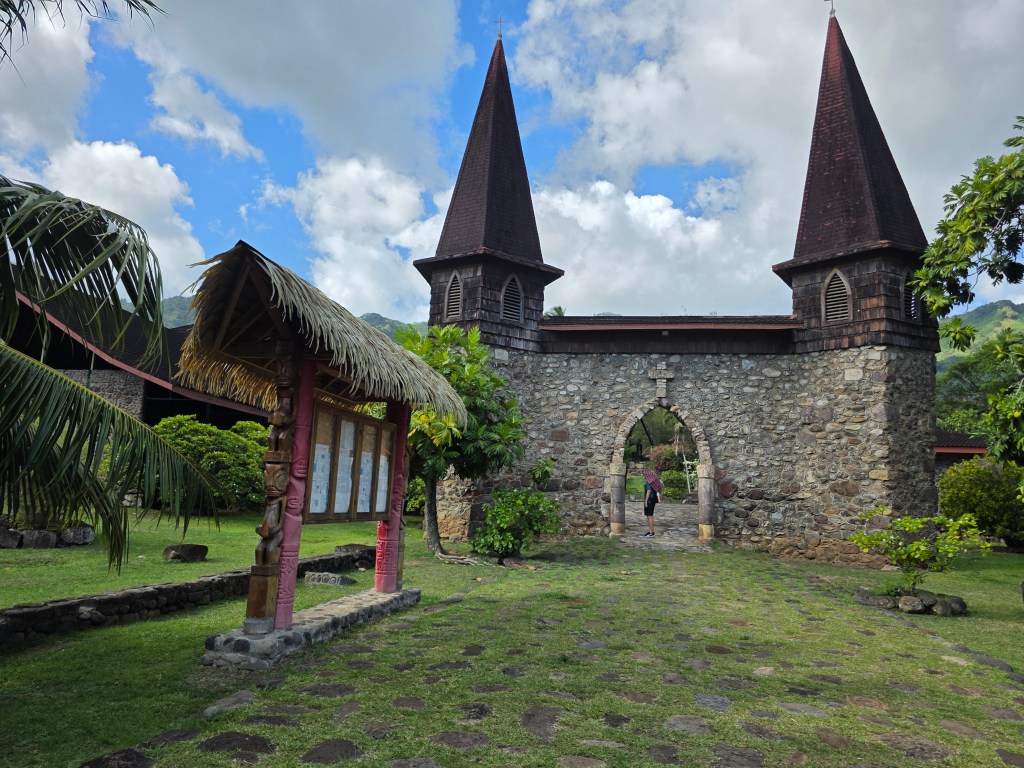
I was enchanted walking up to the building.
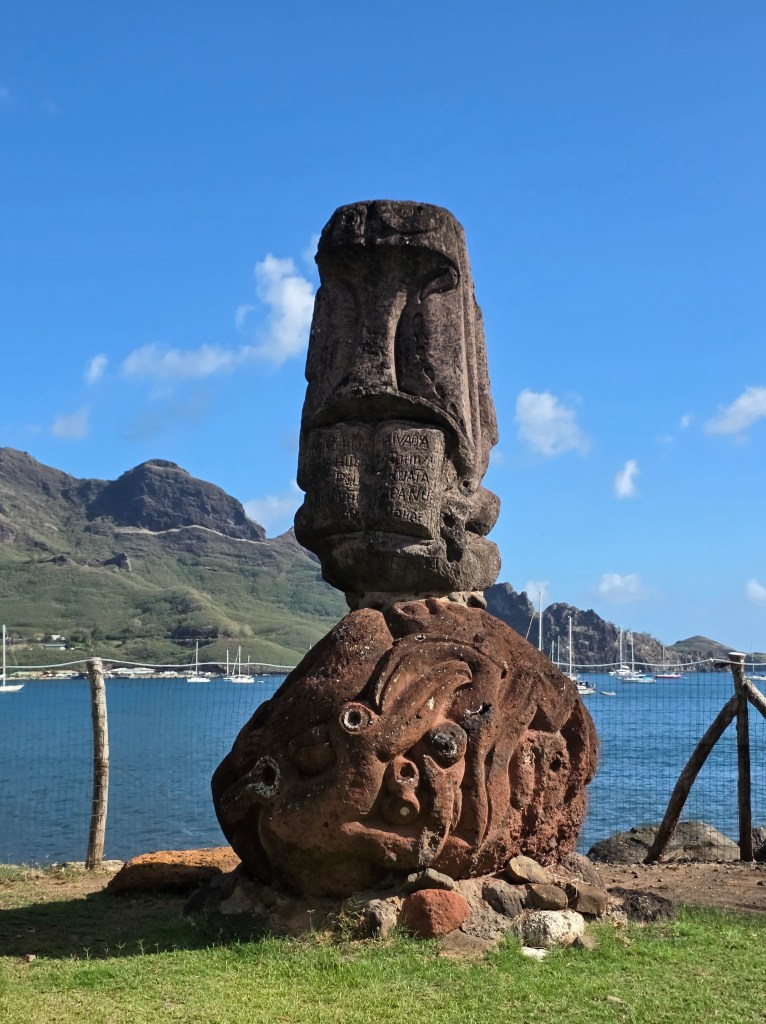
Slightly further down is Tohua Temehea, a cultural park with an artisan center next door. Here, the park is decorated with a variety of different tikis.
The town invited us to attend a Haka dance performance here on our first night. I loved how there was a mix of young, inexperienced dancers with the older pros. The dances also showed how strong the dancers had to be to do the leg movements with repetition.
Snorkelling is not something done around this island, as there is no reef and an abundance of sharks. While the sharks usually do not bother people, it can happen. Seven-Year-Old Boy Seriously Injured in Shark Attack
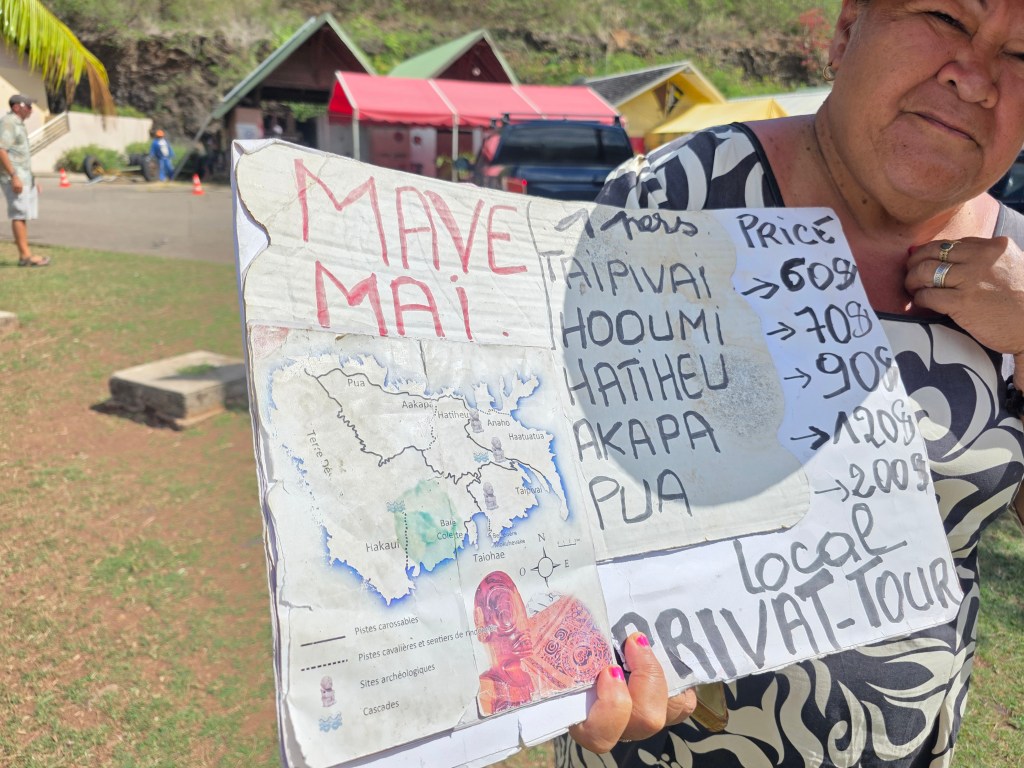
There is gorgeous mountain scenery, though it requires a 4×4 to see it all. I took a ride to Taipivai. On the way to this valley, we stopped for pictures at several lookouts.
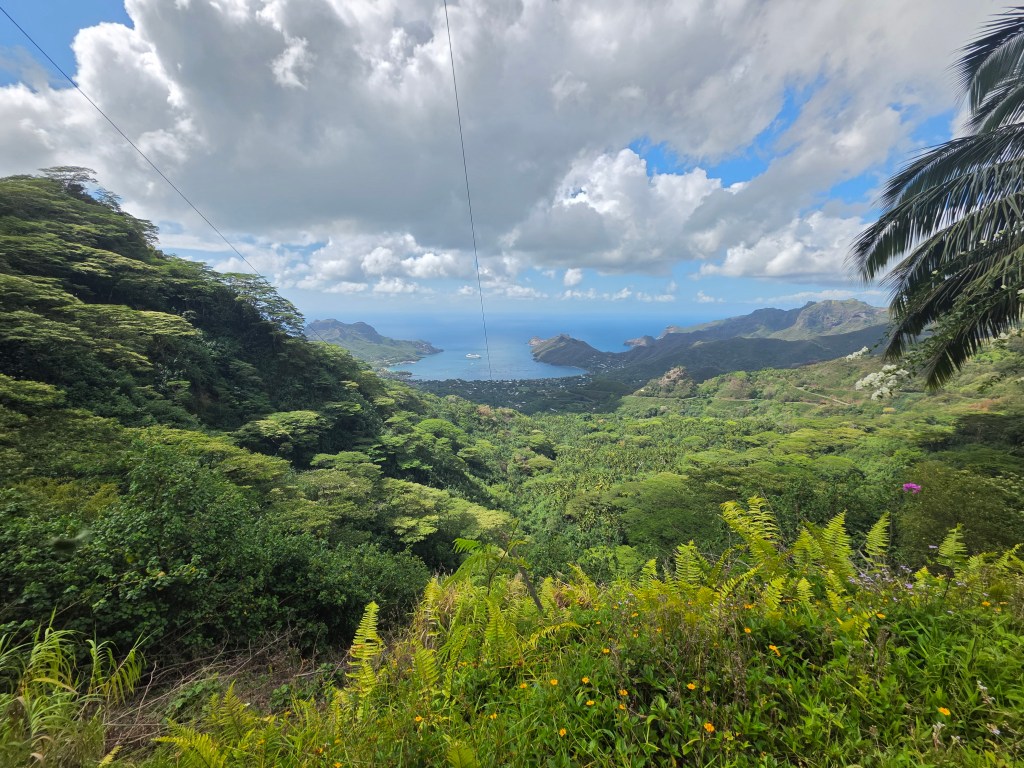
Taipivai is home to several waterfalls, and “Paeke”: one of the archaeological sites on the island.
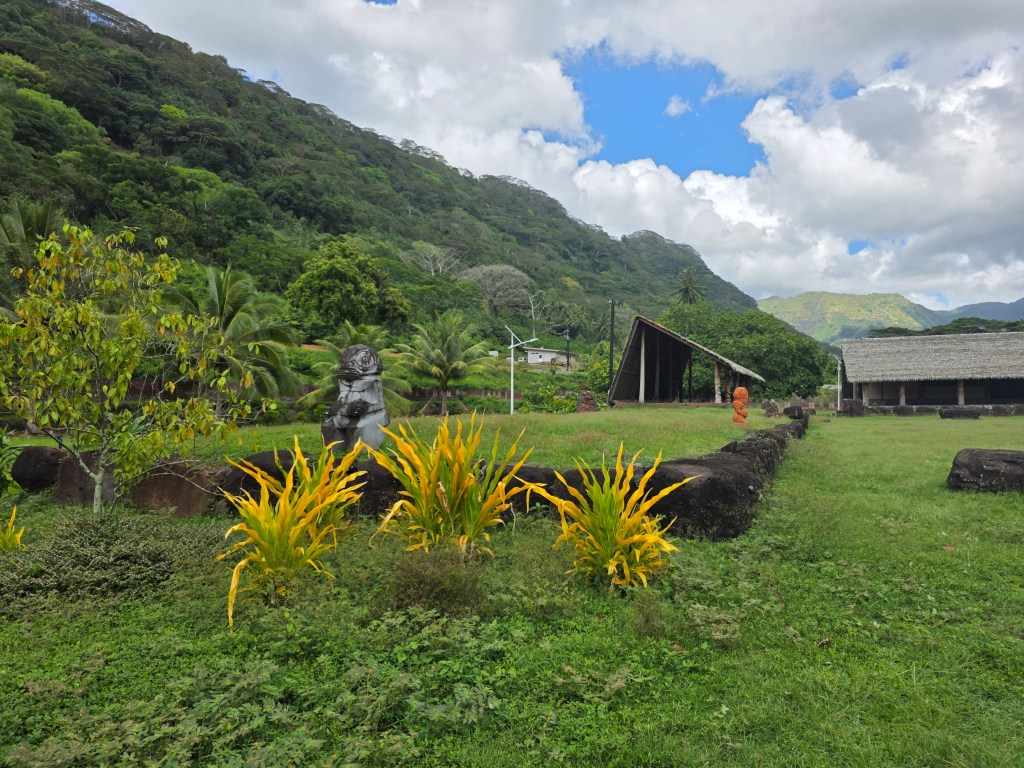
The town also includes a half-walled church, fruit trees, and a black sand beach.
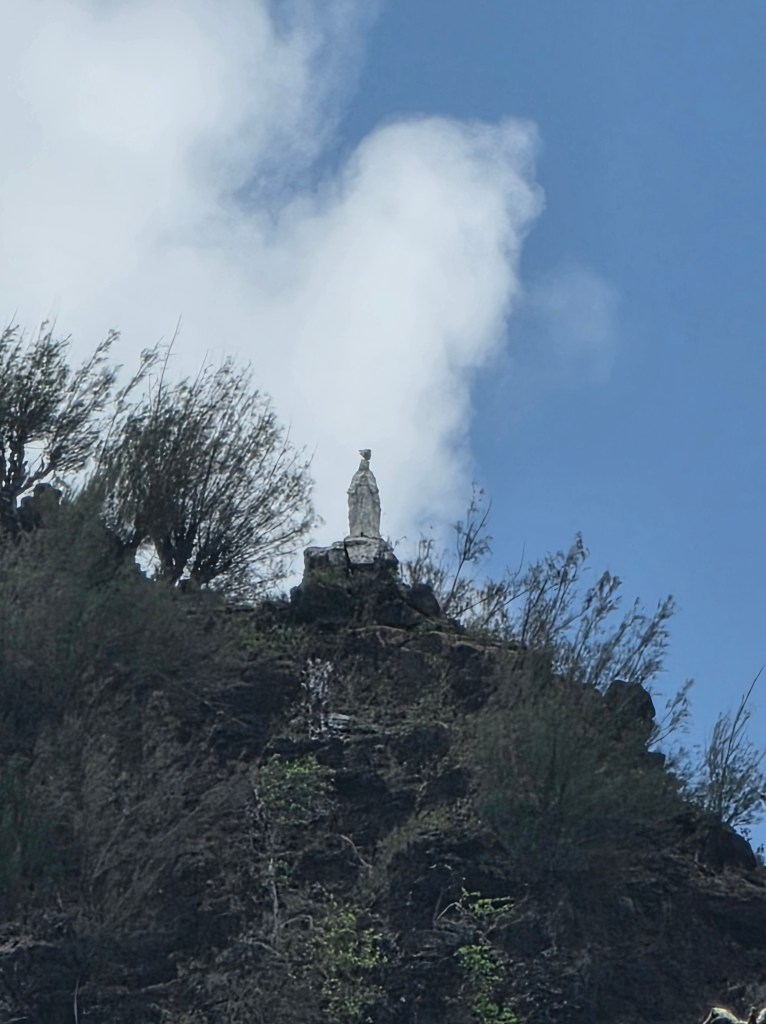
From there, we made our way to the next valley of Hatiheu. Again, we stopped multiple times to take in the panoramic views. It is on the North of the island and has a statue of the Virgin Mary hoisted 300 meters high on a basaltic ridge.
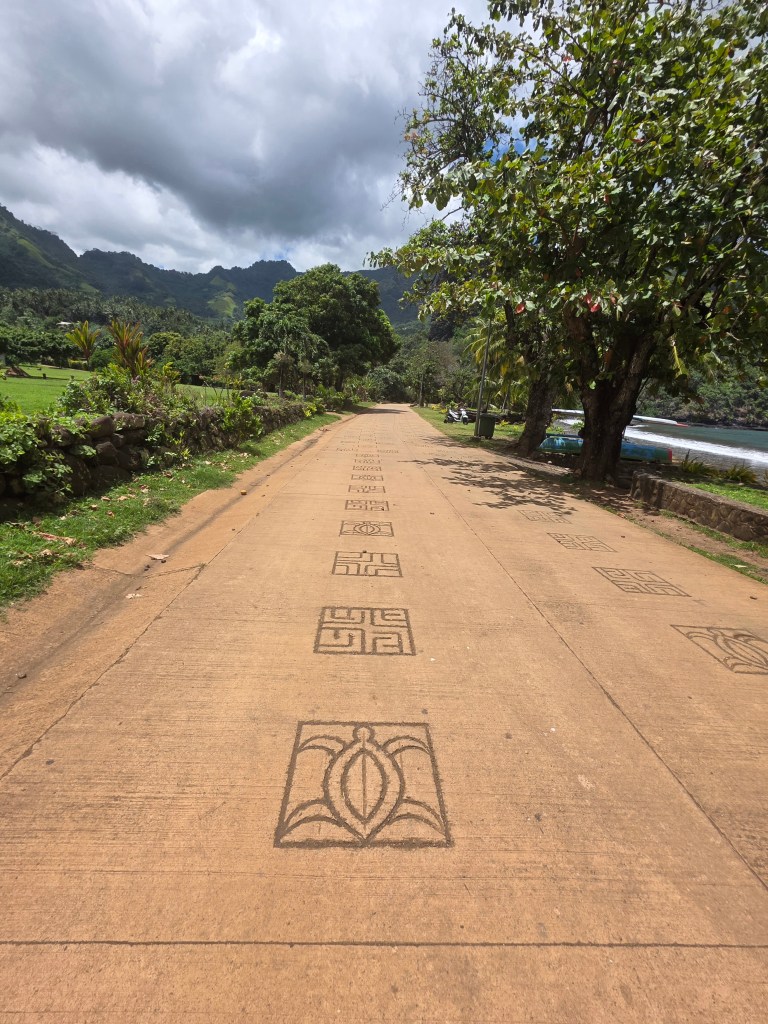
Before reaching the village and our lunch stop, we passed through tohua Kamuihei, tohua Hikokua, and the Meae paepae. Here is where human sacrifices were performed, and the area is surrounded by sacred petroglyphs.
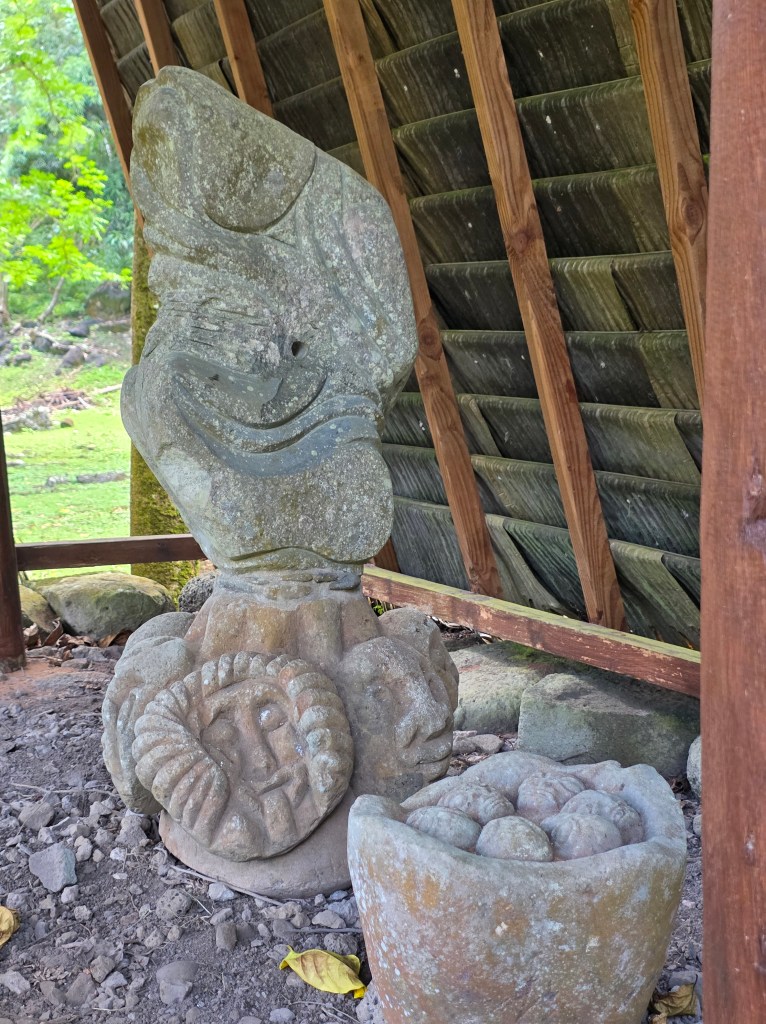
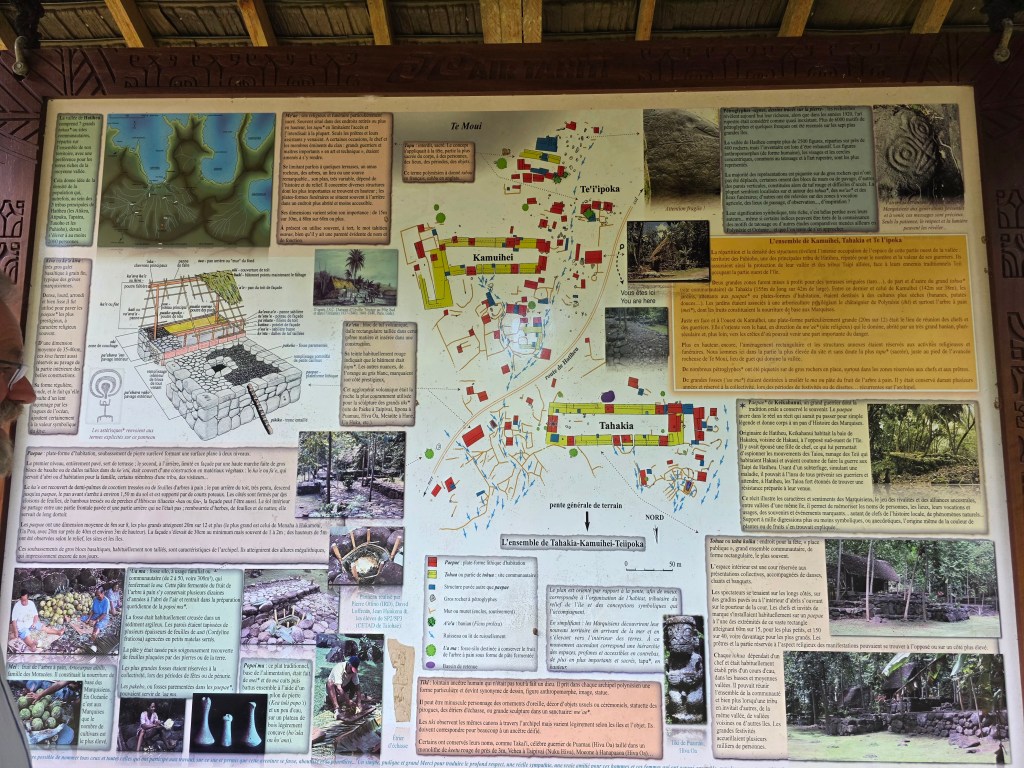
It is an amazing area, and here is when I felt saddest that I couldn’t understand my French guide. I did take pictures of the informational boards in French to translate later, though.
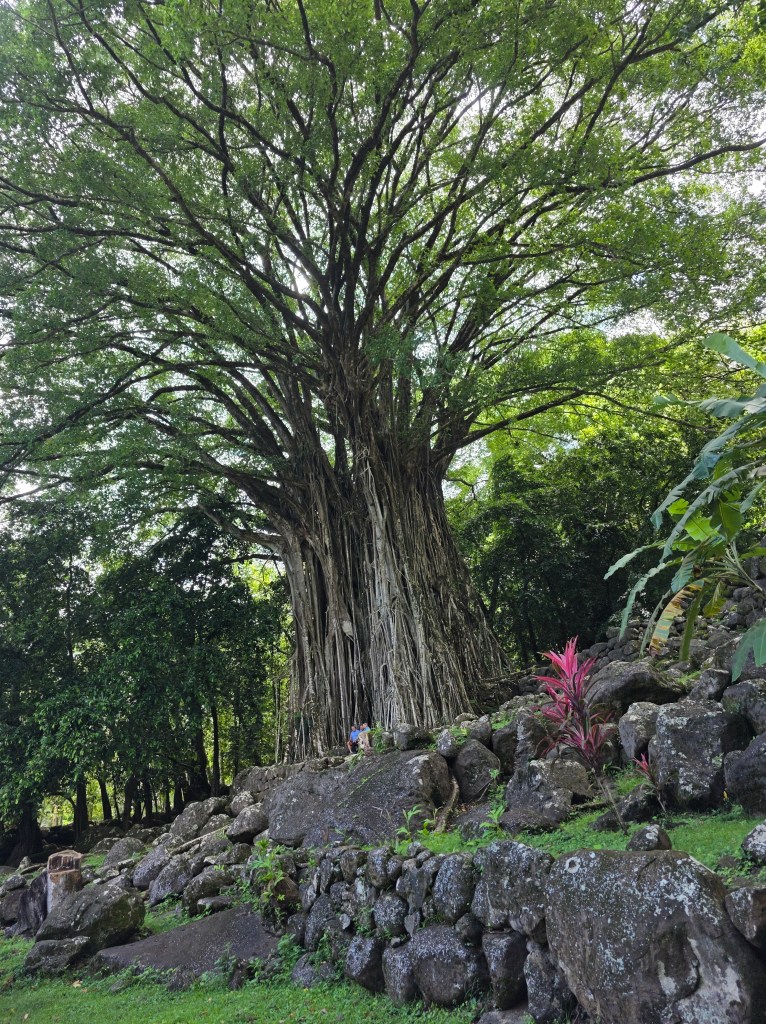
My favorite site was the enormous tree that I spotted as we approached the site.
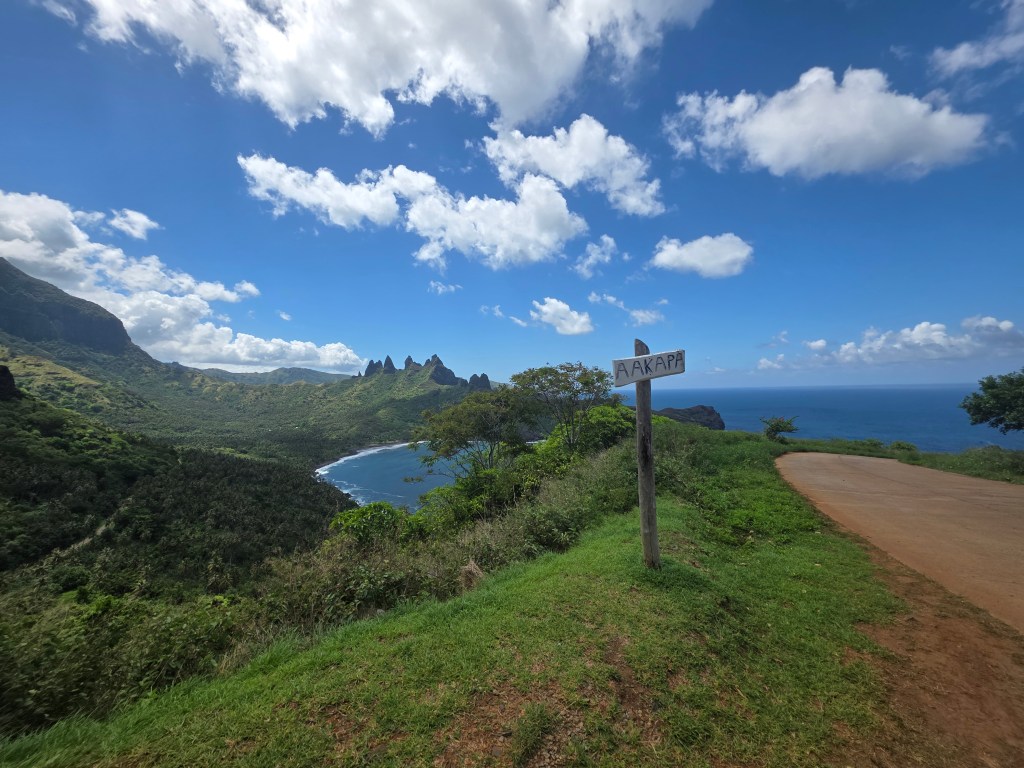
After lunch, we drove to Aakapa Lookout. This village is less visited, and the restoration of its archeological site is still ongoing, but the Aakapa peaks are amazing.
Hapatoni, Tahuata
Two of the Marquesas Islands are very close together: Hiva Oa and Tahuata. The ideal plan was to tender to Hiva Oa, as there is more to do on the larger of the two, but weather conditions made it difficult and dangerous to have tenders there, so we continued past it to Tahuata.
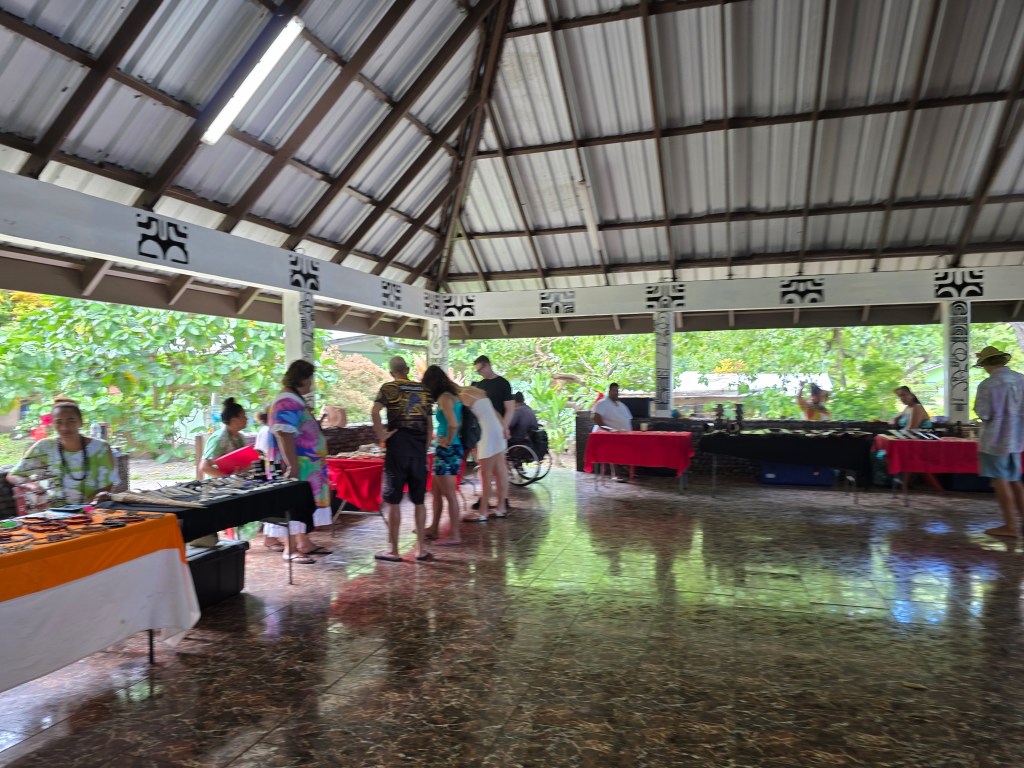
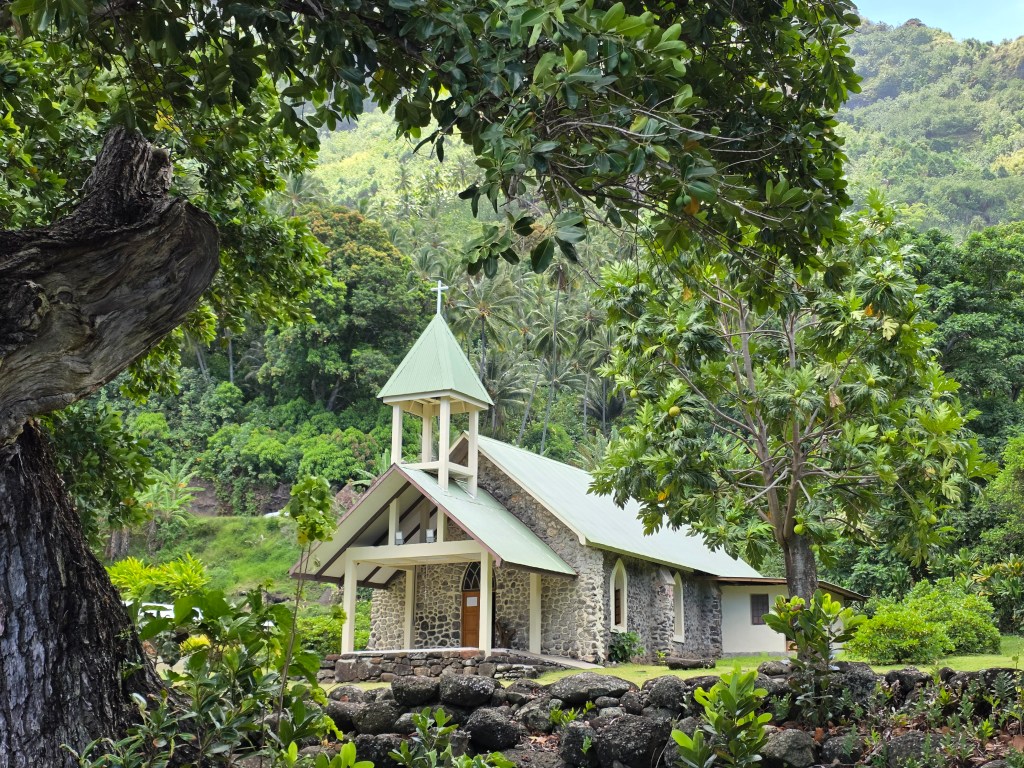
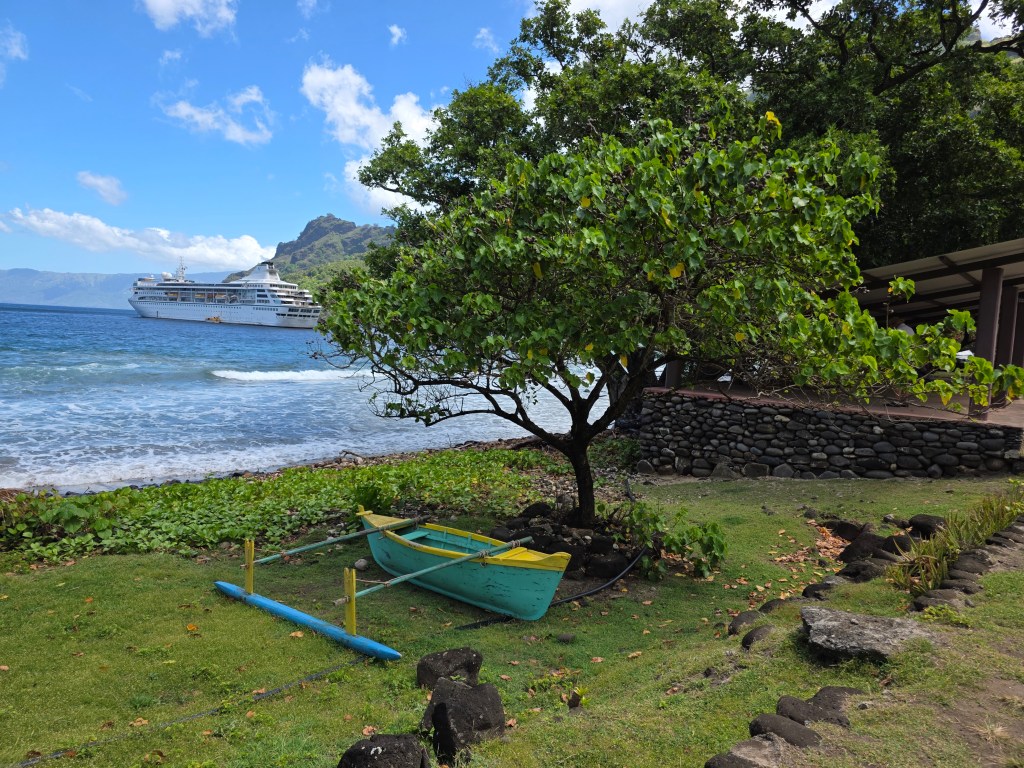
The town of Hapatoni is small. The entire island has a population of about 600, and this is the smaller village on the south side. There is the pier, a public toilet, a community/market area, and a church. That’s all.
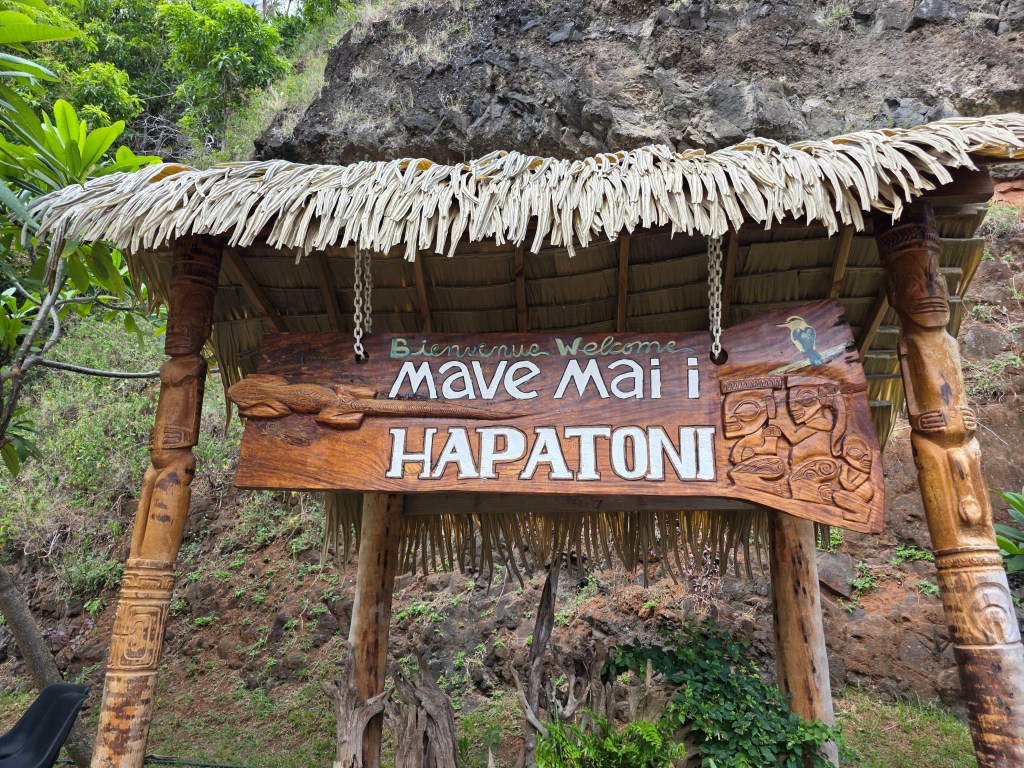
Considering that we didn’t know that we would be coming until about 7am on the day of, the village managed to give us a wonderful welcome.
They arranged for some music on the pier when we got off the tenders, and a dance and music show in their community building at 10:30am. The vendors had quickly gathered their wares and had them on display, and a few entrepreneurs cleaned their trucks to offer a taxi service around the small island.
Some people walked along the road up the mountain to overlook the bay, but I chose to wander around the village and up into the hills, scaring many chickens.
This was a small but mighty port stop.
 Chasing Summer -
Leave a comment