December 30-January 1
After a week in French Polynesia, I feel like I know what to expect when we reach a new island, but this is Tahiti, the capital and the most well-known Island for Canadians. It’s also over the New Year. The raging debate on the ship is about what will actually be open. The good news is that it is a docked port, so we don’t have a tender curfew, and people can celebrate all night long should they choose. I’m thinking we can put the New Year’s ball drop from New York on the TV at 7pm and skip the midnight madness.
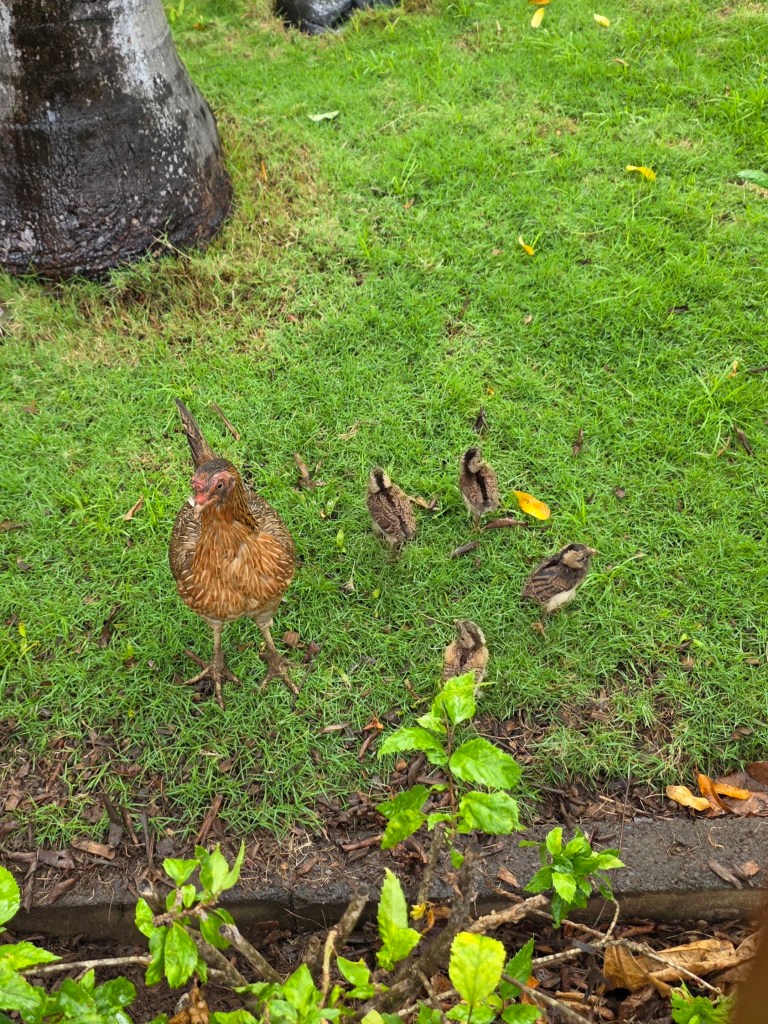
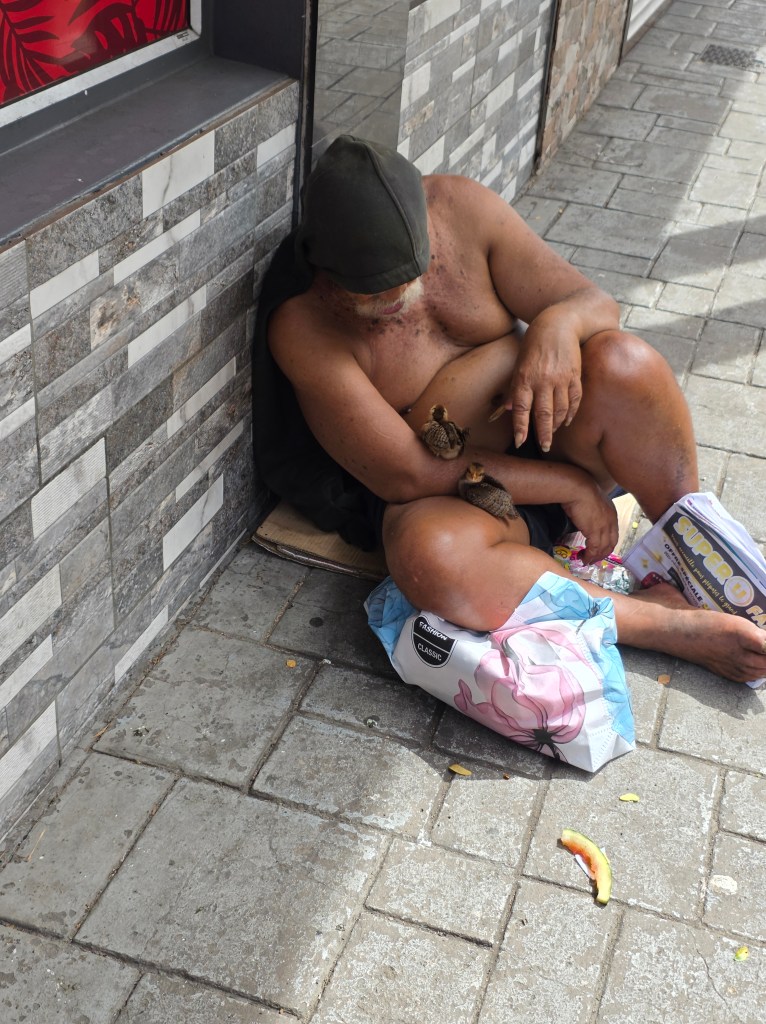
All of French Polynesia, but in particular Tahiti, is always going to be remembered as the chicken islands. The free-roaming chickens and roosters have taken over and can be found everywhere. They are on the city streets, in the parks, and on the hills and mountains. There are momma birds, noisy roosters, chicken tenders (teenage birds), and chicken nuggets (baby chicks) roosting everywhere, even on people if they sit still long enough.
Papeete
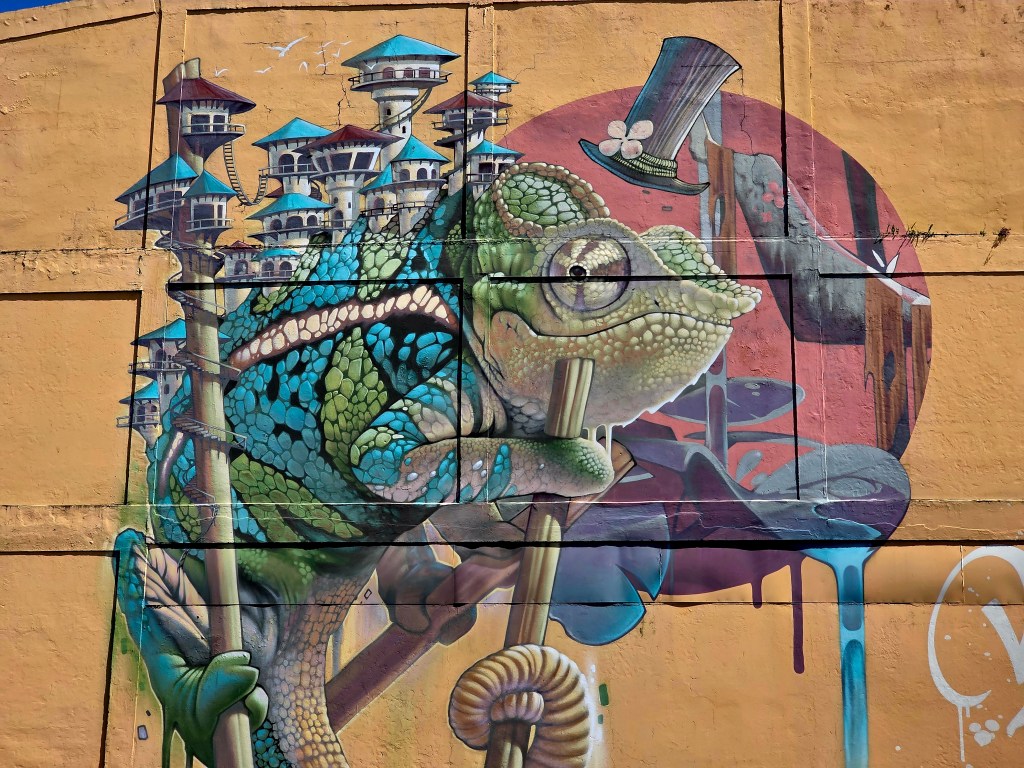
I spent two mornings roaming around Papeete and trying to resist the temptation of buying too much at the overpriced stores. Some residents say that this town reminds them of France, but except for the French language and prices, I have to disagree. They do have murals. Murals appear throughout the island on any large blank space. My January 1 walk was to find some when everything else was closed.
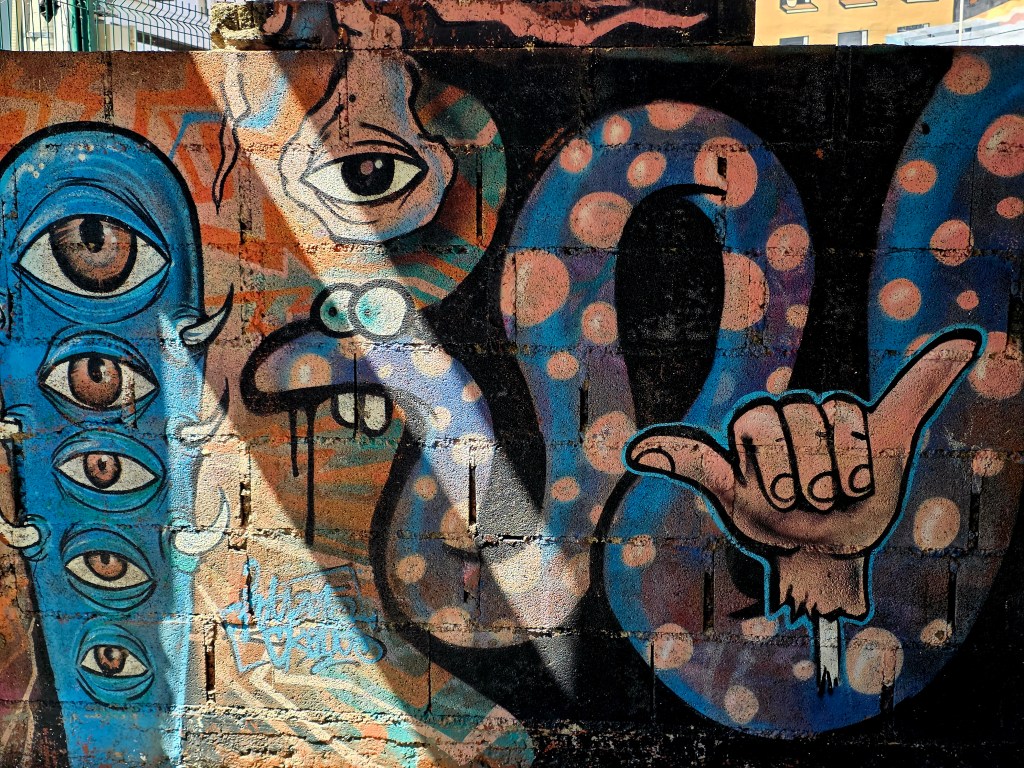
From the cruise port, everything is within a 30-minute walk. Some of the places that I visited were;
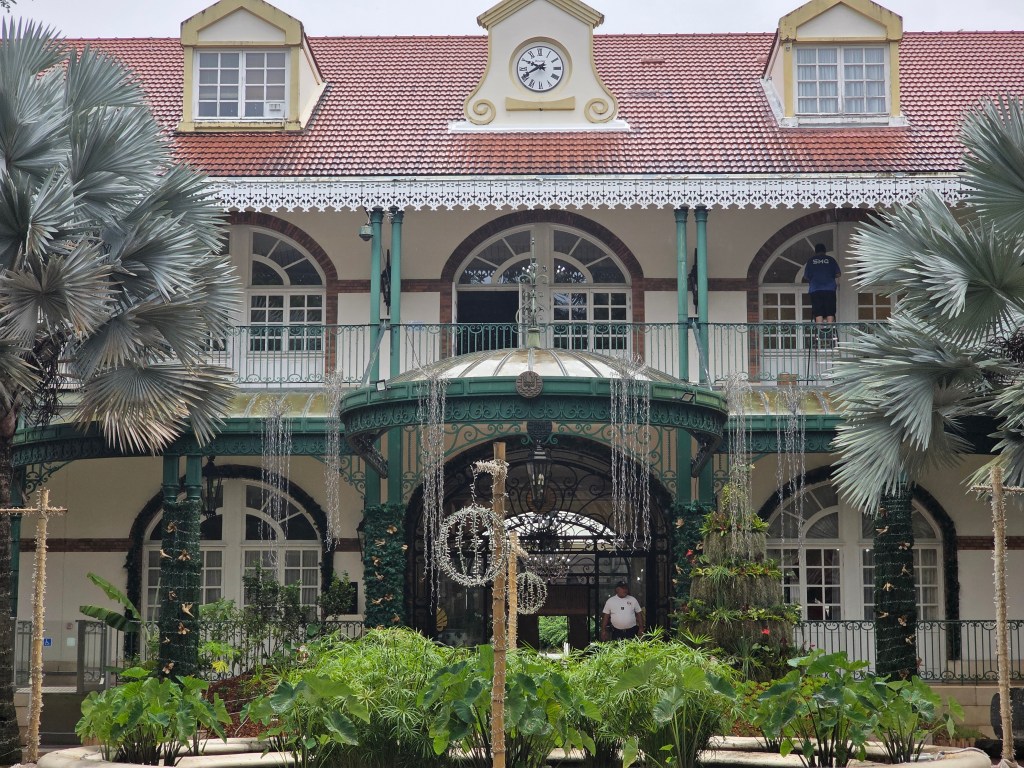
The Presidential Palace. This home was inaugurated in 2000 and was a remake of the former Broche Barracks.
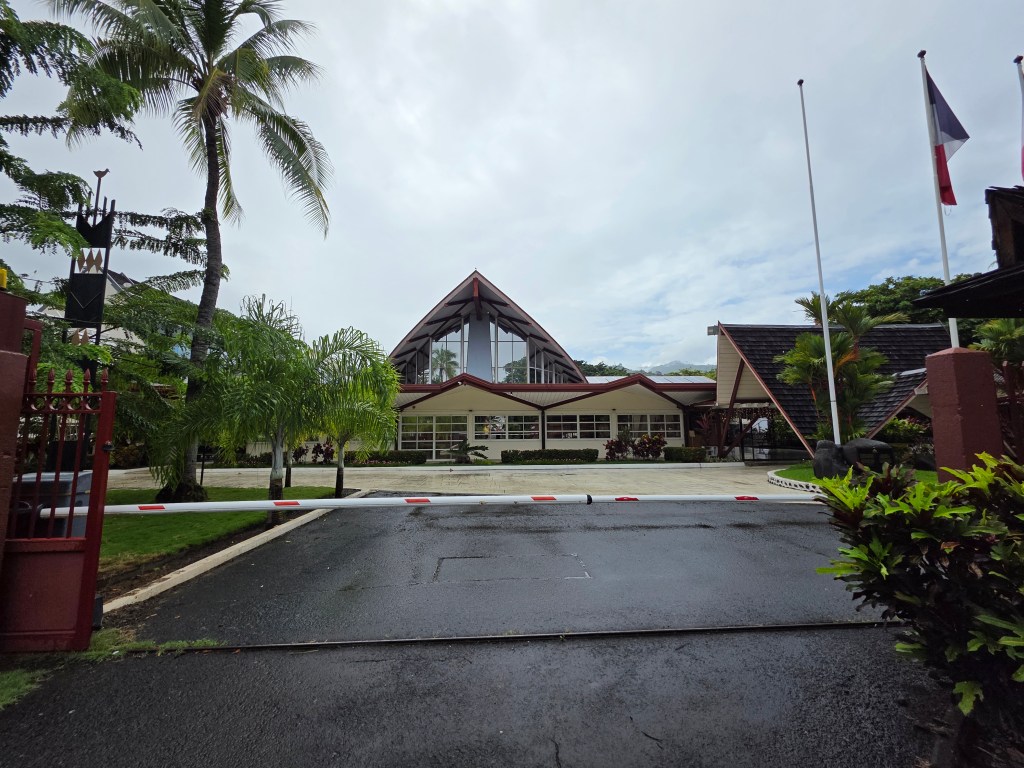
The Territorial Assembly. This building was constructed in 1960 and has a shell-like roof. Out front is a statue of Pouvanaa a Oopa, a French Polynesian nationalist.
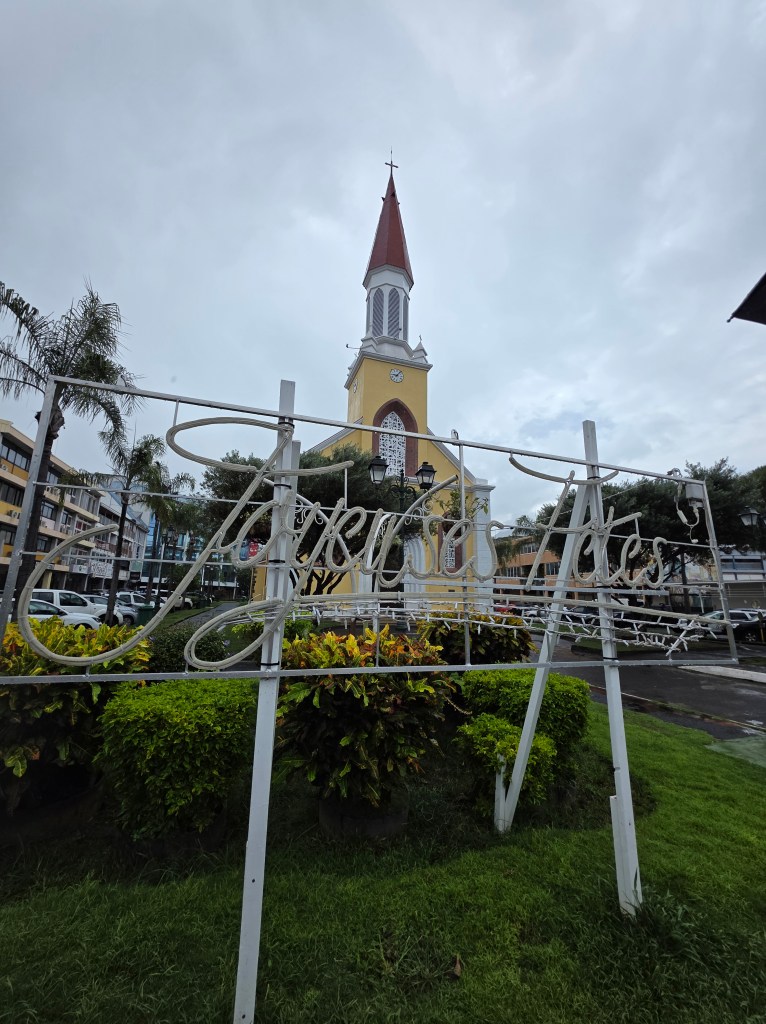
The Notre Dame Cathedral. The cathedral opened in 1875 and is the oldest church and one of the last standing buildings from early colonialism.
The Municipal Market has been in the same location since 1869.
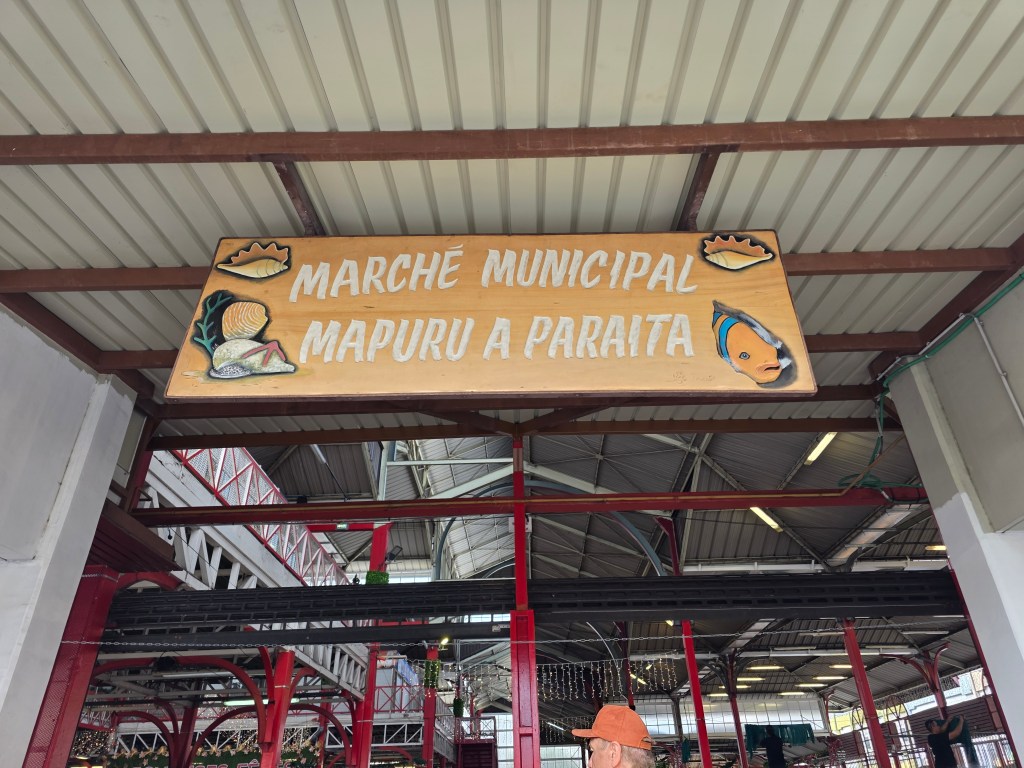
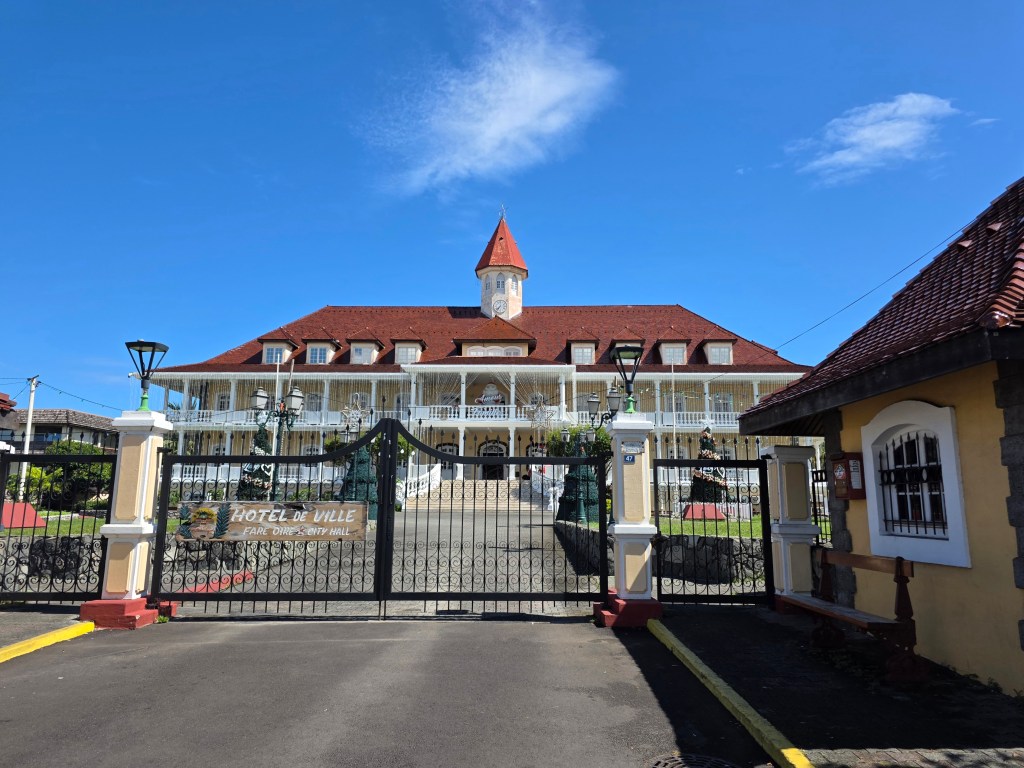
The City Hall, also known as Hotel de Ville or Marie, is a replica of the mansion of Queen Pomare IV.
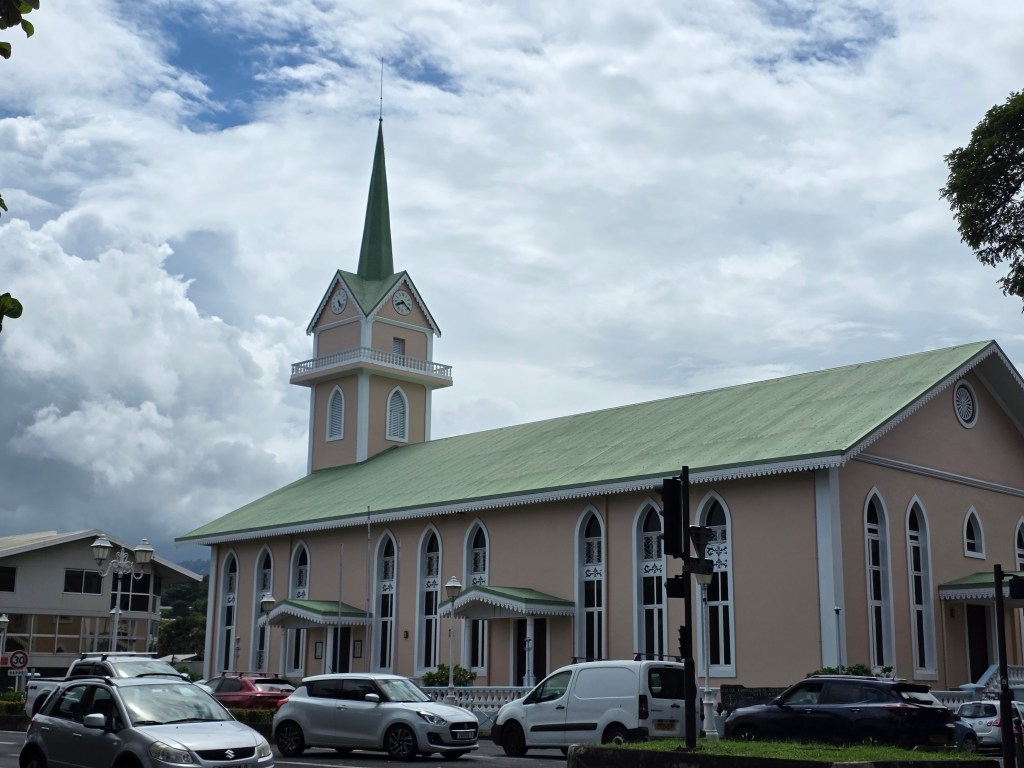
The Protestant Church of Paofai was built in 1818.
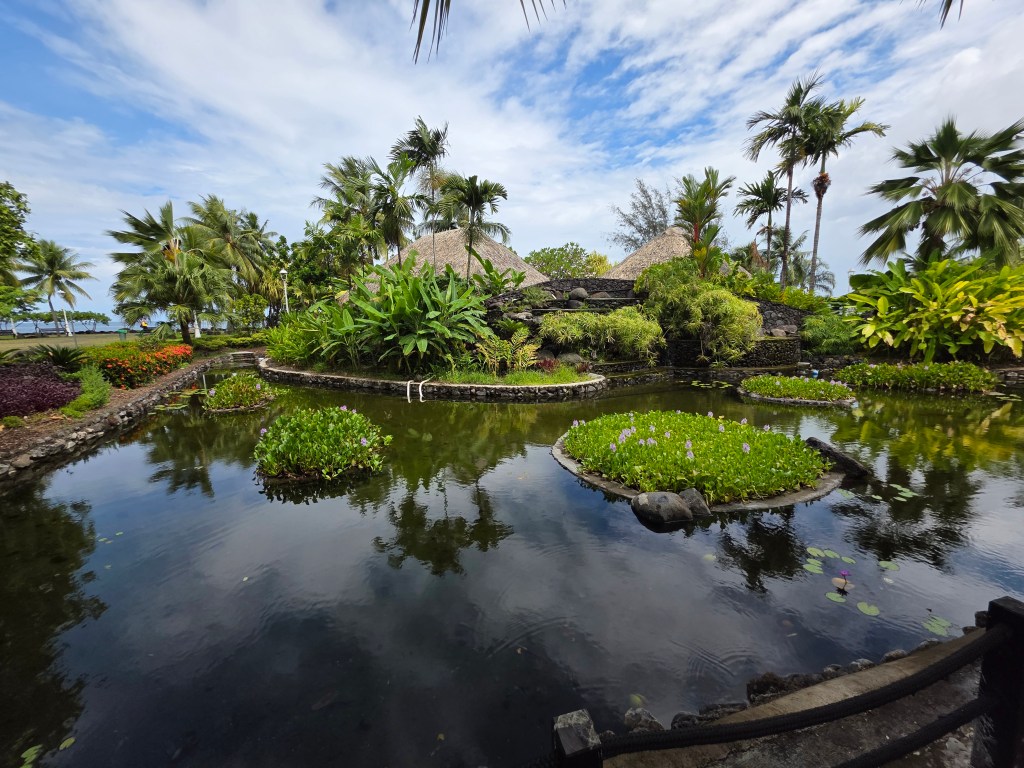
The Paofai Garden (Jardin de Paofai) has green spaces, water features, restrooms, locker rooms, playgrounds, and trees. The pathways are paved, and there are small kiosks and cafes.
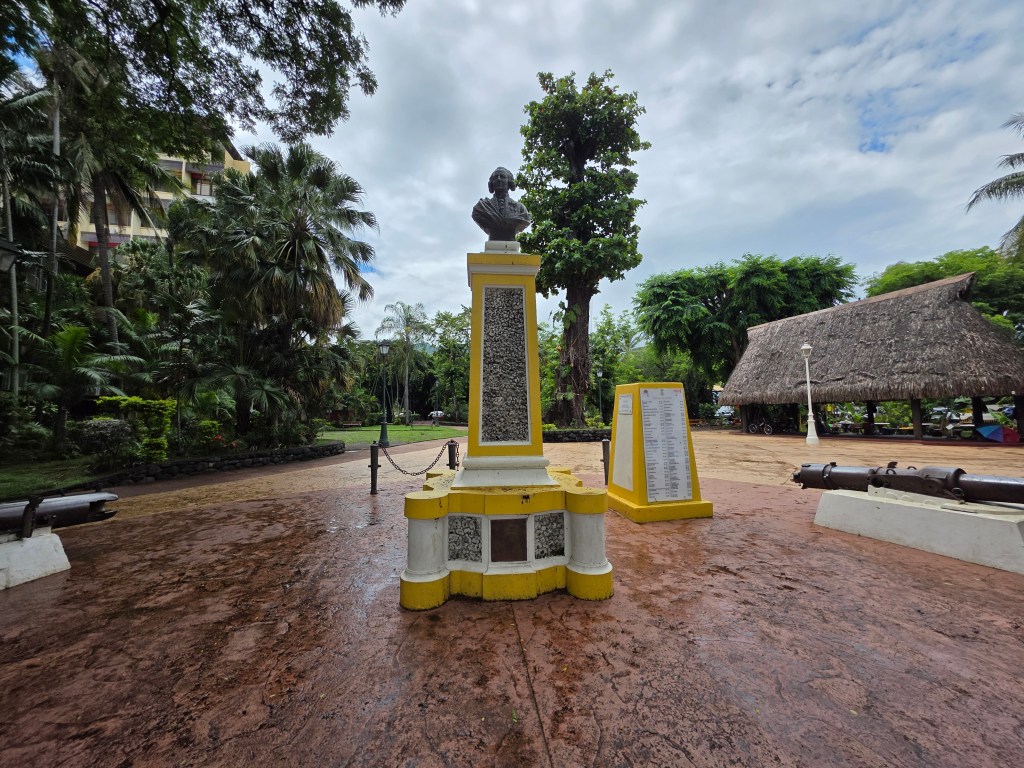
The Waterfront has several sites. One is Place Vaiete. Another is the Bougainville Park and Statue.
Going around the Island
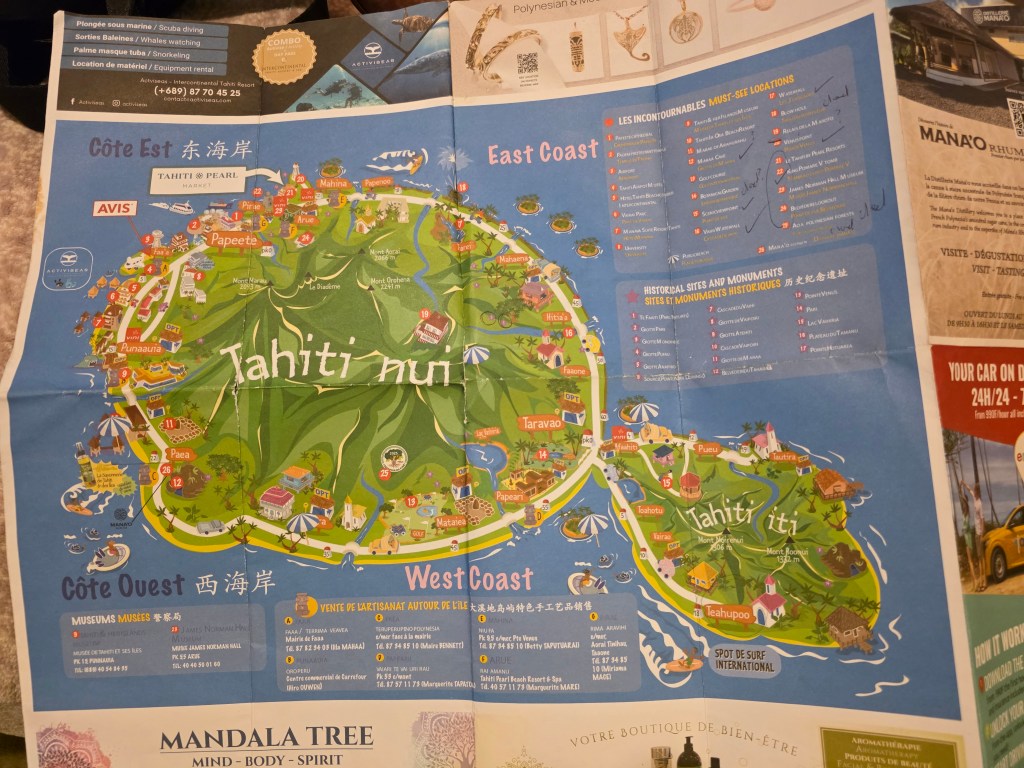
My friend Leslie rented a car for two days, and I invited myself along. On day one, we drove along the East side, and on December 31st, we visited the sites on the west side. In general, the water falls, and surfing is found on the east side. On the west, there are calmer beaches and historical/cultural sites. Most of the sites are marked with signs that resemble red flags.
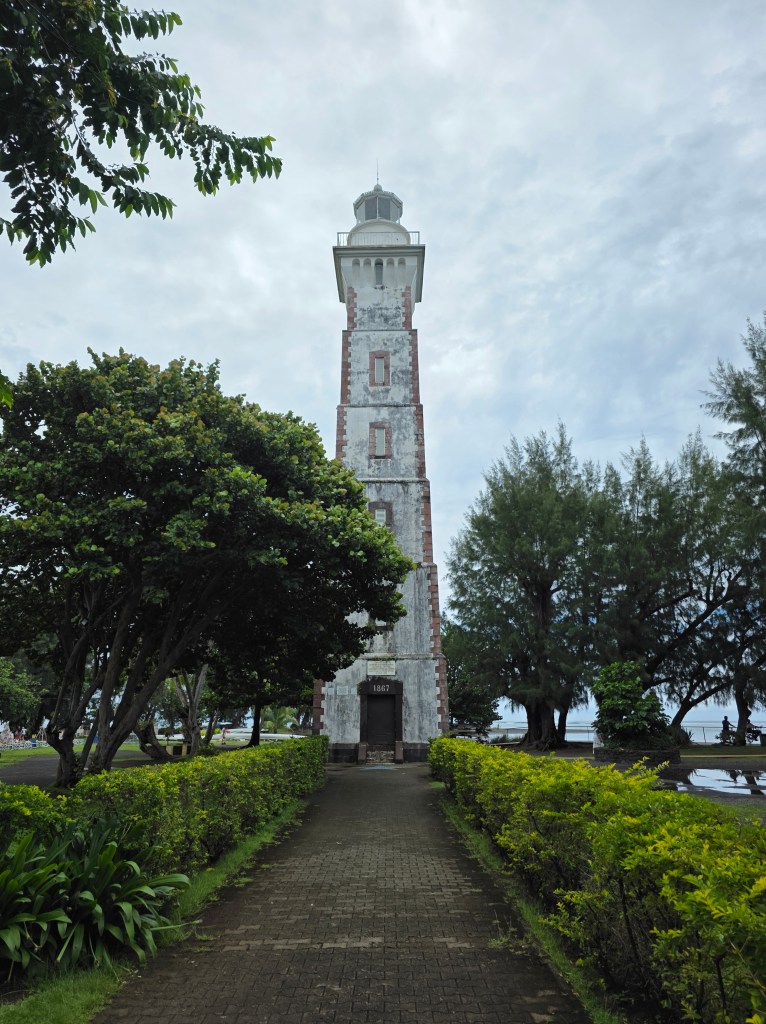
We started out with the Venus Point Lighthouse, 1867. This marks the north point of the island, and is where James Cook built an observatory in 1770. Historically, this is also the landing site for ships like the Dolphin, the Endevour, the Bounty, and the London Missionary Society.
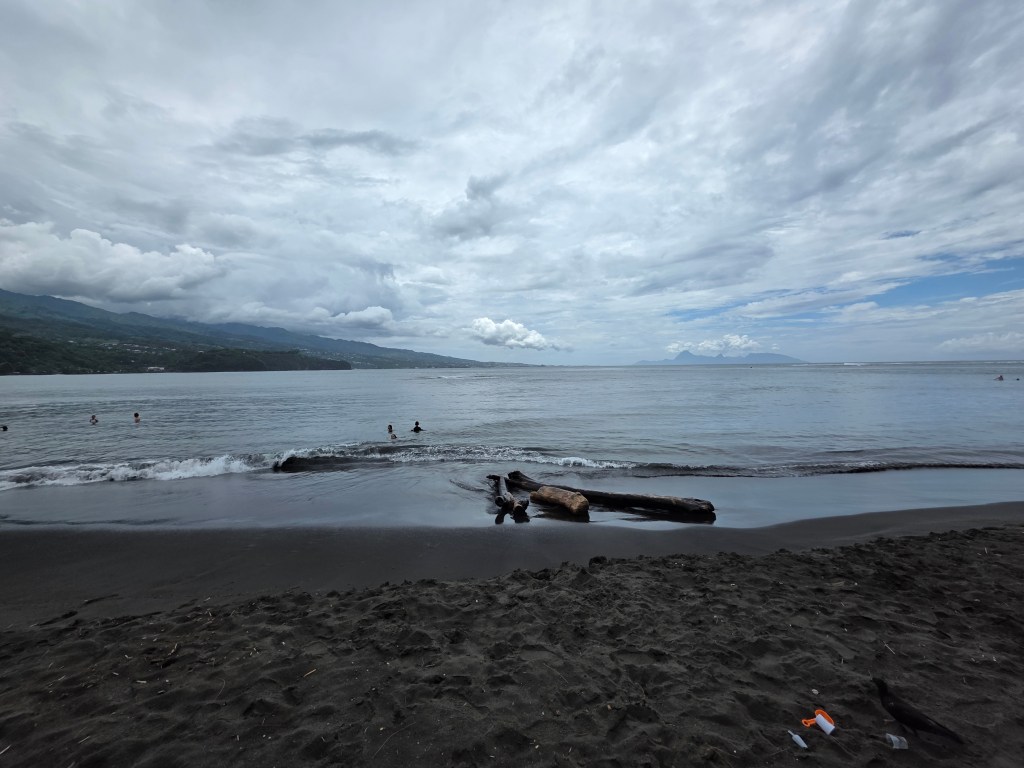
There are black sand beaches here for swimming, a reef for snorkelling, and some restaurants. Many families come and spend the day here. There was a sign warning about jellyfish when we were there.
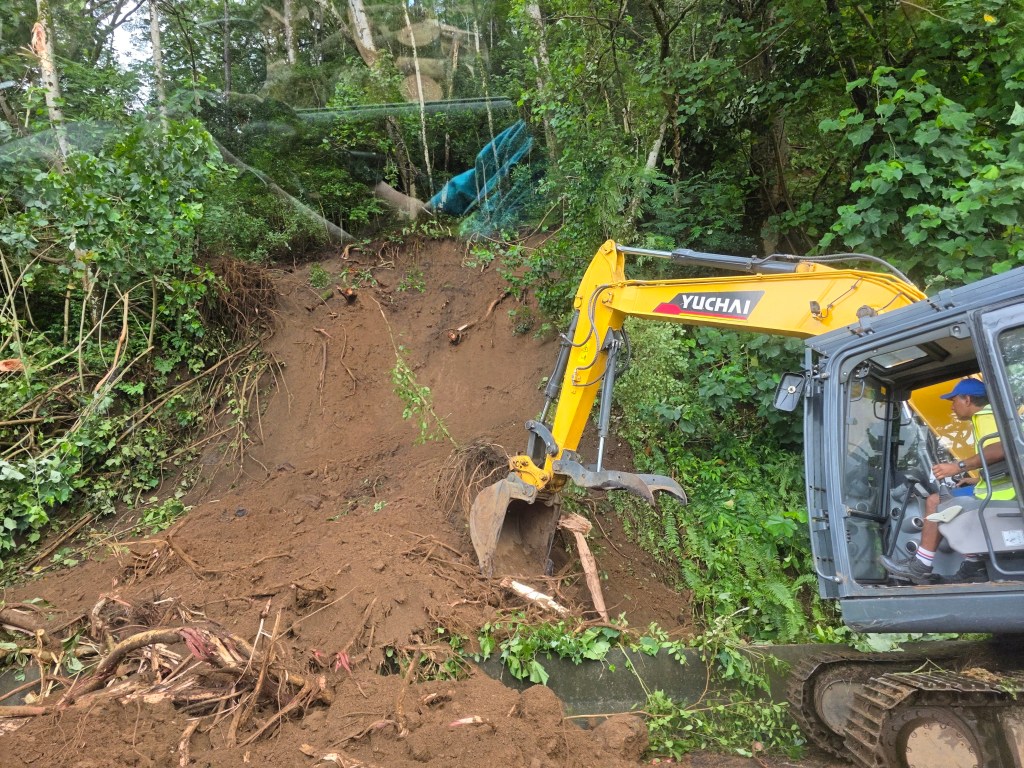
Driving on the main road that circumnavigates the island, we came across a small landslide and a fallen tree, and we needed to wait for a crew to move it to the side. It went amazingly quickly, and we were able to get to Troudusouffleur Blowhole.
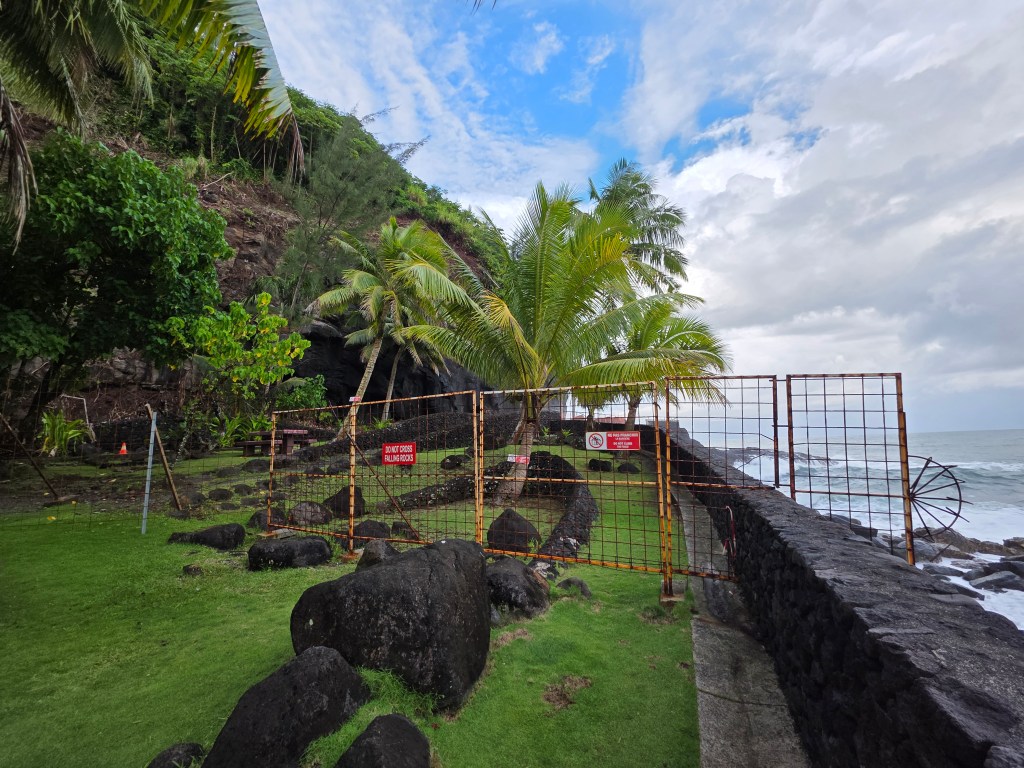
The blowhole is immediately after a short tunnel and far enough around that the beach that is located here is occupied by surfers, not swimmers. The area around the blowhole is under repair and not accessible unless you want to walk on the wrong side of the wall. It was a nice spot to grab a few pictures of the waves and some of the spray from the blowhole.
A very short drive (less than a minute) took us to the turn-off for Les 3 Cascades. It is 800m up the road to the parking area and a 150 m walk to the main waterfall, Faarumai. We are here in the off-rainy season, so the route to the other two falls was closed due to the weather.
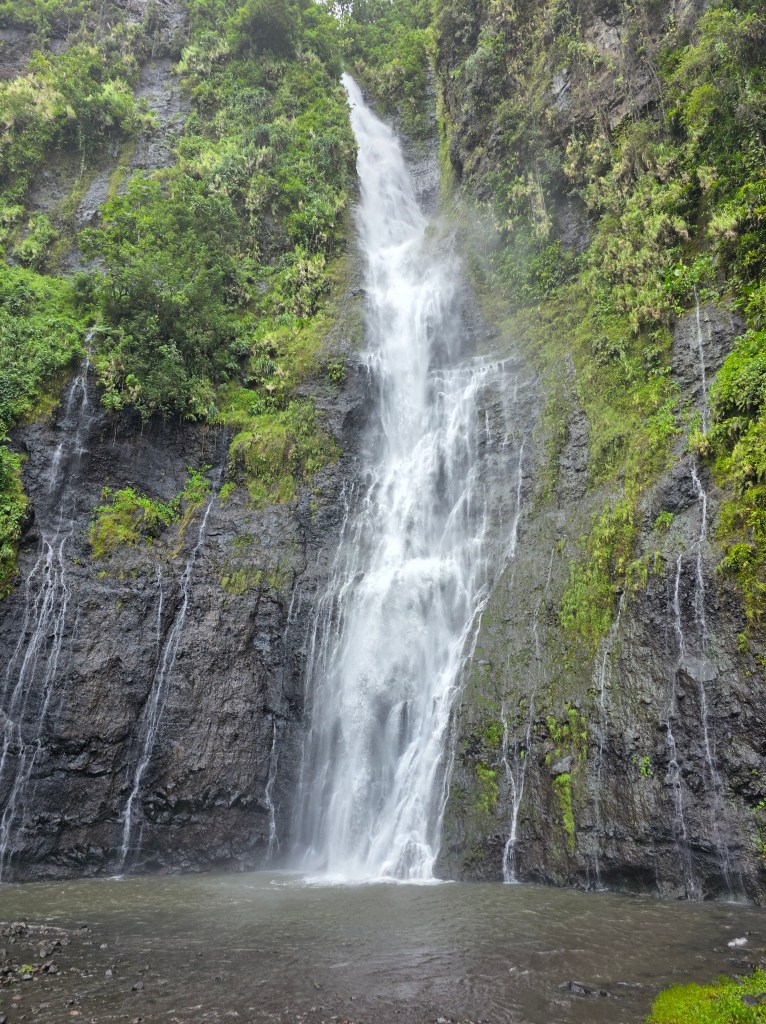
Was the one waterfall worth it? Yes it was beautiful. legend of the three waterfalls of Faarumai – Tahiti Heritage
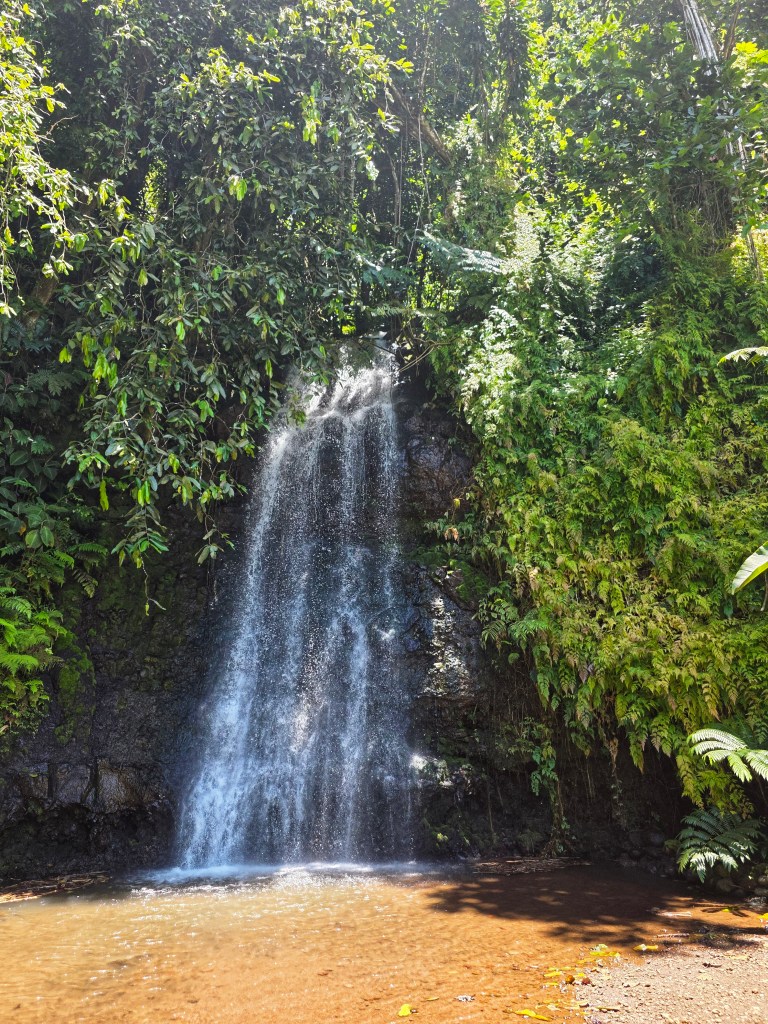
We drove to another waterfall, Vaihi Waterfall. This site is one of the few that does not have a sign. There is a small parking area off the road, and then a short walk through the vegetation to the waterfall. We drove right past it the first time, and had to turn around and go back.
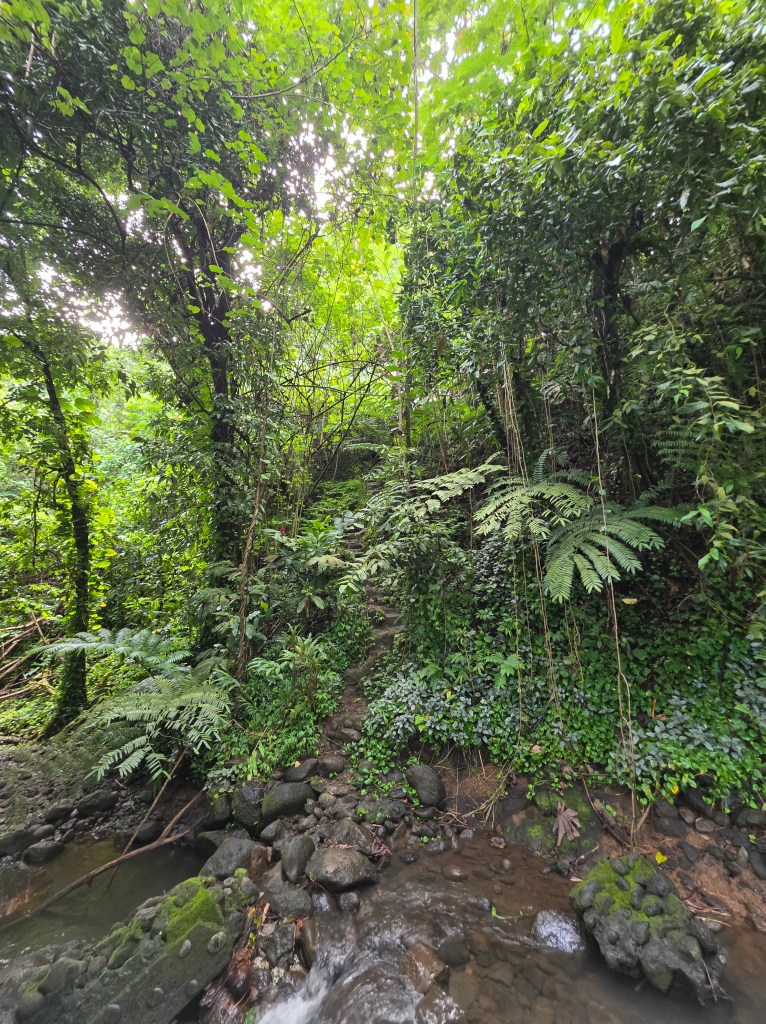
It is only a couple of minutes’ walk to the waterfall, but it was muddy, and mosquitoes were out. It is a short waterfall with a split cascade and a pool good for swimming. There is a short trail of stairs leading to the top, where there are a couple of pretty pools. The path to the stairs goes through the water, so I was very glad that I wore sandals that could get muddy and wet and still had traction.
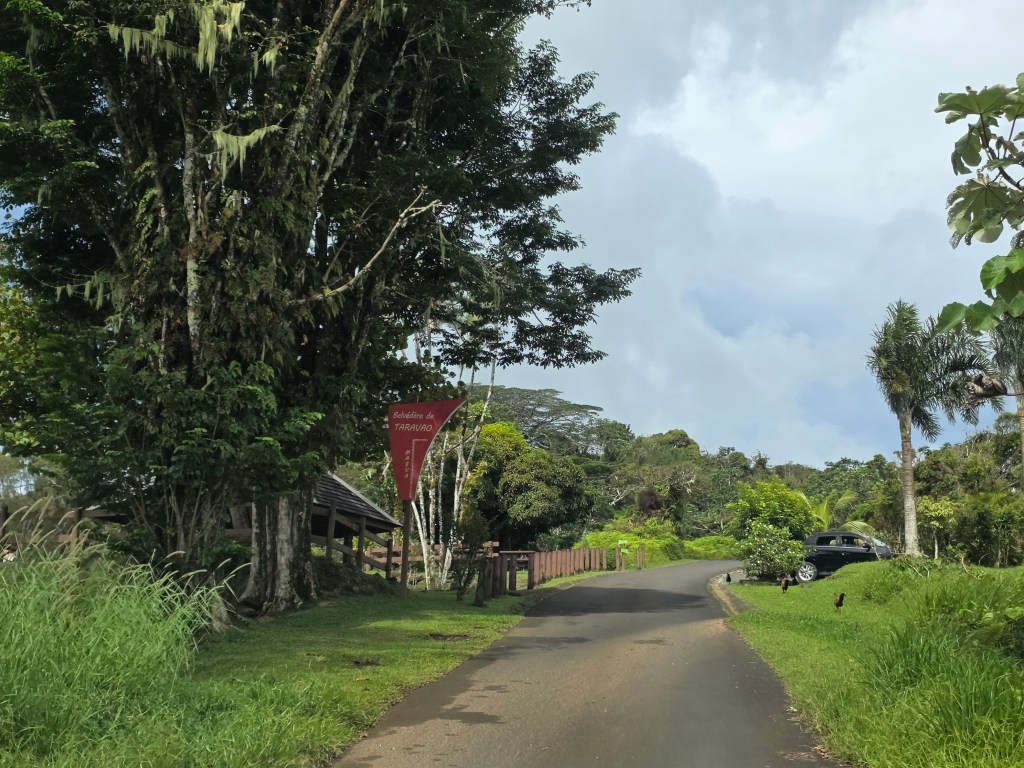
Our last stop on day 1 was on the tail of Tahiti, Tahiti iti. This small protusion is also the location of the Summer Olympics surf site, and a drive on the west side goes to the Olympic rings. We went up. There is the Belvedere de Taravao, which is a plateau up on green fields dotted with cows. At the top is a man-made lake and a short hike (40 minutes, 2.5 km) through an arboretum. It is a gorgeous spot, and there are picnic tables if you bring a snack.
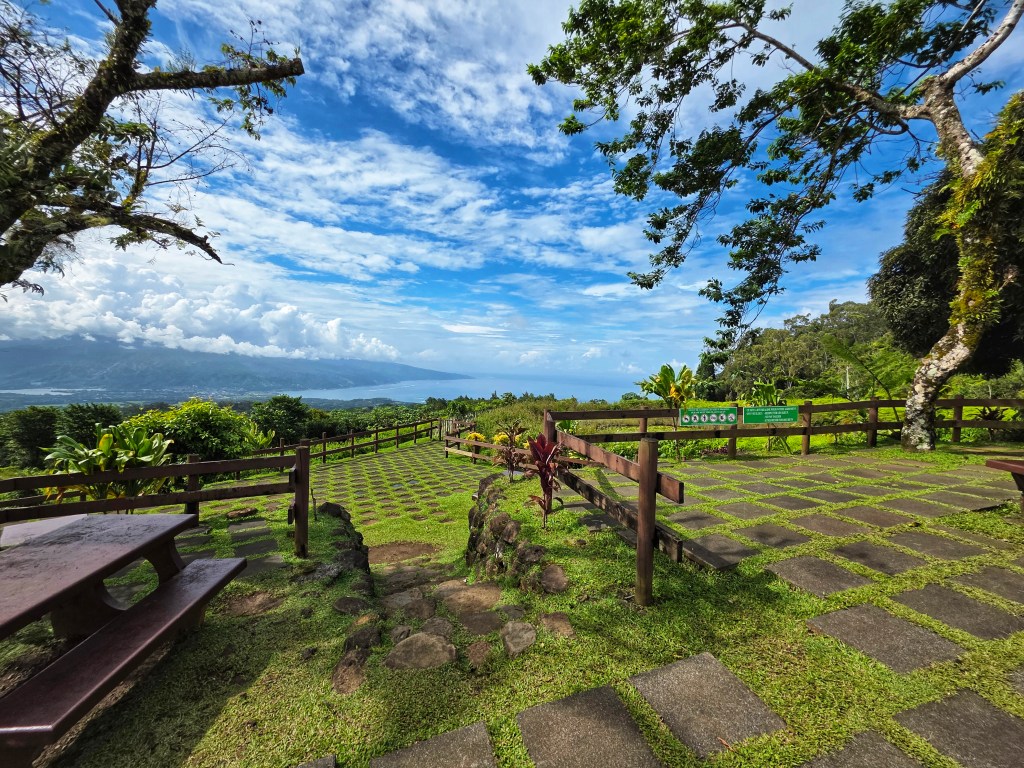
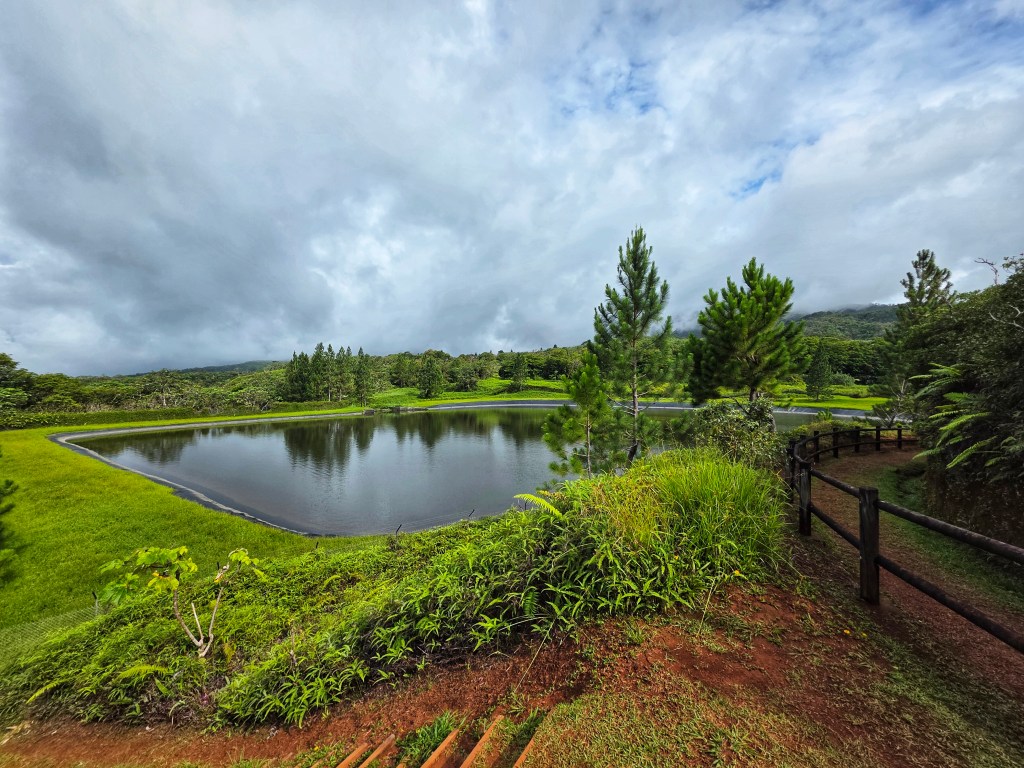
The only two spots that we missed, and I wish we had seen, were the King Pomare V Tomb and another lookout on the main island, but I couldn’t figure out where to go. We must have missed the sign, or it doesn’t have one.
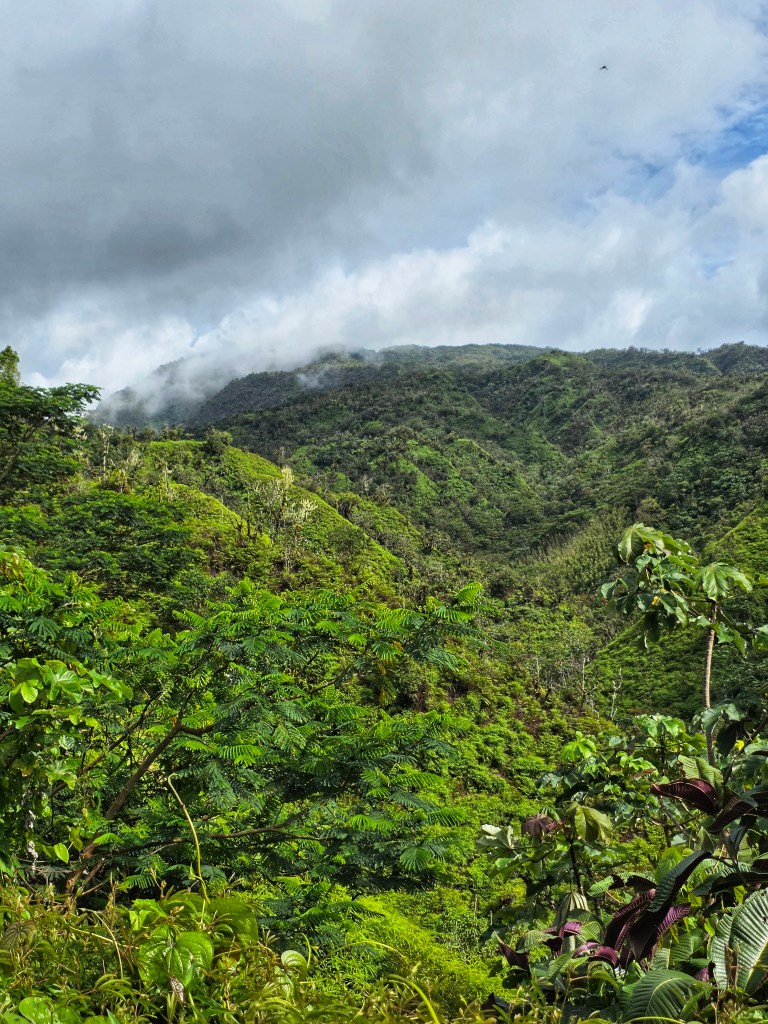
The next day, we had more time and left by 9am to view the west side. We started at Vairai Park. While it is a pleasant place, its claim to fame is being the closest beach to Papeete. Otherwise, it is not worth visiting.
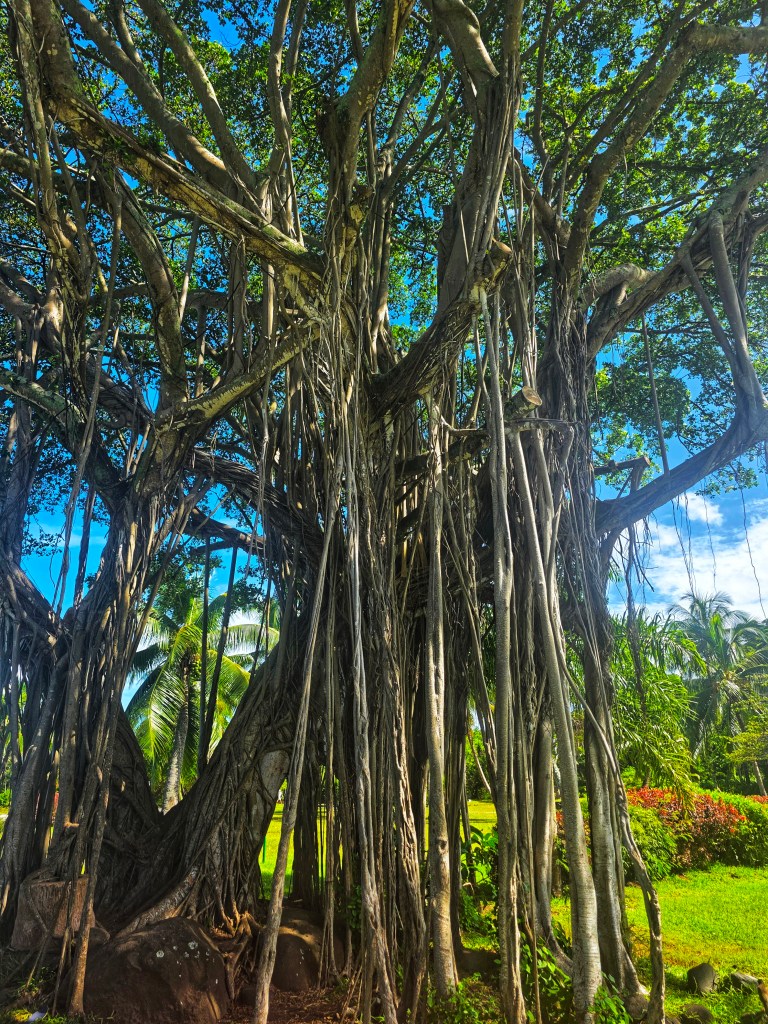
Driving down, we passed several public beaches for swimming, and a charming village of Pa’ea, with a stone church and a picturesque community. This side of the island had much more tranquil waters.
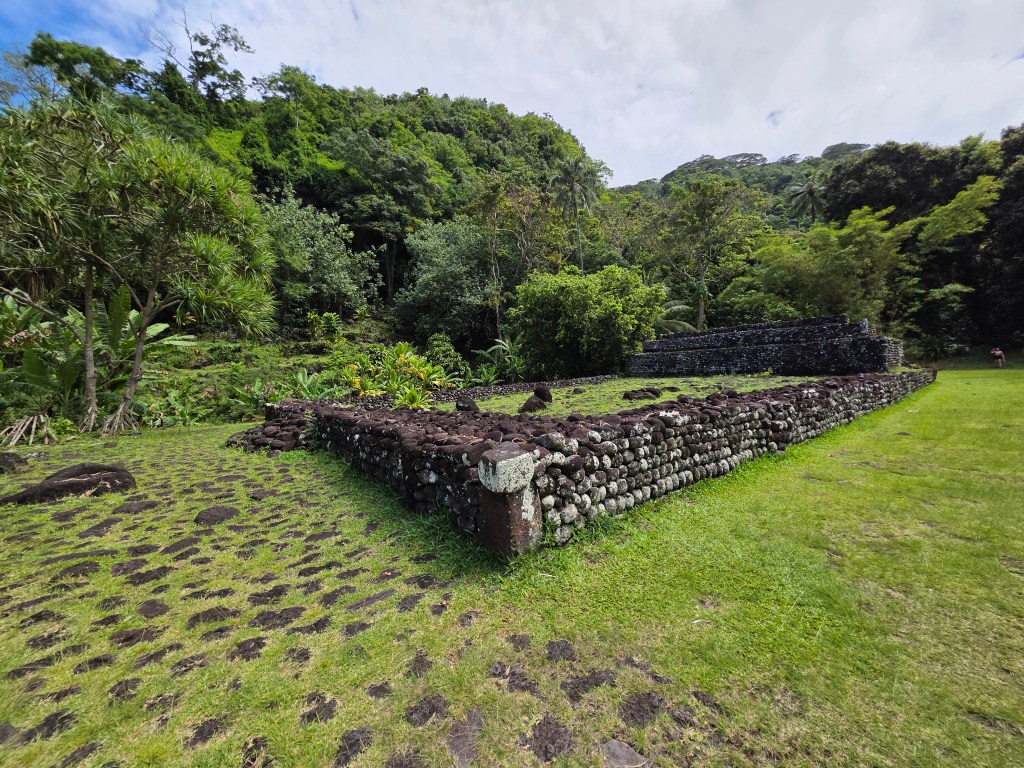
We stopped at the Marae of Arahurahu. This is a restored (1953) archaeological site. It has a tahau (sacred square), a patu (surrounding wall), an ahu (altar), and red unu (sculptures). There was no red sign, but there was a sign on a wall off the road. If you were heading in the opposite direction from us, then you would miss it.
Behind the Marae is a trail leading to a 2.5km hike to a pool (I found out later). I didn’t know anything about the walk, but I just saw a few people exit the forest and decided to take a little stroll. I was with three other people who would not venture into the forest, so I gave myself a 10-minute time limit. At 10 minutes, I would turn back.
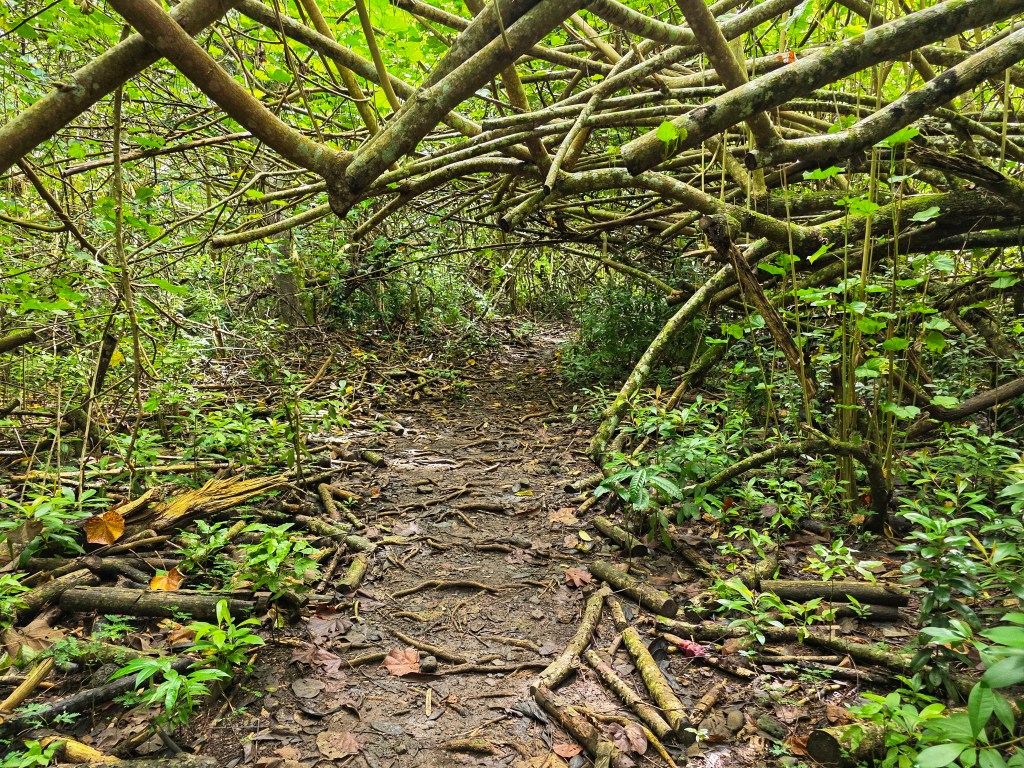
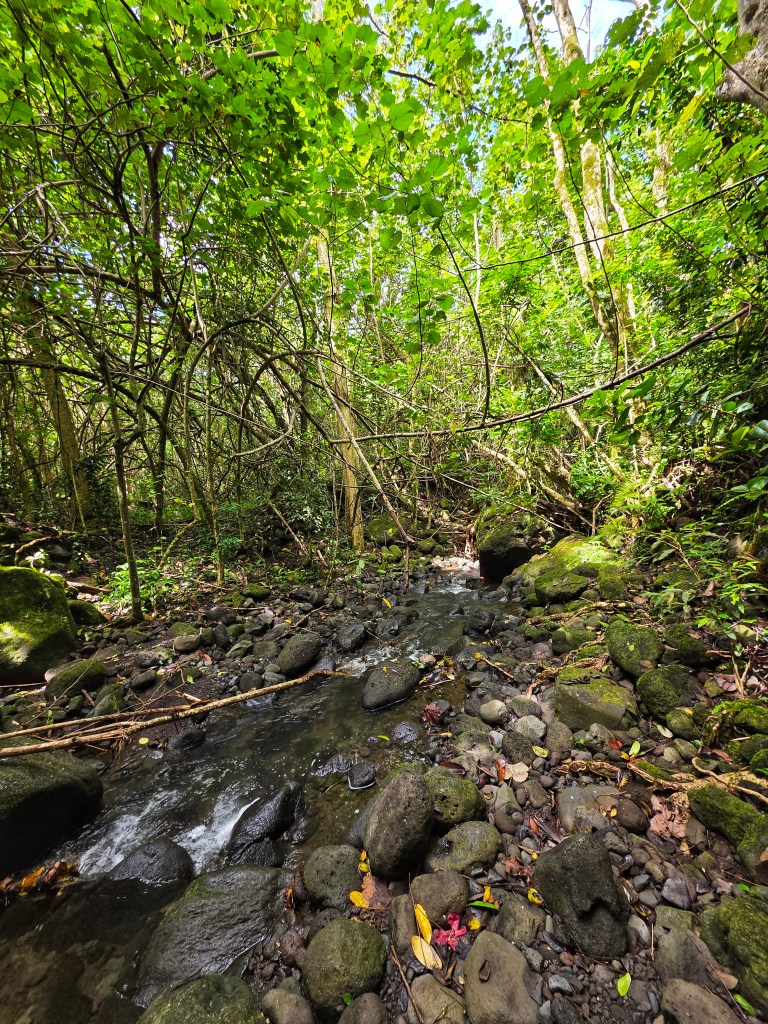
The path was a muddy pit with several low-hanging trees. It did follow a creek, so the sound of music followed me. I passed three people leaving, but they only spoke French, so I couldn’t ask any questions. At 10 minutes, I turned around and made my way back out. Later, I found out that it is a 30-minute hike, so I was only 1/3 of the way. If I came back, I would do the walk and swim. I was wearing my good for water sandals and a bathing suit, but no repellent, and there were mosquitoes.
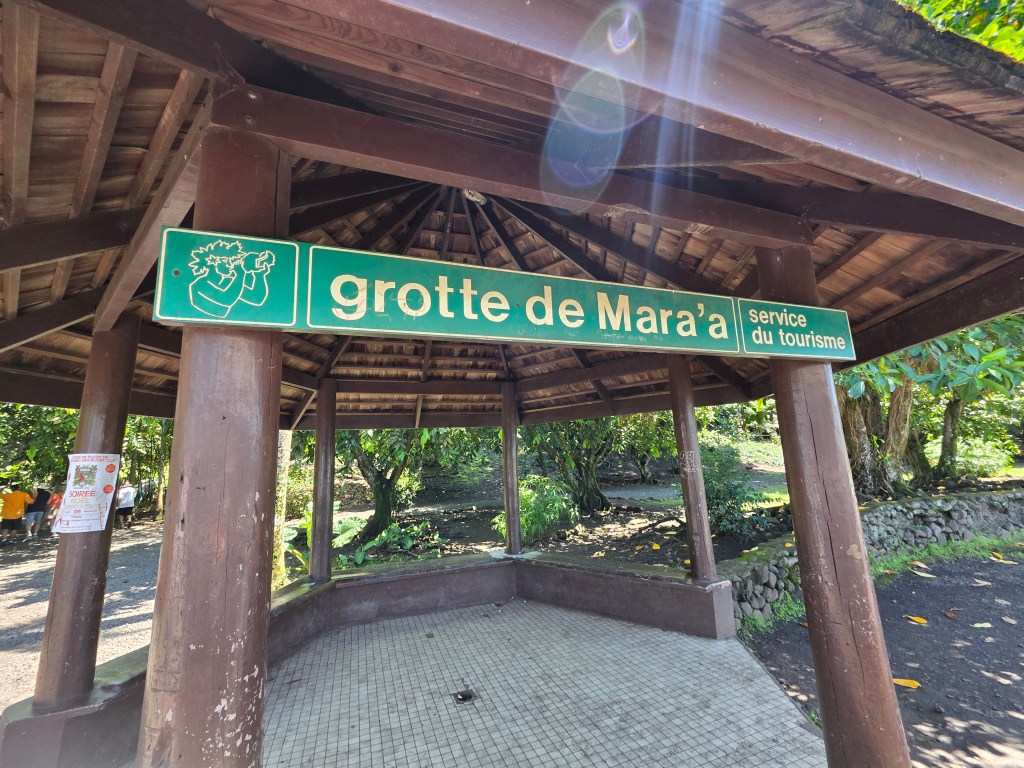
From there, we headed to Maraa Grotto, and there were several signs and parking on both sides of the road for this one. There was also a small souvenir and snack shop. There were three separate grottos along gravel paths. Grotte Vaipoiri, Mata Va’a, and Teanateatea. The first one was the best, and the last one was hard to see and extremely muddy. I would recommend doing the first two, but skipping the last one.
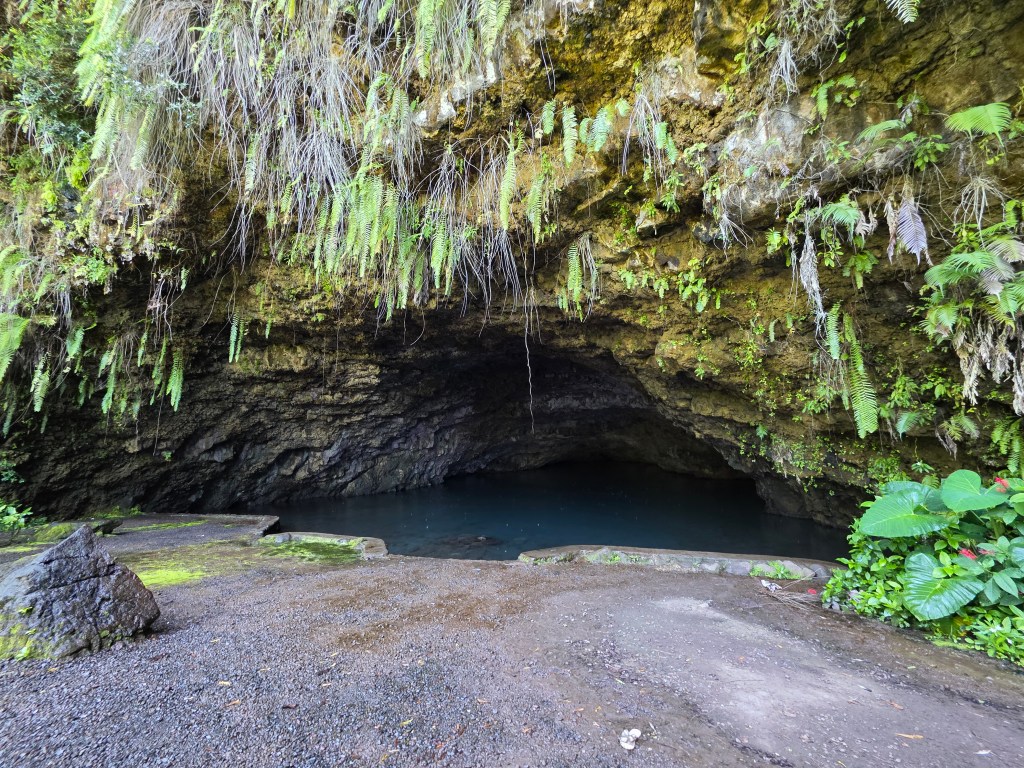
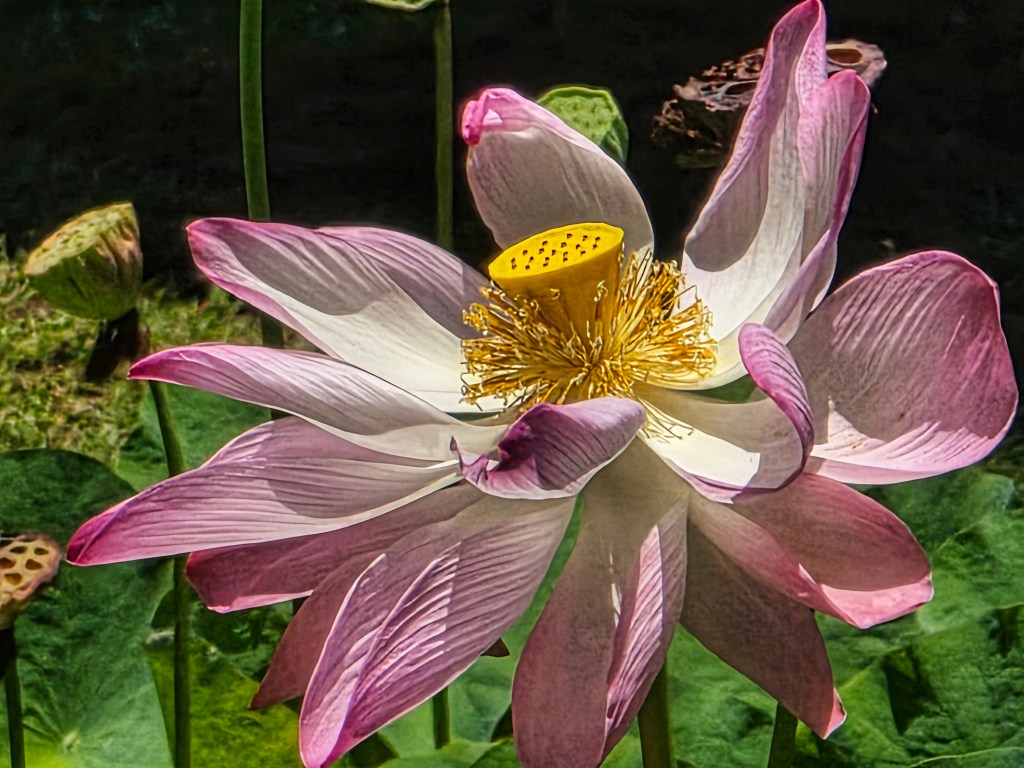
Our final big stop was the Water Garden Vaipahi. This is a botanical garden that has signage and a small shop as well as toilets. Like every place, it is free. It is a small garden with a small waterfall and several ponds. There weren’t any plants here that we hadn’t seen in abundance everywhere, but the trail was easy to walk, and the lotus plants were in full bloom.
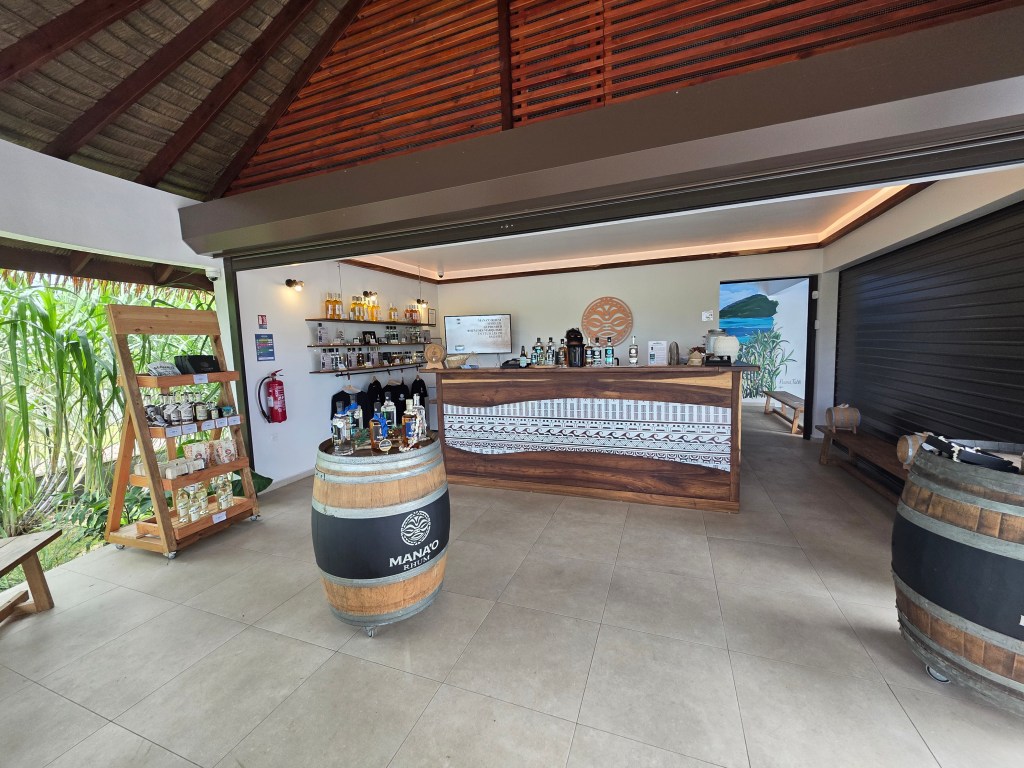
We attempted to go to the Aoa Polynesian Forests, but the road was rough, and we turned around once Google said we weren’t on the road anymore. We also stopped by the Mana’O Distillery, but it was closed.
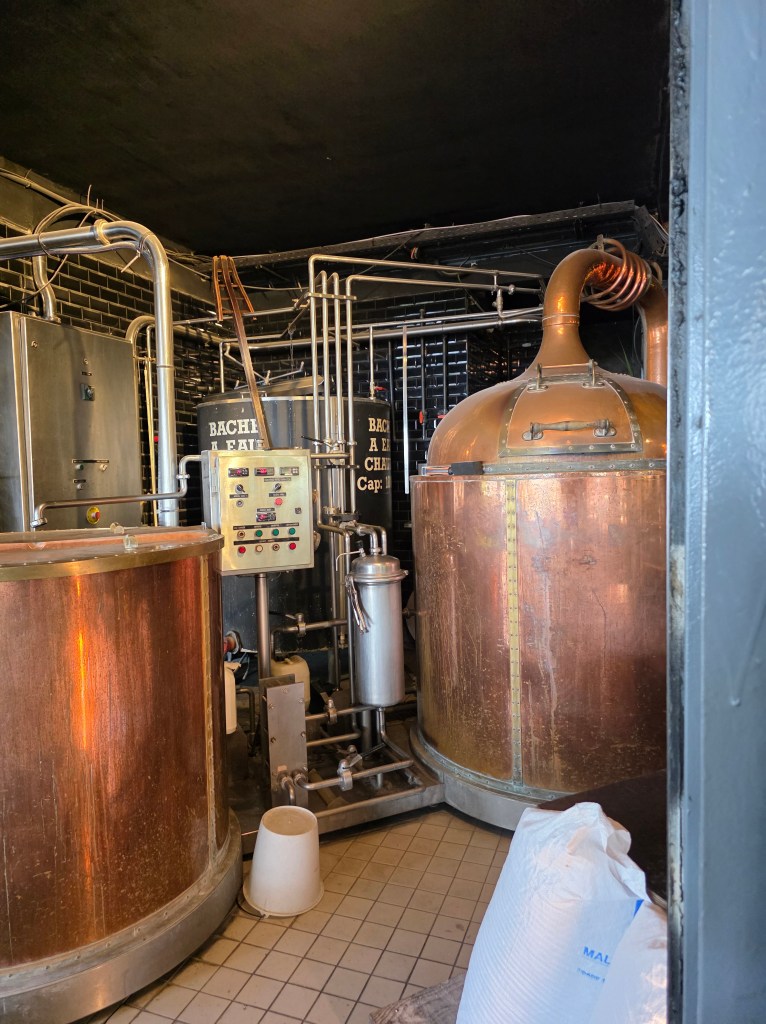
Back in town, I went to the only brewery in town, Les 3 Brasseurs, to try their beers and have a bite to eat.

On New Year’s Day, everything except McDonald’s and another restaurant was closed. There was a small band playing music and handing out small white flowers when we got off the ship for a little walk around town, looking for more murals.
 Chasing Summer -
Leave a comment