December 13-17th
There are actually two distinct Samoas- Samoa and American Samoa. Samoa is a former British colony and, before that, a German colony. It consists of two main islands. American Samoa is an American territory, and even though physically the island is close to Samoa, they are a calendar day apart because the international date line falls between them. Because of this, I had two full December 15ths.
Apia, Samoa
Apia is the capital of Samoa, where the Odyssey docked for three days. There are only about 200,000 people in Samoa, so the towns aren’t that big, and most people live in smaller villages scattered across the islands.
Driving around the island, I loved how well-maintained the homes looked. A tour guide explained that because it is expensive to own land, most homes are owned by the village but are kept by one family as long as they are occupied and maintained. Many villages also have contests to see who has the best landscaping or fine homes that aren’t kept up. There aren’t streetlights, so most roads and driveways are lined with old tires or rocks painted in light colors that are reflective at night.
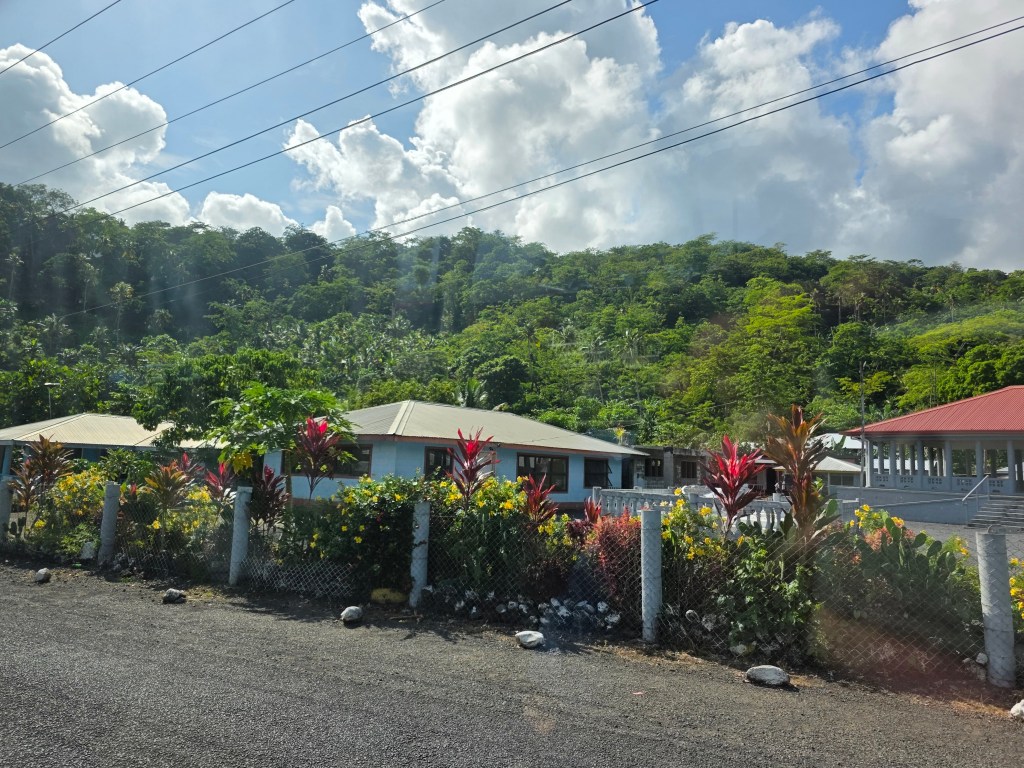
Samoa is also a very religious island, so most shops close at 12 on Saturdays and are only open before church on Sunday or in the afternoon after church time. Alcohol is not sold on Sundays, and there are houses of worship every km.

As a cross between being religious and occupying family plots of land for generations, two important but different practices have emerged. Many of the plots of land have a large building with no walls on the front lawn, and this is where the different family members and villagers can get together to eat or hang out, and walled homes for different related family units are behind the communal building. In several places where there is little electricity, the wallless homes are where a family might live and sleep.

The second noticeable custom is family mausoleums out front. Families bury their ancestors on their land. It is almost a status symbol of how long a family has owned a piece of land, as measured by how many generations are buried there. I was told that there is a practice of washing the remains in the ocean and returning them to the family mausoleums. It used to occur yearly, but now it occurs more commonly every 5 years or so.
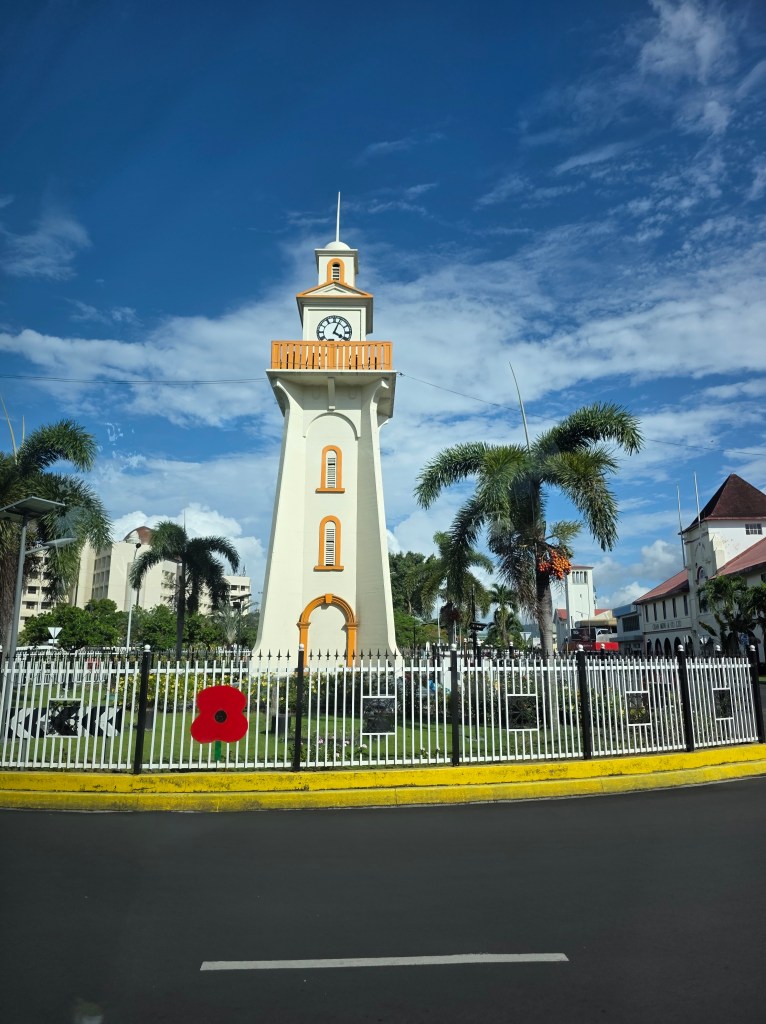
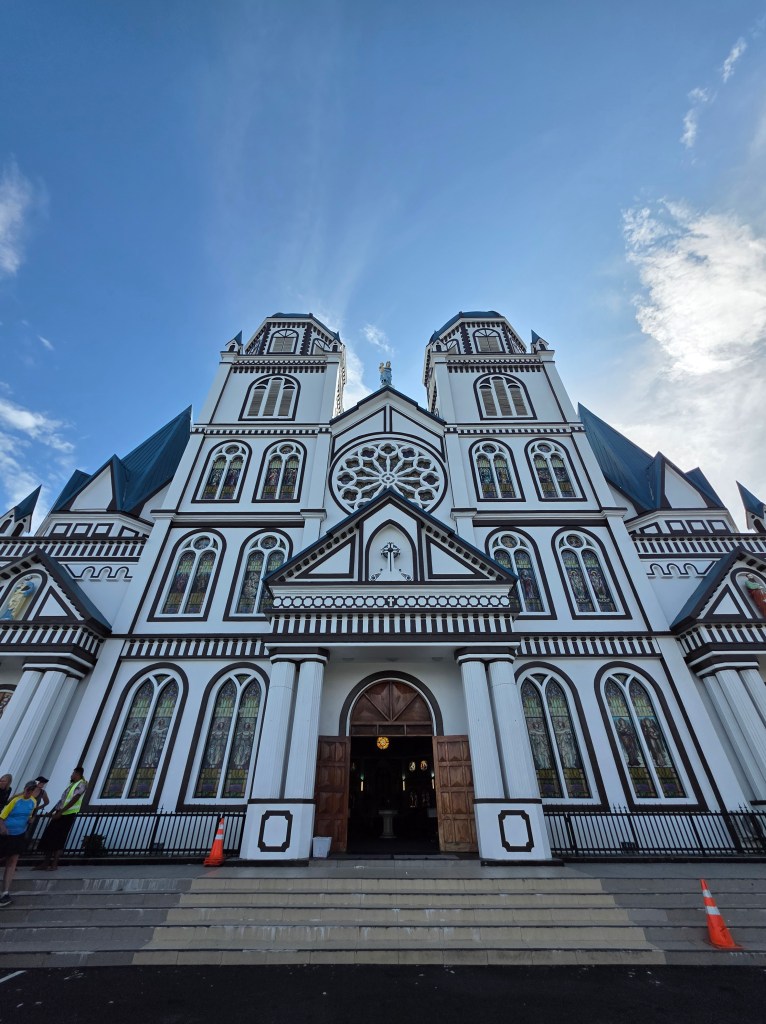
There is a cultural village in town, but it was closed while we were in port. There are also a few variety shops, a market, several banks (ATMS were not working on Monday morning), and a museum. The most recognizable landmark is the Cathedral. It is also the oldest church on the island. It was rebuilt after the earthquake and tsunami in 2009 that devastated the country.
A short drive or an hour walk out of town is the botanical gardens and Robert Louis Stevenson’s House. RLS lived in Samoa for the last 5 years of his life and is buried on the top of a short mountain directly behind the house. He is most well known for penning Dr. Jekyll and Mr. Hyde and Treasure Island. The grounds of the two are free to enter and connected by a path through the trees. There is a loop that will take hikers to his grave, and it takes about 1 hour to complete. Less ambitious walkers can stroll to the waterfall that he swam at and enjoy a dip themselves. The house itself is a museum and costs 20 Samoan to enter.

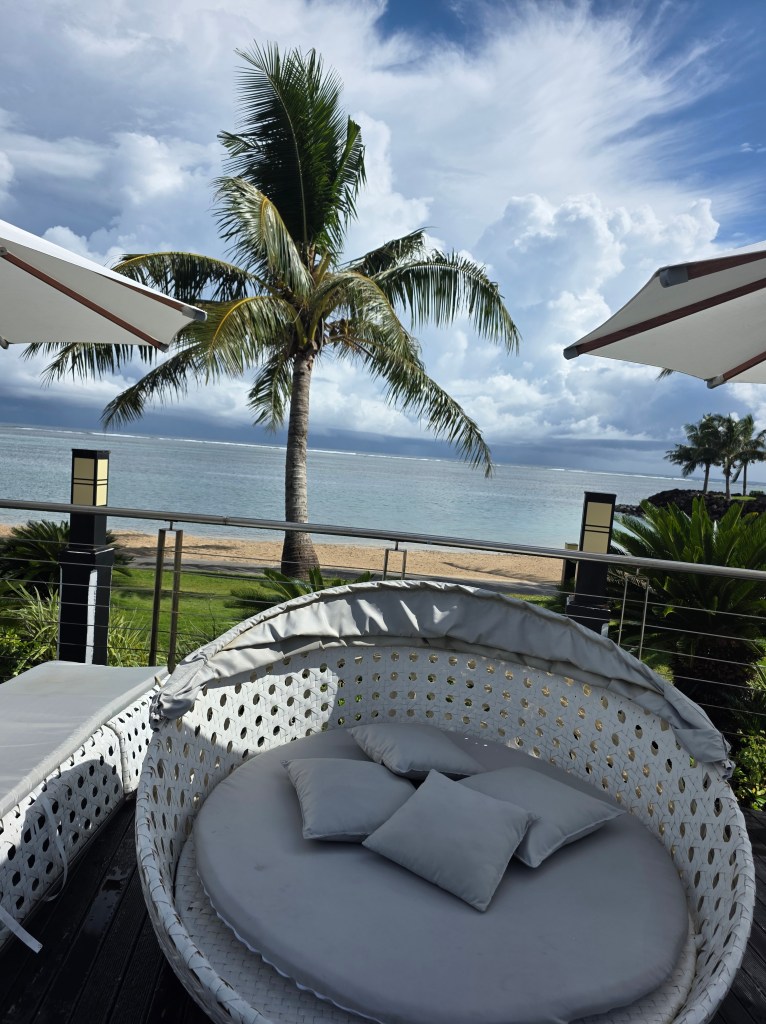
To the left of the port and a 9-minute walk is a deep marine reserve for snorkelling costing 5US, and a 40-minute walk away is the Taumeasina Resort Island. The Taumeasina allows guests to use their facilities for the purchase of a meal there. There is a pool and beach with snorkelling as well.
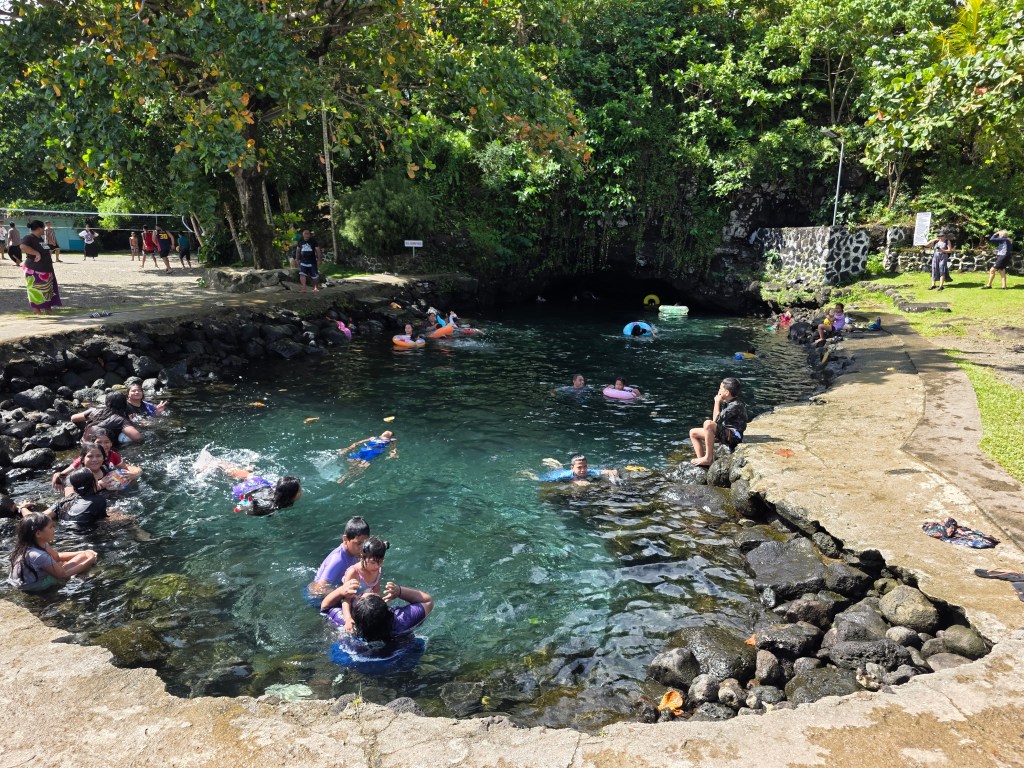
I also joined a tour group that did a tour around the center of the island. Our first stop was Piula Cave Pool. Here, the Church of Latter-day Saints maintains the grounds of several freshwater pools that are connected by a cave/tunnel. There is a fee for using the facilities, but it is cheap enough that many local families were swimming the day away.
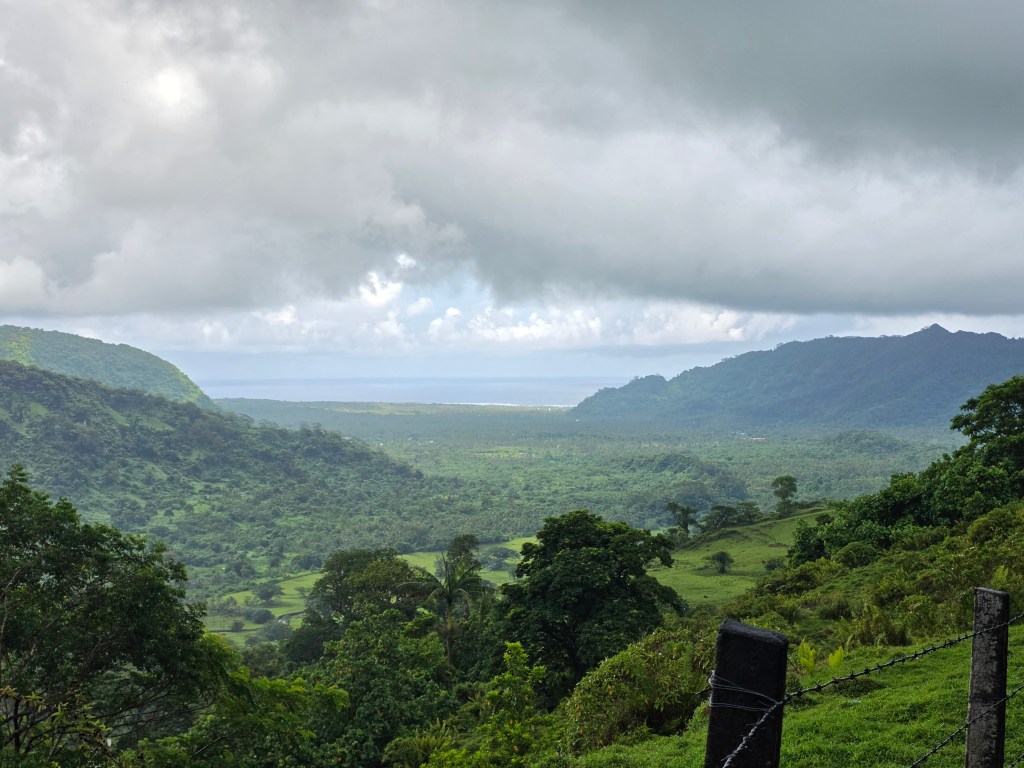
From the Pool Cave, we headed over Le Mafa Pass. It is the highest spot on the island and the coolest. It was pouring rain off and on as I tried to take a picture of the valley without getting the camera wet.
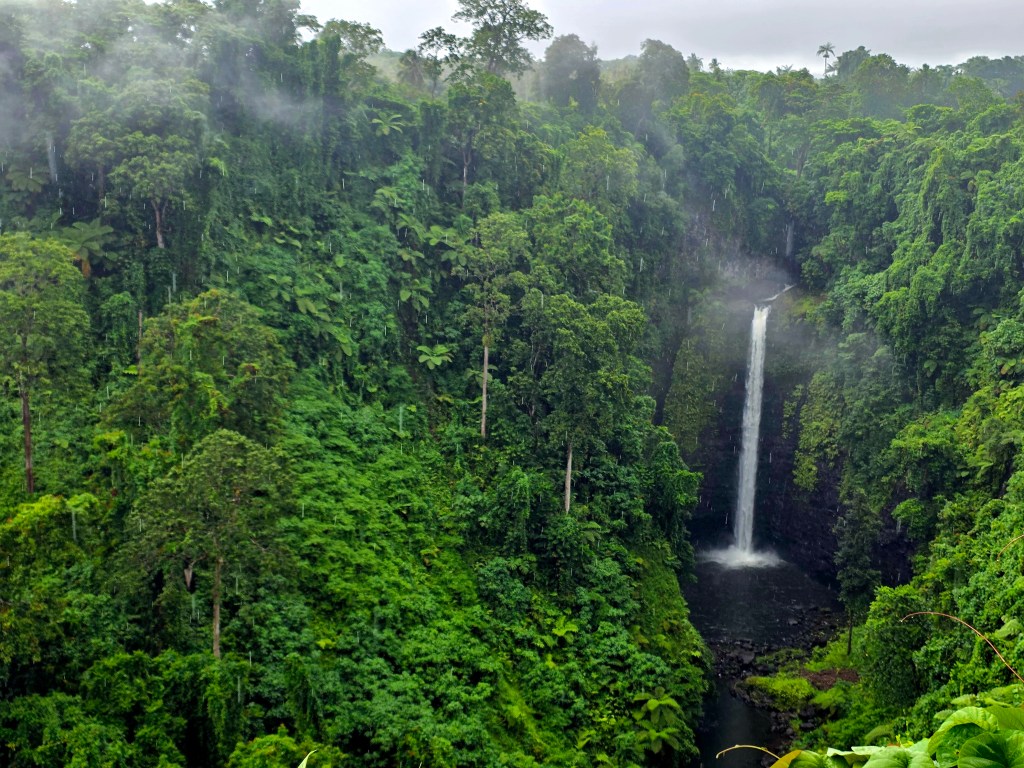
From the pass, the bus headed down to Sopo’aga Falls Viewpoint. Here, a family maintains a viewpoint of the waterfall and also makes coconuts available for coconut processing demonstrations.
The grounds are beautifully kept, and there is a fee for use. It was still raining while we were here.
Next, we headed to the Tu-Sua Ocean Trench. This family-maintained location has two deep sinkholes, one of which leads to a freshwater pool. It does require a climb down a ladder to reach the water.
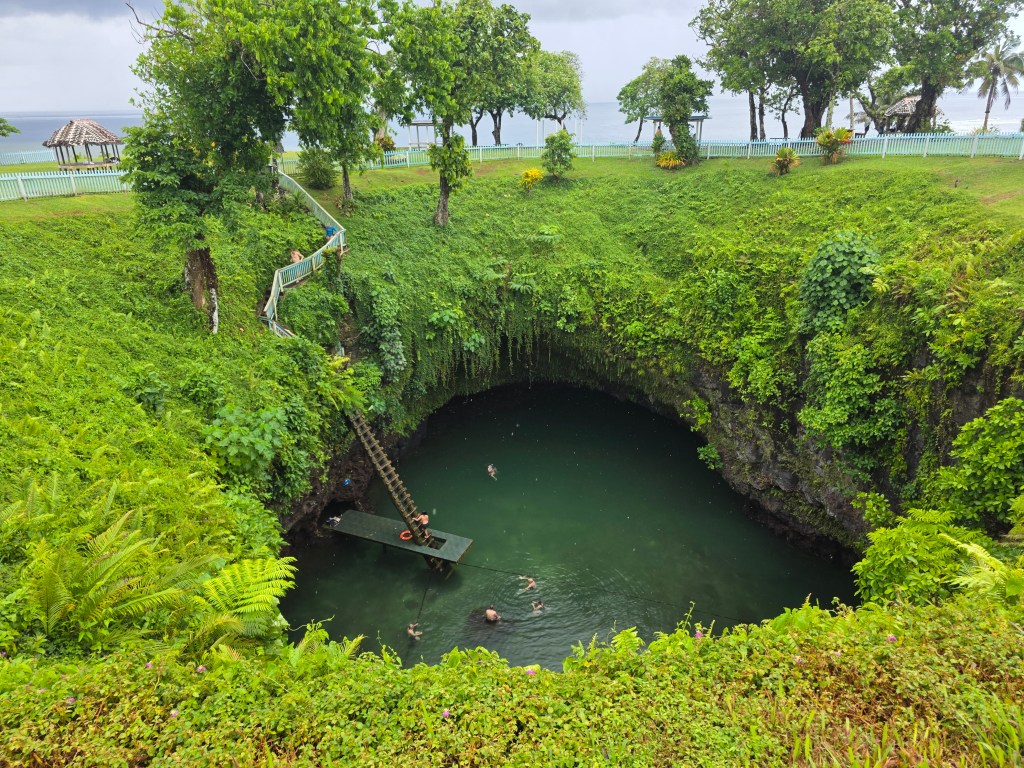
The surrounding area is dramatic cliff seascapes. There is a small convenience store, but be warned, the prices are higher than most Samoan stores.
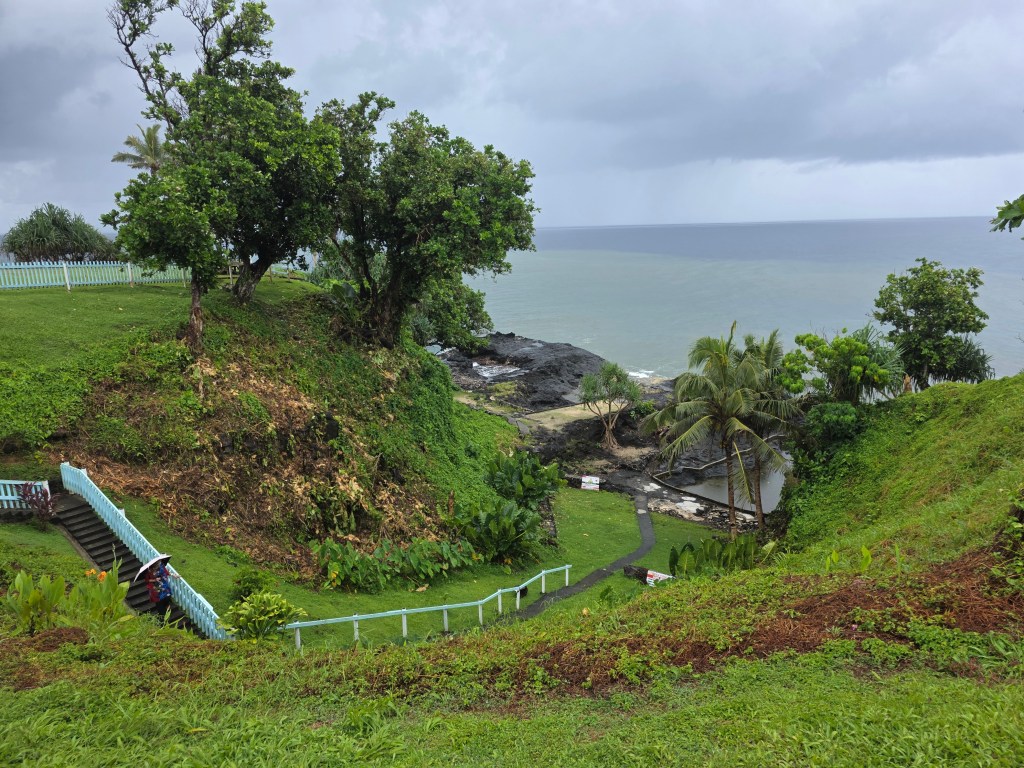
Sinalei Reef Resort was our tour’s stop for lunch. Their claim to fame is that this is where King Charles stayed in 2024 for the Commonwealth Heads of Government meetings. It is a nice location with some snorkelling available, but the fish and coral were sparse. There was more rain after a brief respite.
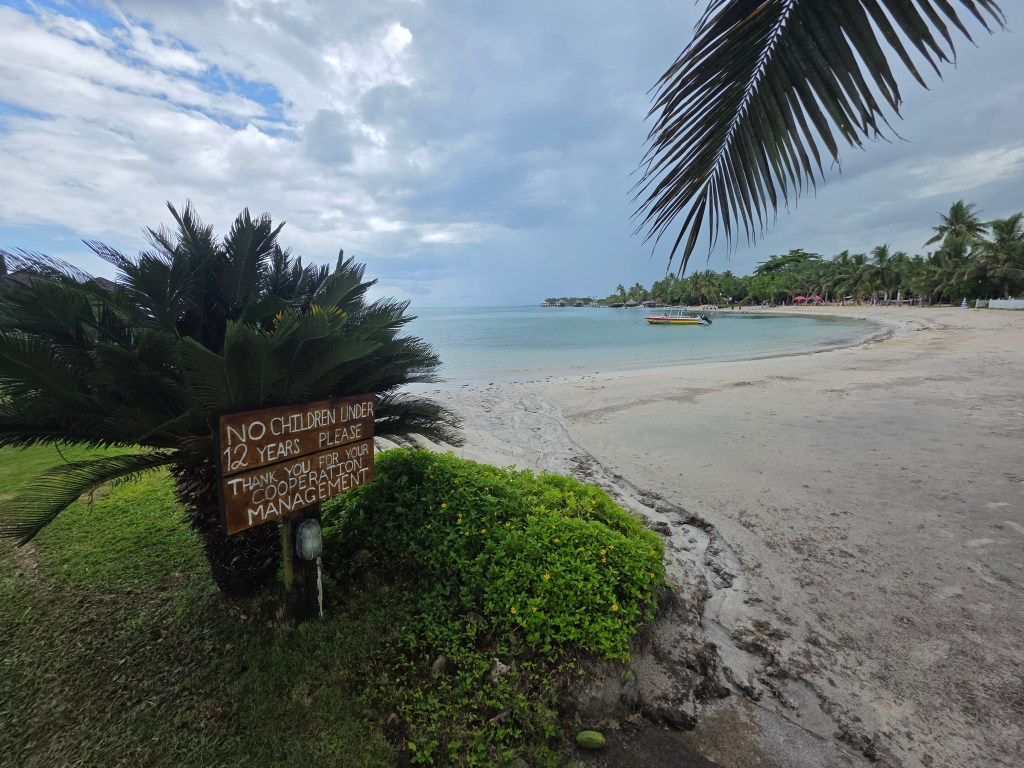
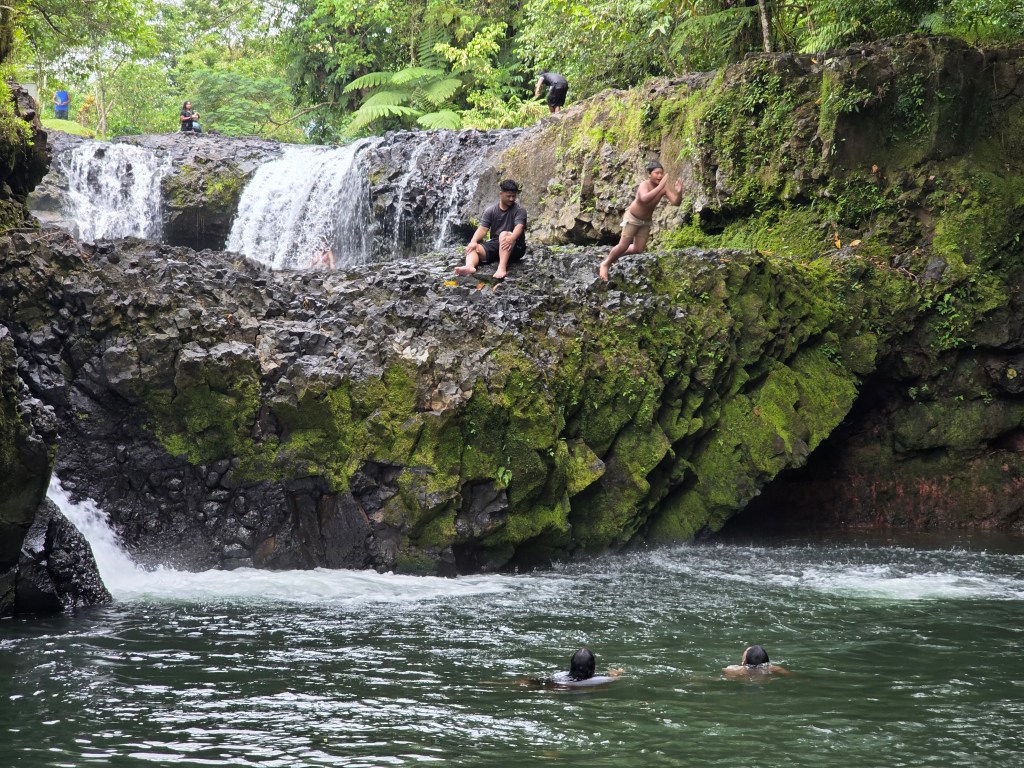
From here, we headed to more waterfalls. Sadly, we didn’t go to the Giant Clam Sanctuary, which was on this side of the island. We stopped by Togitogiga Waterfall, which is maintained by the government since it is on the nature reserve land. The joke was that this was the only place today without an open toilet because the government doesn’t work on the weekend.

Again, there was swimming in the falls, but what I liked was the huts with barbecue spots for families to picnic at.
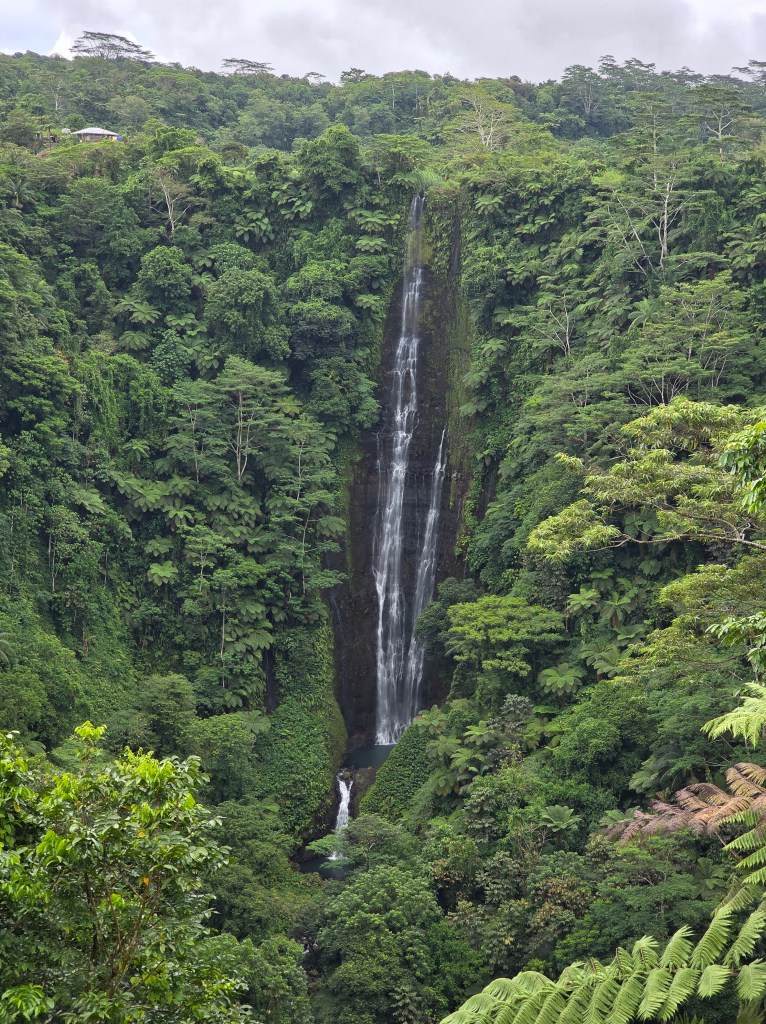
We then headed up to Papapapaitai Falls, which are the tallest falls on the island. This was a viewpoint only, but I would imagine there is a hike leading to them somewhere. The road that these falls are on and the shortest way across the island has only been paved for 1 year. It was paved for King Charles’ visit and is still receiving its finishing touches.
Our last tourist spot was also the Bah’ai House of Worship and its well-maintained grounds.
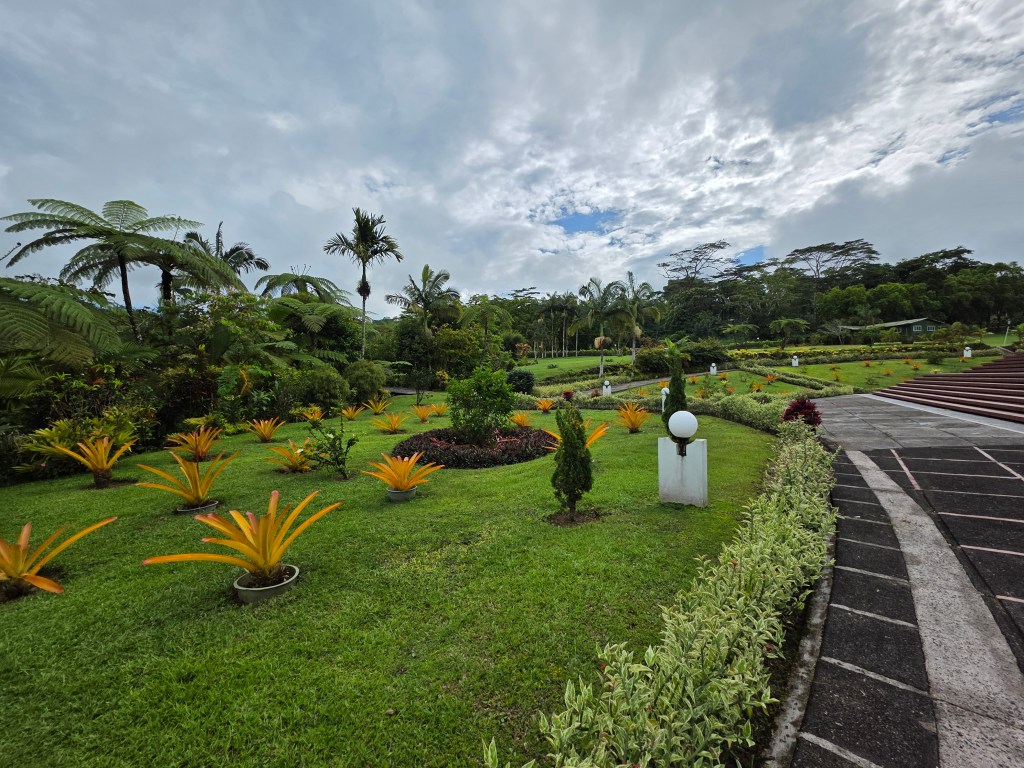
I must admit I loved the flora that I saw around the island and took many photos of flowers and leaves.
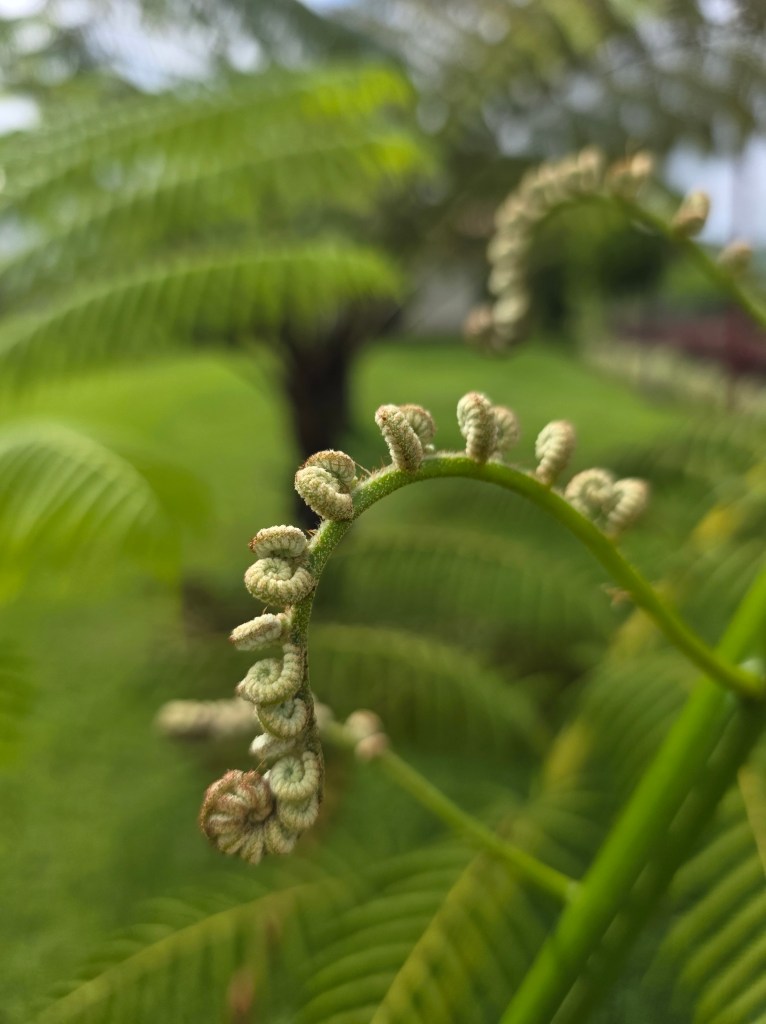
There are several other sites, falls, beaches, and even a turtle sanctuary that could be visited. I guess I need to come back again and finish seeing the sights.
Pago Pago, American Samoa
American Samoa is similar to Samoa, but the American influence has led to subtle differences between the islands. Pago Pago is the capital of AS, but it has only 3.6k people. That’s only 16% of the 64K population of American Samoa. It is small, and there are fewer facilities on the island.
Just like in Samoa, there are gravesites everywhere. Some in front of houses, beside homes, at the beach, in church yards, and even inside some homes, according to a local. He claims that others will not move into a home if someone has been buried there, not of their family, so abandoned homes probably have someone’s grandpa in the floor. On one hand, it is refreshing that death is so open and part of daily living, but on the other, it creeps my North American sensibilities to see kids playing on the graves like they are playground equipment.
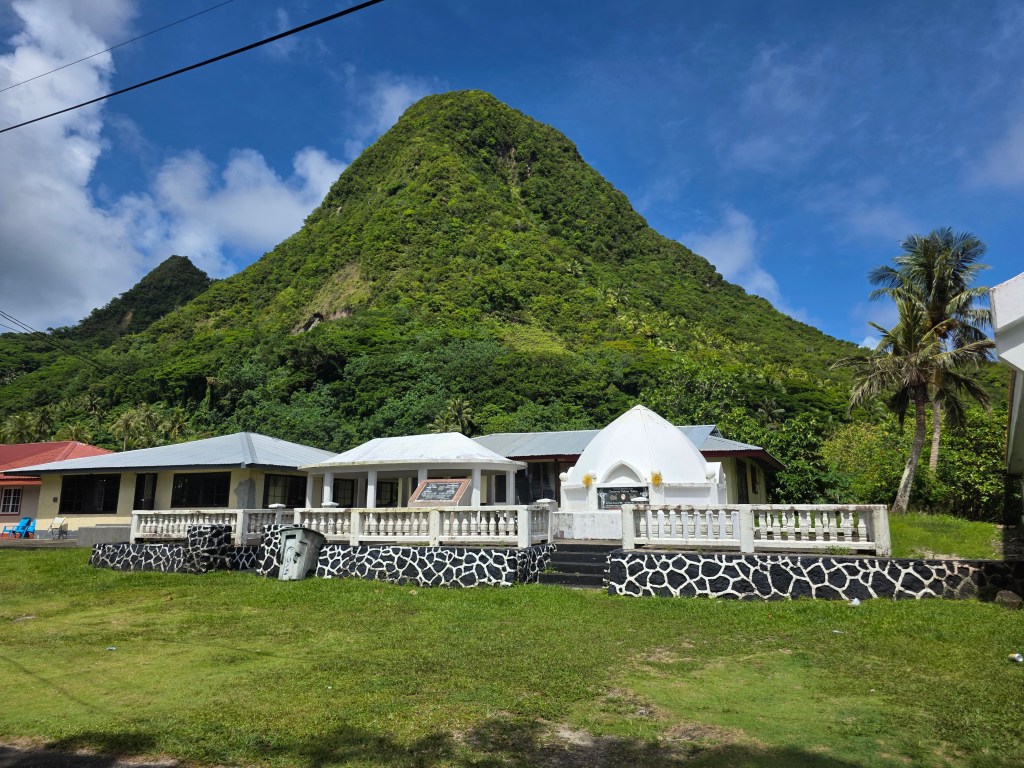
The yards are not as well-maintained here, with less shrubbery and floral landscaping, as in Samoa. The people are just as nice, and people waving from their passing cars and even some offering rides happen frequently. This island has more dramatic landscaping and a National Park that maintains hiking trails.

The people here also greeted us with dancers as we arrived and again when we left. There was even a fire dance show on the first night, too, on the pier from a local male dance academy. They were welcoming and happy to have us come in for multiple days right before Christmas to make a little holiday money.
The easiest tour of the island is not pre-booked. I walked off the ship, and at the port exit, there were a couple of wooden bench seat buses with people holding up signs for a 3-hour tour for $20.

There were also taxis there with absurd charges of $15 per person per hour. But for 3 hours, the bus was good enough. I hopped on the Superman bus with Junior at the wheel. Some people (complainers) thought the seats were too hard, so if you have a delicate fanny, you need to bring a pillow to sit on. My toosh has enough padding that I was fine.
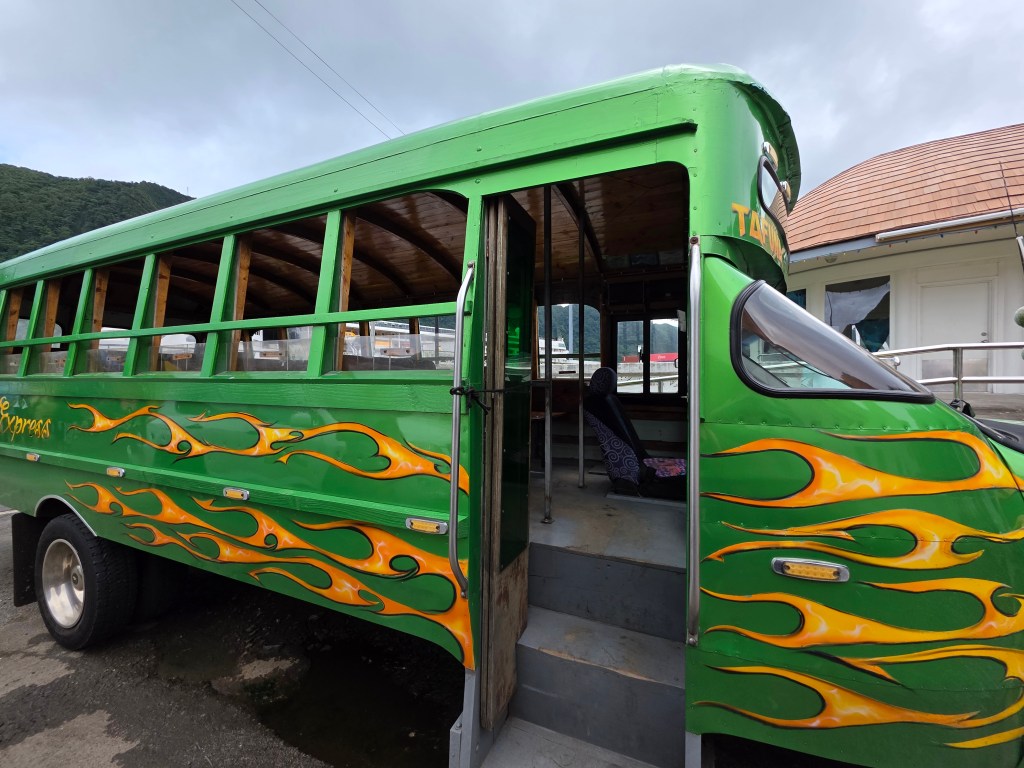
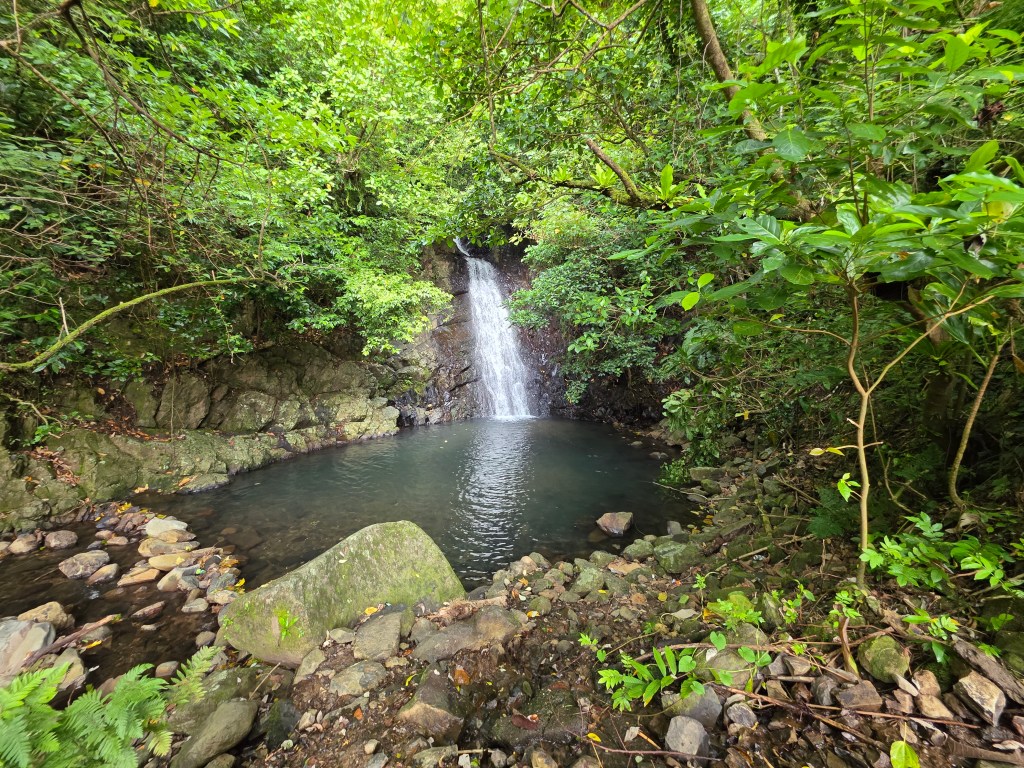
With the wind coming in through the windows to keep us cool, we went to Fagaalu Stream and Falls. It was a little strange to go through a construction area, but the falls were nice, and if I came back, I could go swim in the pool there.
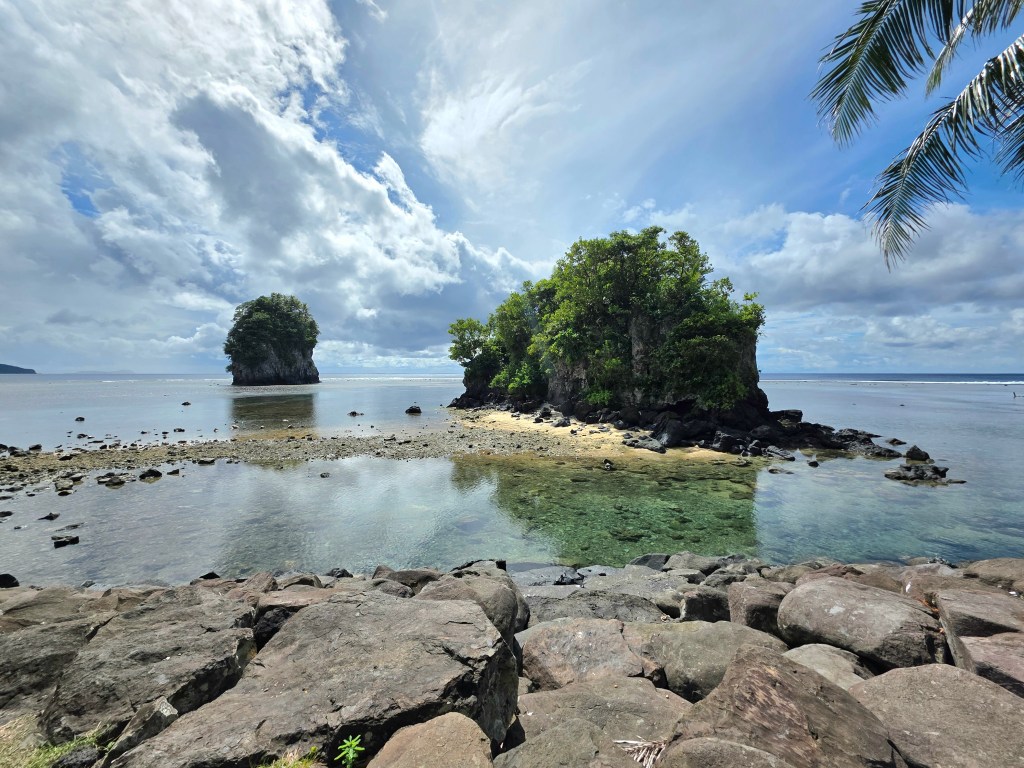
From the falls, we drove out to Fatu Rock on the side of the road. That’s another thing, you can’t get lost because there is only one road going east to west. No road circles the Island, so everything is an in and out.
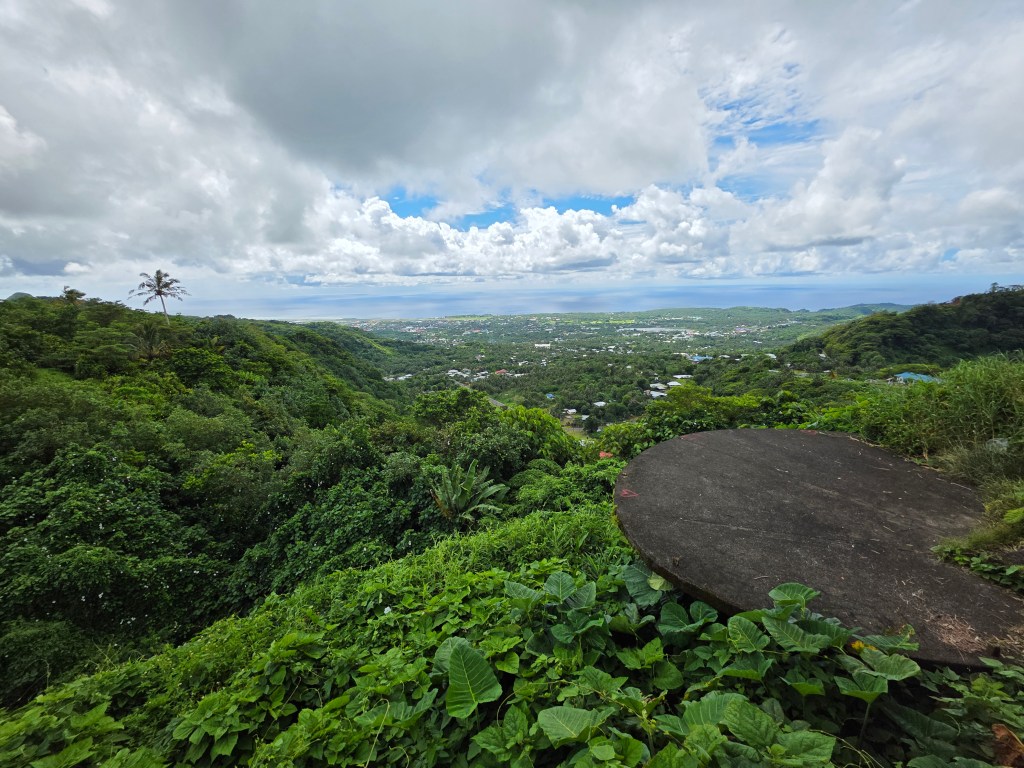
To get a better view of the “city”, we went up a mountain to a lookout near Maria le Tina Church.
There is a legend of a shark and a turtle. On another island, there was an old woman and her granddaughter who were turned out of their village for being a burden. They decided to jump into the ocean to let the gods decide their fate, and were transformed into a shark and a turtle. They swam from island to island until they reached here, where they transformed back into humans, and the villagers welcomed them to stay. They were thankful, but after so long as a shark and a turtle, they missed the water and told the villagers that they would go back to the water, but would make that area home. There is a song that can be sung, and they will return. We went to the lookout point of this legend.
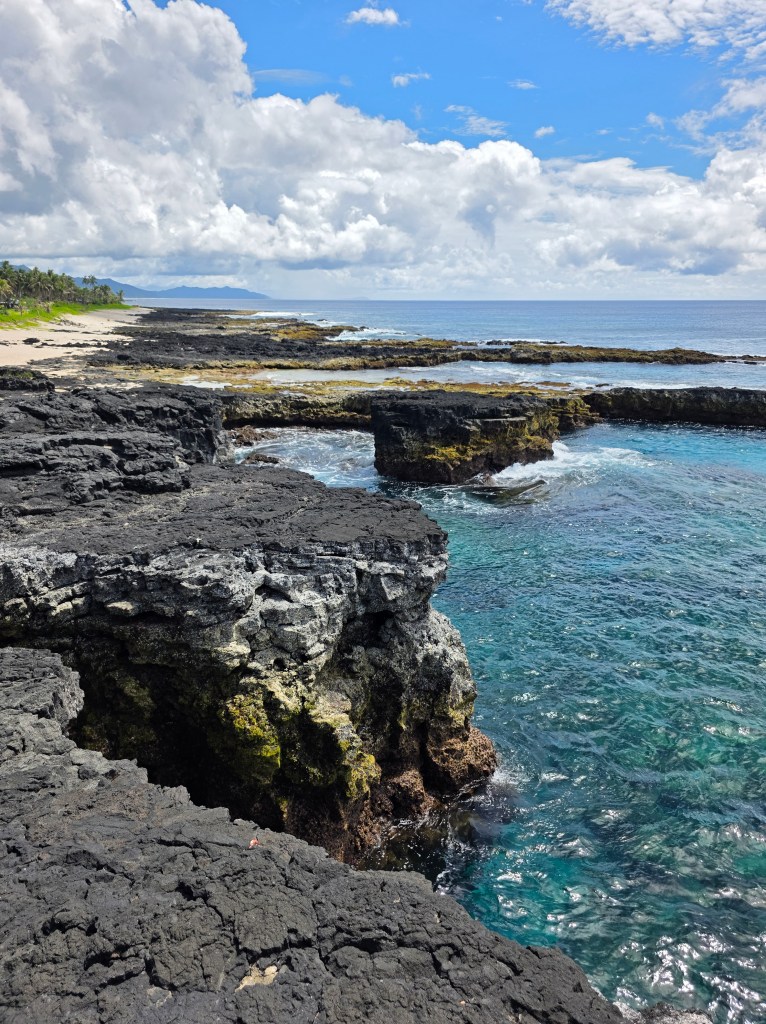
From there, we returned on the same road and went further east to Camel Rock, another amazing rock formation.
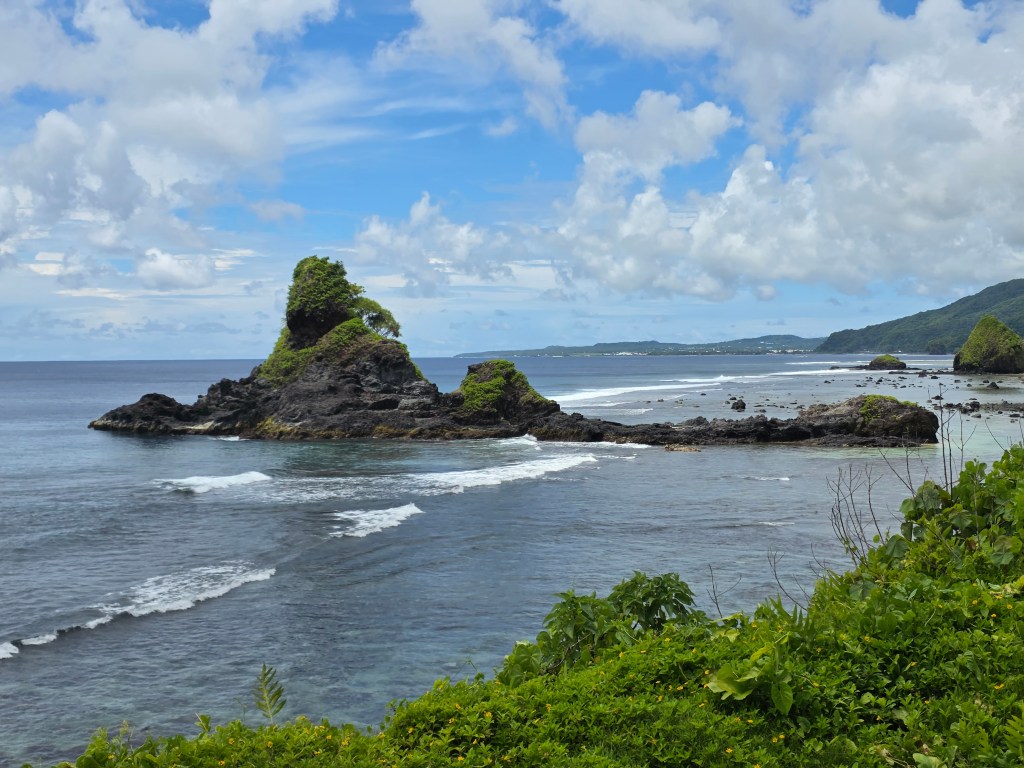
Past Camel Rock is Tia’s Barefoot Lodge, which has wonderful reviews for food and drinks. There is also a beach good for snorkelling. Several of our residents attended a dinner there where they had to weave their own plates from leaves, and dinner was cooked in the ground covered in clay. At $80 I passed.
Slightly further down is Two Dollar Beach, which ironically costs $5 to use.
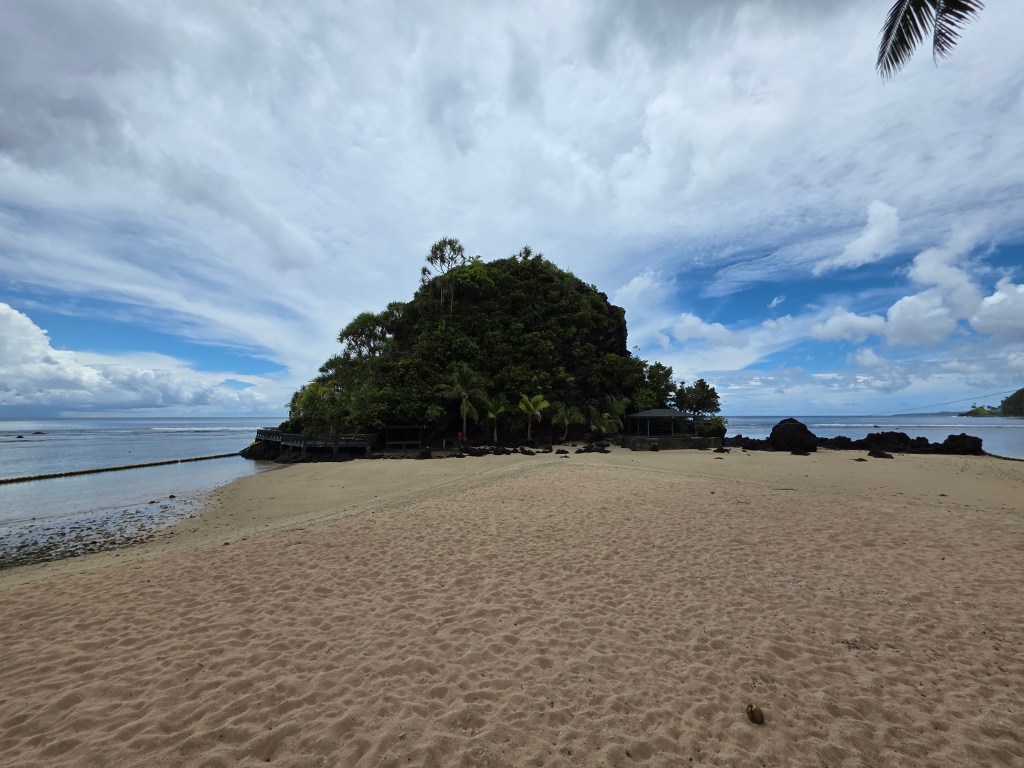
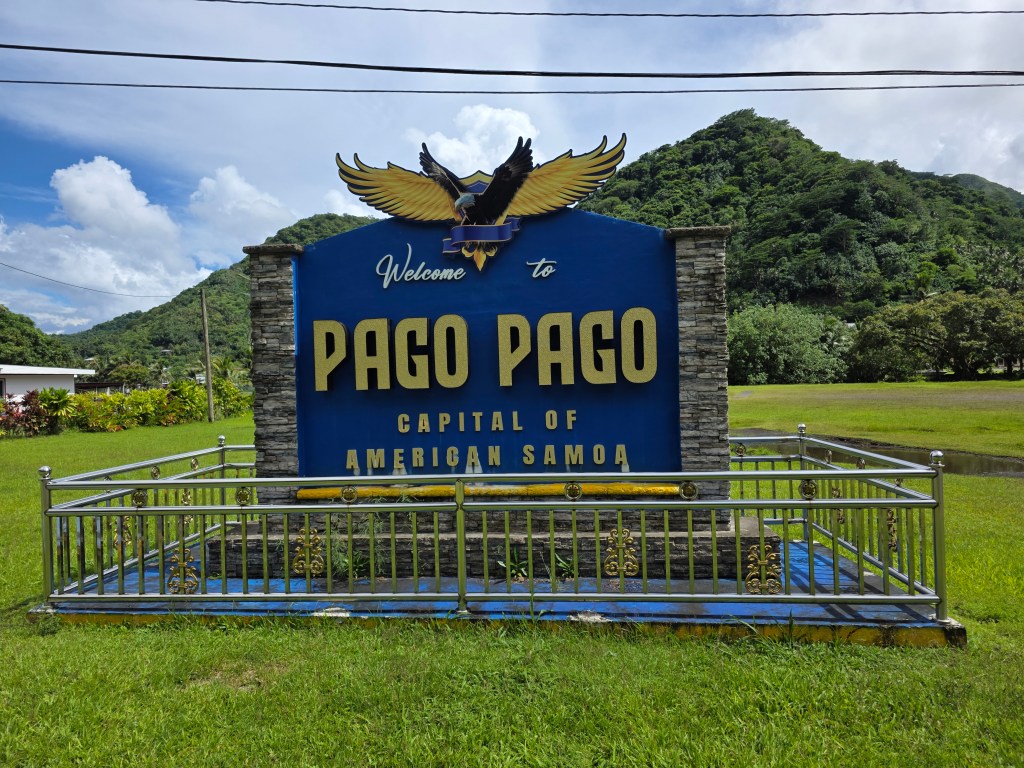
A 20-minute walk from the port brought us to the Pago Pago sign and the National Park Office. There is also a market and several shops in town.
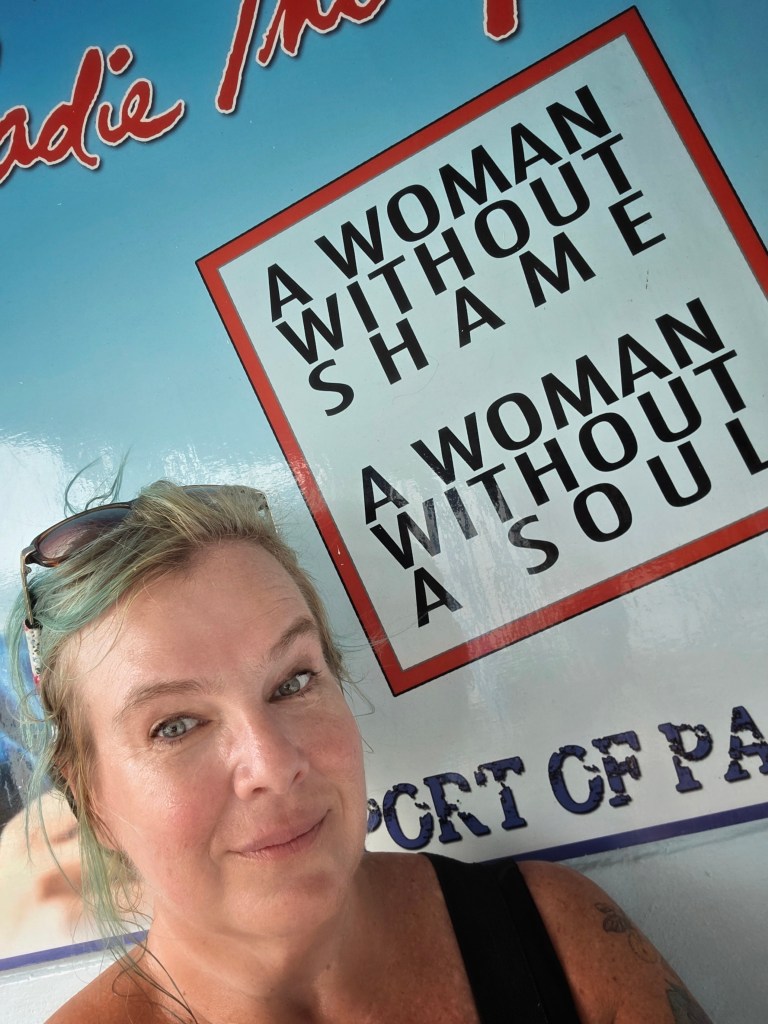
A goal was to go into the National Park, and I was hoping to take a bus to the furthest town that is in the park, but alas, the bus doesn’t go there anymore, so it’s a hike over the mountain or take a taxi. So taxi it was. $40 for two of us, but the cab would wait there and take us back. Now I did find out later that a group of 8 people convinced a bus to bring them there and back for about the same price, but they stopped at a few more spots for pictures.
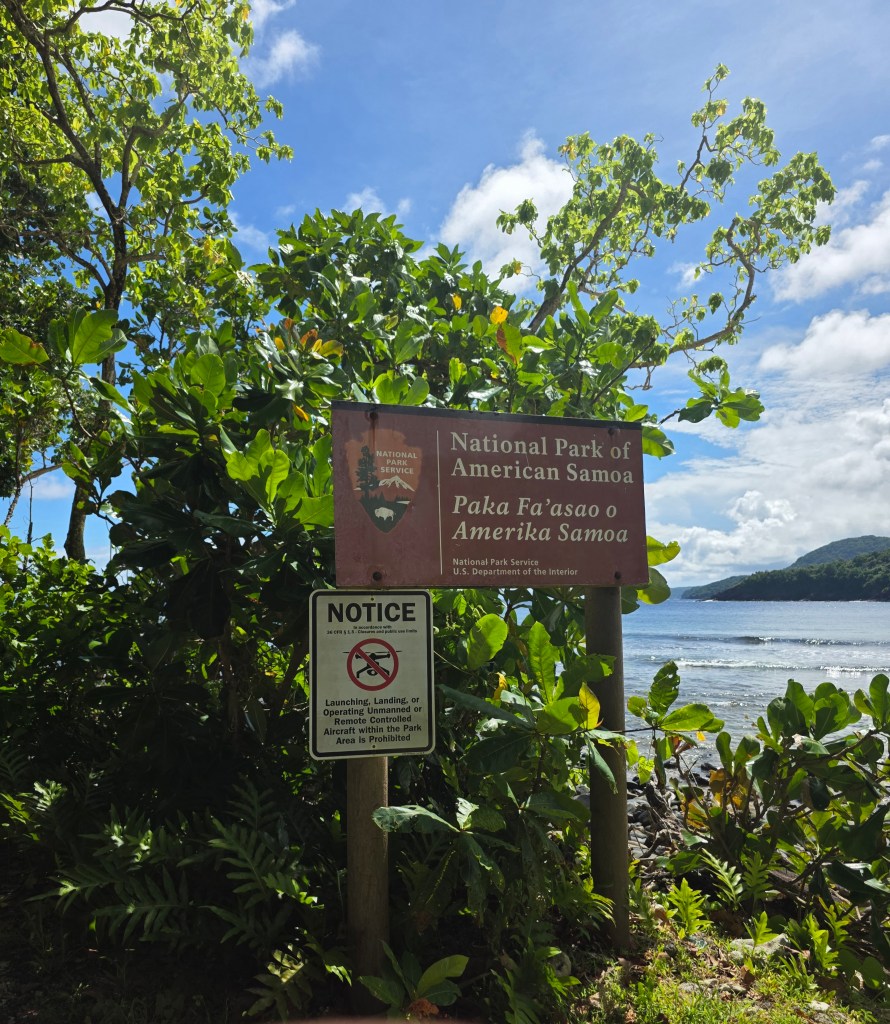
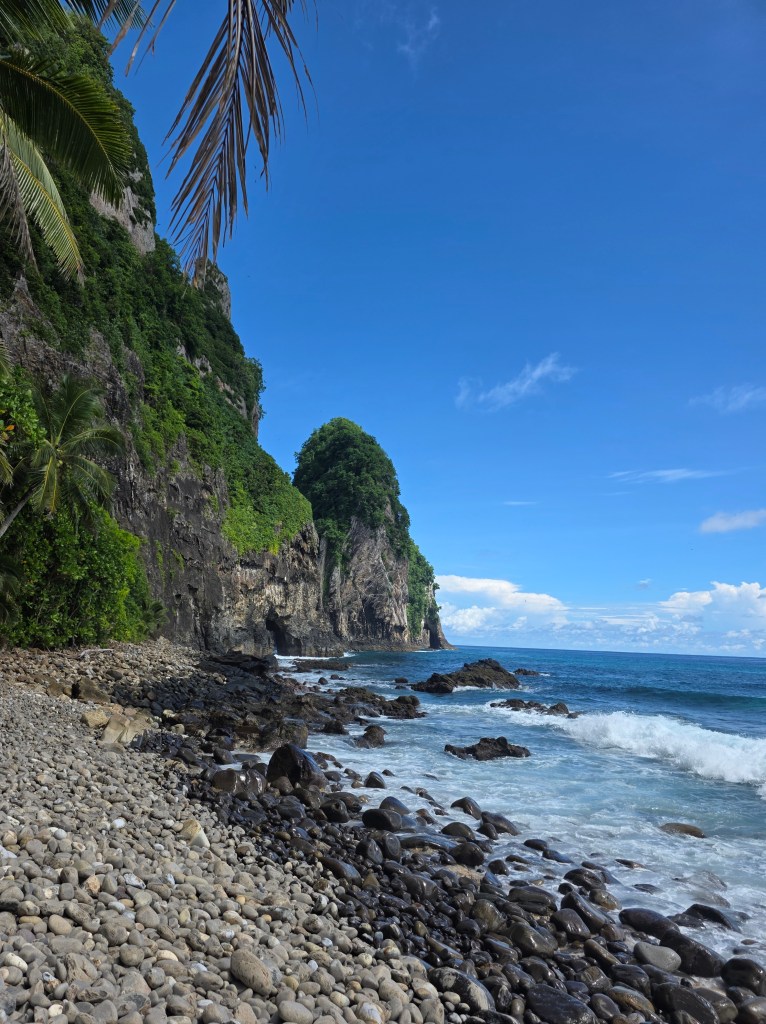
Vatia is a small village at the end of the island. There is a short walk to the Pola Island overlook and rocky beaches.
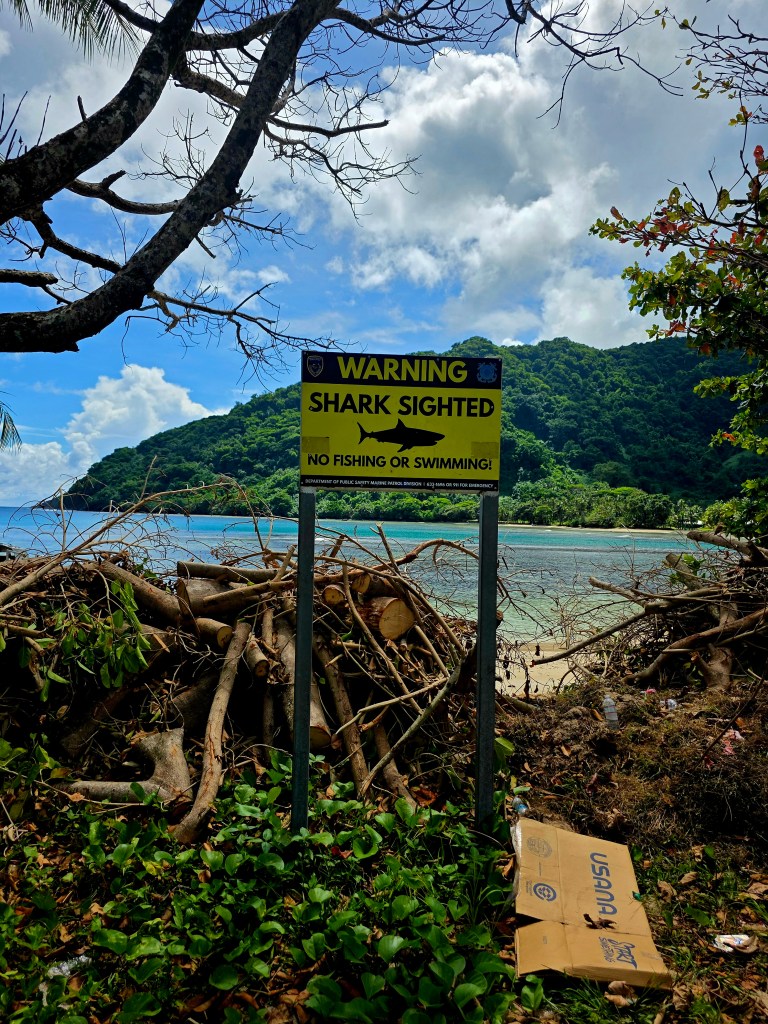
A cute little place where the dogs were loudly concerned that strangers were there. I had hoped to jump in the water there as it was supposed to be great for snorkelling, but the shark warning sign kept me out of the water.
In Tafuna, the largest town on the island, there is a Cost-U-Less, which is similar to Costco. They even had Kirkland brand toilet paper. Junior and his bus agreed to take ship people here and back again for $4 round-trip each. We filled his bus and another with people and goods.
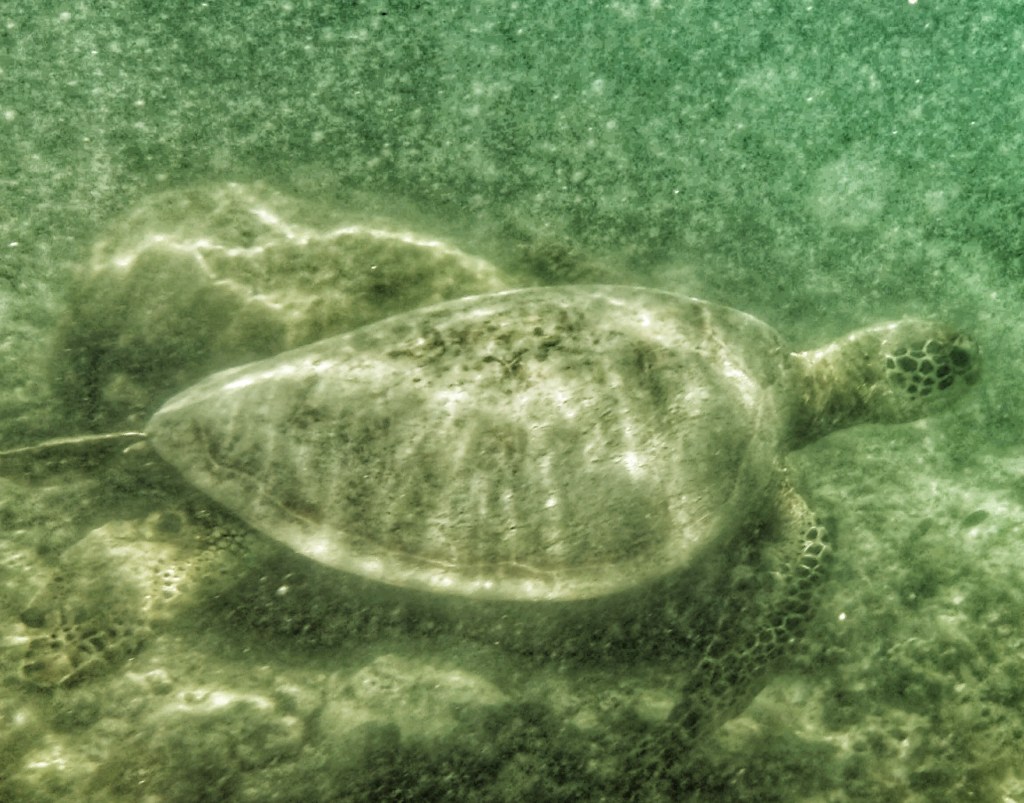
A ten-minute walk from the port was Utulei Park, where there was free snorkelling access. It was a little murky from the rains the previous night, but it still had lots of fish and coral, and even a couple of turtles.

 Chasing Summer -
Leave a comment