August 31-Sept.3
Beijing is the capital of China and has been in existence for 3000 years. Its history is deep and greatly connected to the leaders of China. I was in Beijing in the year 2000, so 25 years ago. As much as China has changed in advance, the history of Beijing remains intact.
Two very important apps that should be downloaded if you’re planning a trip to China are Alipay and Didi. Alipay is used to pay for pretty much anything that you want to purchase in China. Didi is the Chinese ride share app that can be linked to Alipay. Transportation and food in China are both relatively cheap and easy.
A group of 15 residents from the boat decided to do a 10-day overland trip through China. Residents from Canada and the United States can do a 250-hour transit visa in China. This meant we needed to fly in from South Korea and fly out to Japan.
Interestingly enough, while we were in Beijing, a military parade celebrating held 80 years of communism what’s taking place. There have only been three such parades in the 80-year history, There was a historical moment, It also meant that several locations were closed down while we were there.
Great Wall of China & Ming Tombs
On my first full day in Beijing, Sept 1, the group of us rented a bus and a driver and went to the Mutianyu section of the Great Wall of China. We left the city at 6:00 AM to arrive at the wall before other groups, and the heat could begin. It was an amazingly smart decision.
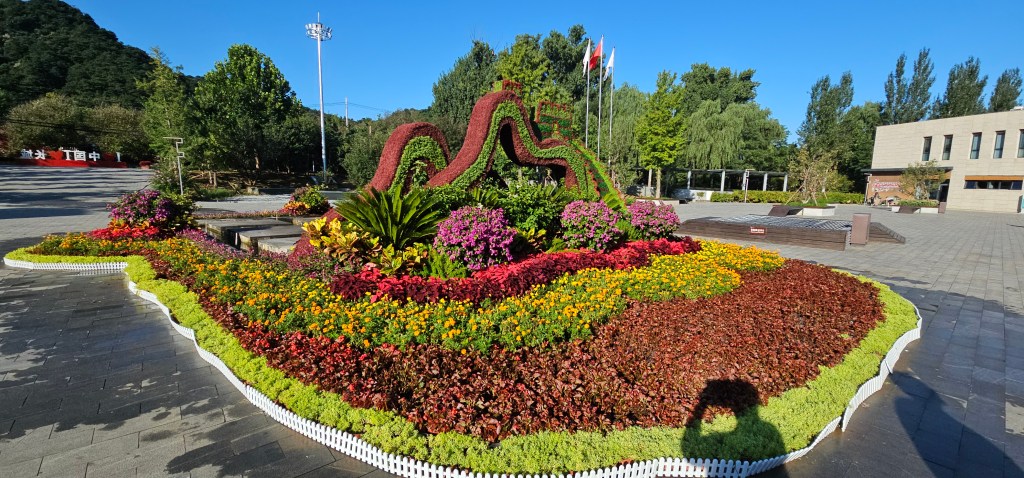
The last time I went to the Great Wall, my friend and I climbed up and then walked to the wall. It was exhausting and a hard workout. This time, I purchased a gondola ride up and a toboggan ride down from the Mutianyu Great Wall for 140 yuan. I also needed to show my passport at the ticket office.
On the ride up, I was able to see the mountainous countryside and the Great Wall extending across it. It was a gorgeous setting.
At the top, I walked several hundred meters in both directions to reach the closest towers and take pictures of the wall without anyone in them.
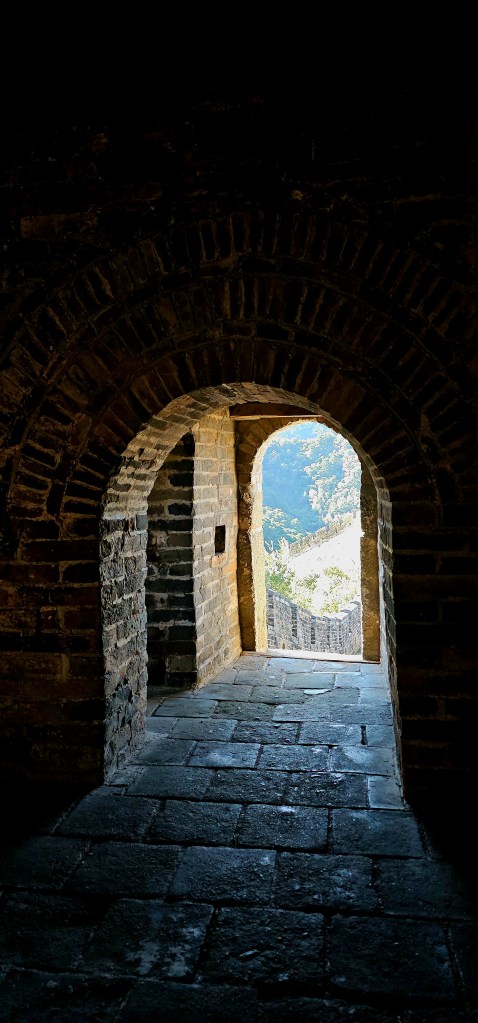
To go down, I took a toboggan. To do this, one needs to be younger than 60 years. The girl in front of me kept slowing down and stopping to take pictures even though we weren’t supposed to, and it forced me to go very slow as well. So slow, I actually stopped at one point and needed to use my hand to get my sled moving again.
At the base, there was a shuttle to take us through the village to the ticketing area of the Great Wall. A ticket to go to the Great Wall is 40 yuan. Here there were many shops and restaurants. The shuttle, gondola up, slide down, and wall ticket costs 200 yuan.
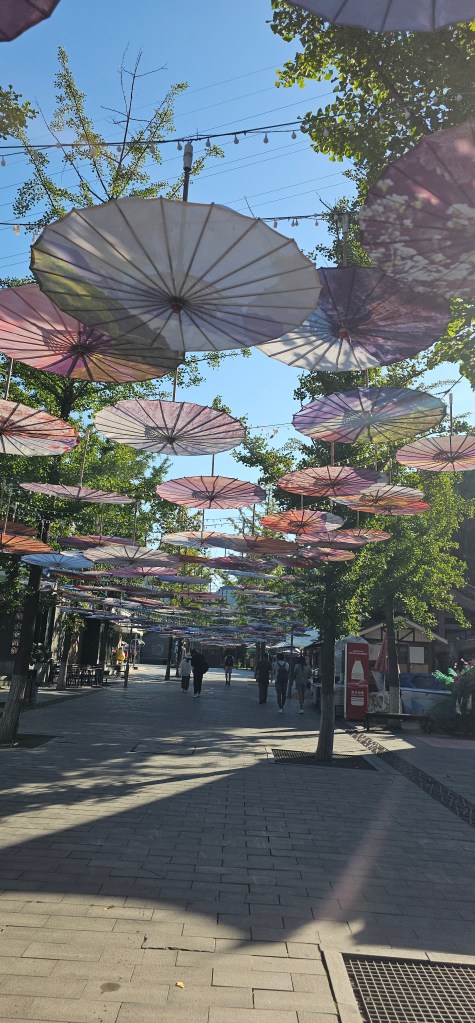
Scott, Sherri, and I were the first ones down to visit the shops and have a small snack while we waited for everyone else, which was the second-best decision of the day. (No one else stopped to eat, and there was no lunch stop.)There were no cafes, so our snack was dumplings and a beer, and we were the only ones not getting hangry later on.
After finishing at the wall, her group headed towards the Ming tombs. First, we arrived at Chang Ling tombs. We hadn’t realized that the tombs were four separate locations, and we actually wanted to go to the Ding Ling tombs. The Chang Ling tomb costs 40 yuan. The area was quickly explored, and no tombs were discovered.

Realizing our mistake, we asked the driver if we could have one more hour to go to the Ding Ling tombs. Luckily, he was able to accommodate us, and we went the 7 minutes away to the only excavated palace tombs. The Ding Ling Tomb costs 60 yuan. I should mention that almost all of the sites are free or half price for people over 60 years old; they just need to show their passports.
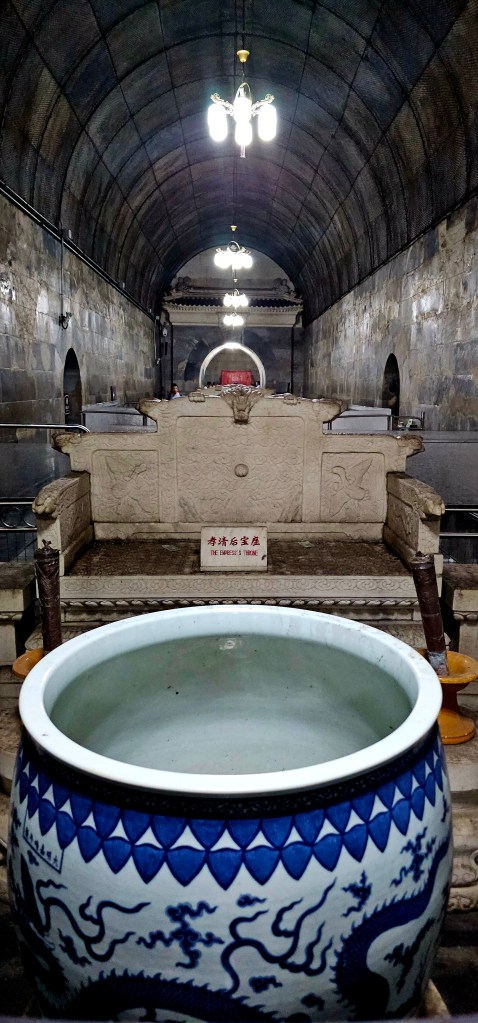
There was another section of the Great Wall in Ding Ling, and many tourists combine the tomb and wall together in this region. If I’m honest, the tombs are not that amazing, and only one really needed to be visited. Chang Ling Tomb would have sufficed.
Summer Palace
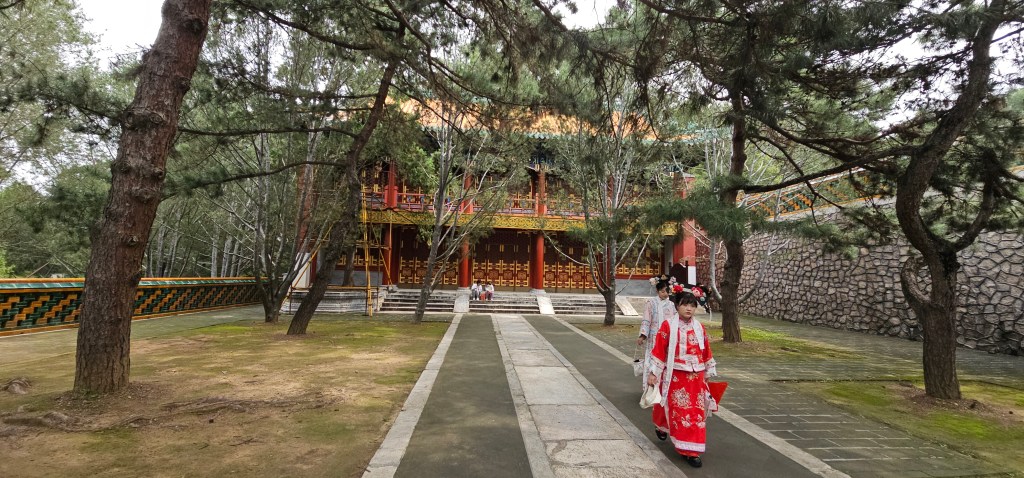
The next day, or day two, some of the residents were concerned because our hotel was part of the locked-down zone for the military parade. Our hotel informed us that at 6:00 PM that evening, we needed to be back in the hotel and would be under a lockdown until the next day, when the parade was finished. Several people decided to change hotels, but I was rooming with another person and had bought through a 3rd party, so it seemed too difficult to change.
Instead, Mary Ann and I headed out to the Summer Palace since the Forbidden Palace would be closed during our entire stay. Often, Beijing is known as the Forbidden City because this is where the Emperor would hold events. The Summer Palace was where the family would live during the Qing dynasty, and it is quite elaborate on its own.
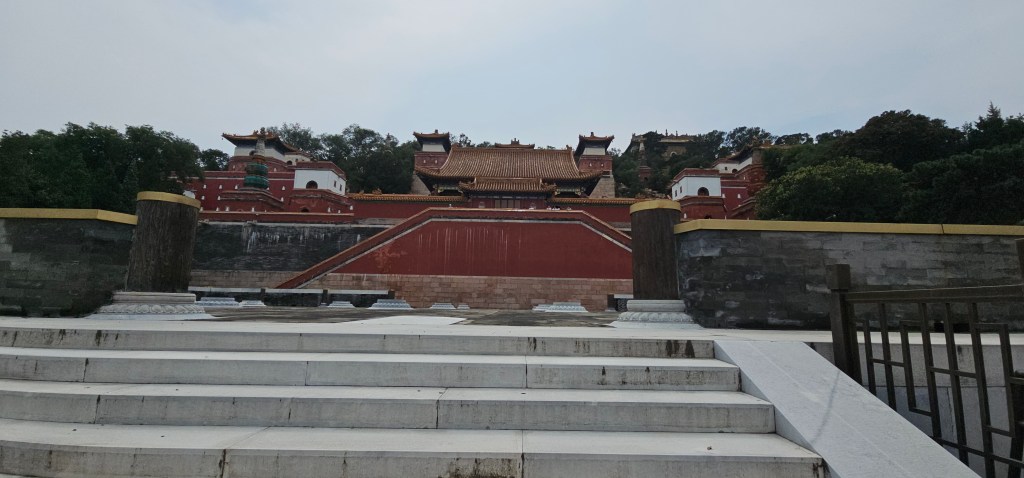
It took approximately one hour by subway to get there, and then we spent the rest of the day roaming around the political, residential, and park areas that used to comprise the emperor’s holiday home. There were a lot of stairs going up and down different areas, as well as a large lake. Longevity Hill rises up 60 meters, and Lake Kunming spreads over 2.2 square kilometers.
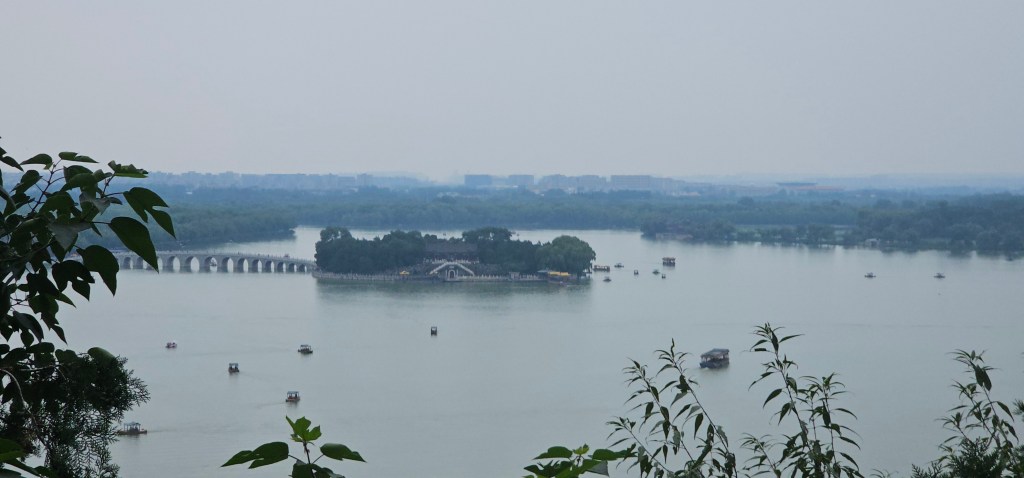
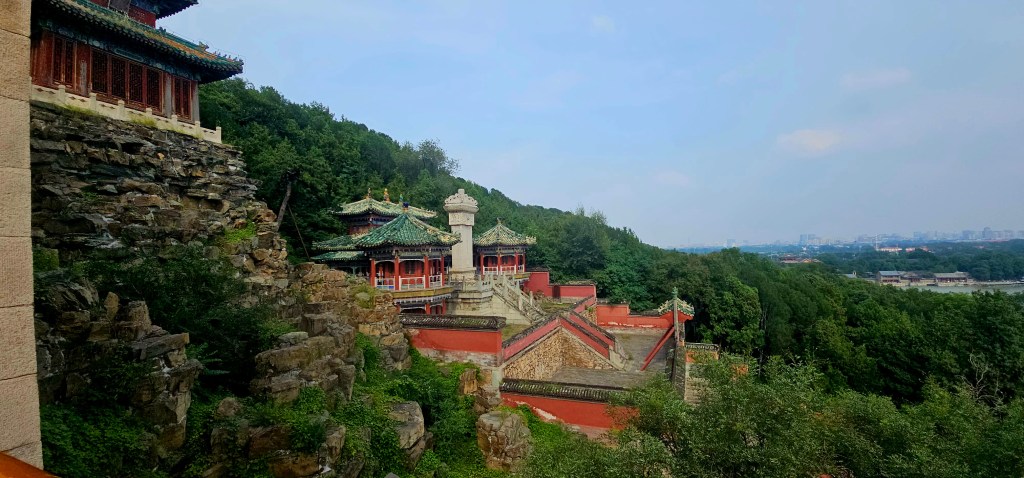
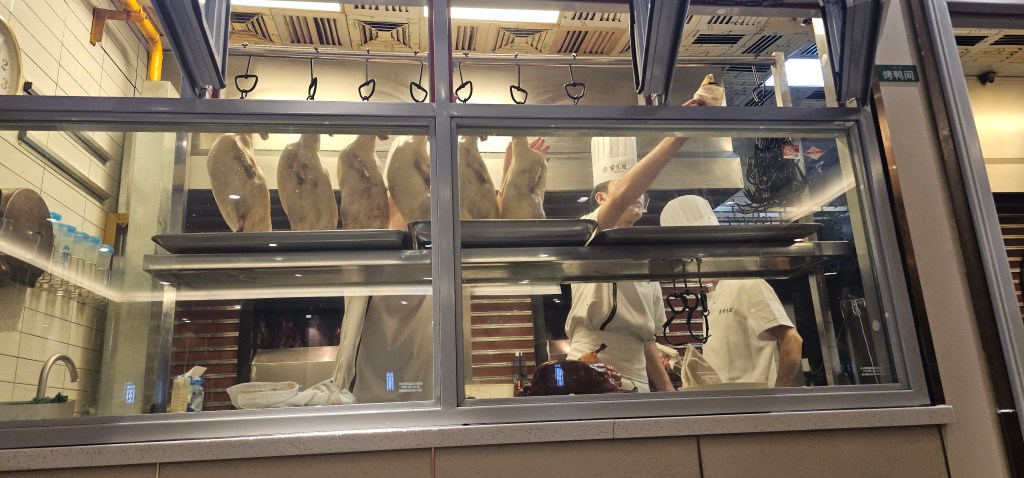
We made it back to our hotel area by 5:00 PM and heard that we would be able to visit restaurants near the hotel, so we went across the road and had a Peking duck experience.
Military Parade & Closed Temples
Because we were not allowed out of the hotel area, Darrell, one of the residents, convinced the hotel, and those of us who stayed, should get a free breakfast, and they agreed. So in the morning, I went to the breakfast area and sat by a window to see what was going on outside. Much to my surprise, a few people were out wandering around. We weren’t as locked in as we had feared.
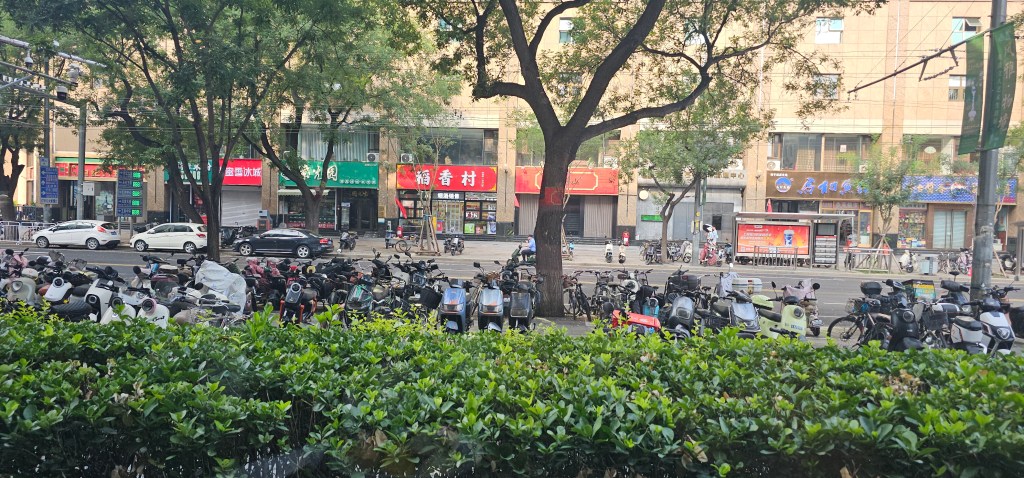
As the morning continued, more people arrived to stand at the corners in front of the hotel. I asked why everyone was coming, and I was told that there would be some airplane flybys. On TV, the parade could be seen going full swing with the leaders of China, North Korea, Russia, and Iran in attendance. All of the Chinese military might was being displayed.
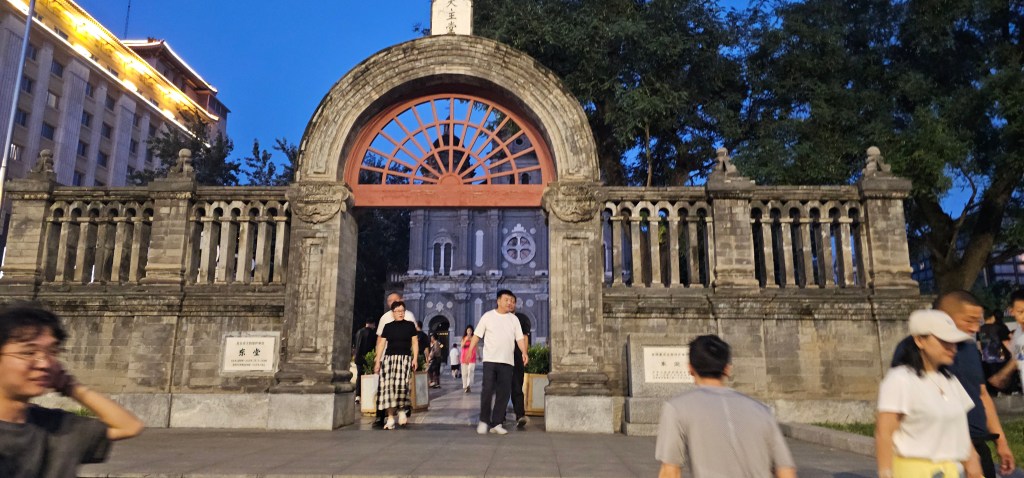
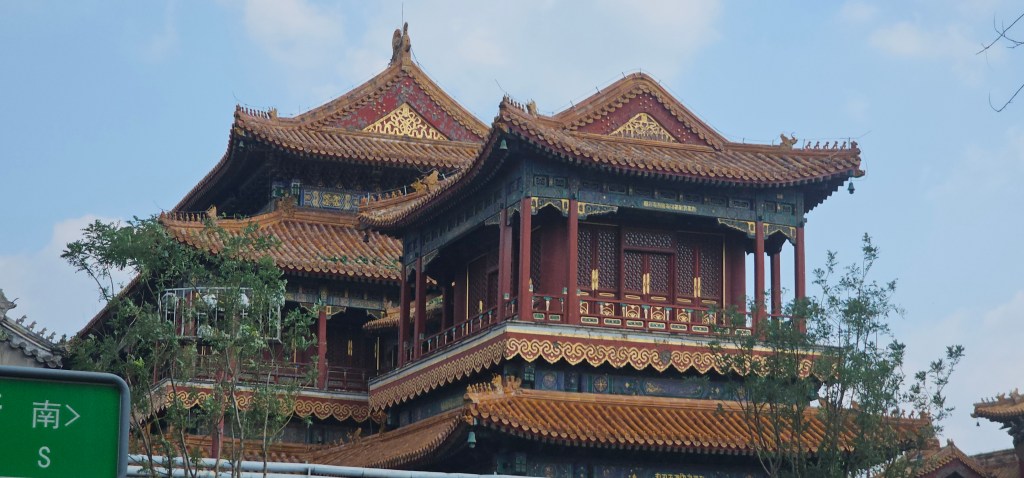
By early afternoon, the parade was finished, and the police blockades were being taken down. The smaller group of us still at the hotel decided to go to Lama Temple and the Temple of Confucius, even though they were closed due to the parade; we wanted to see them from the outside.
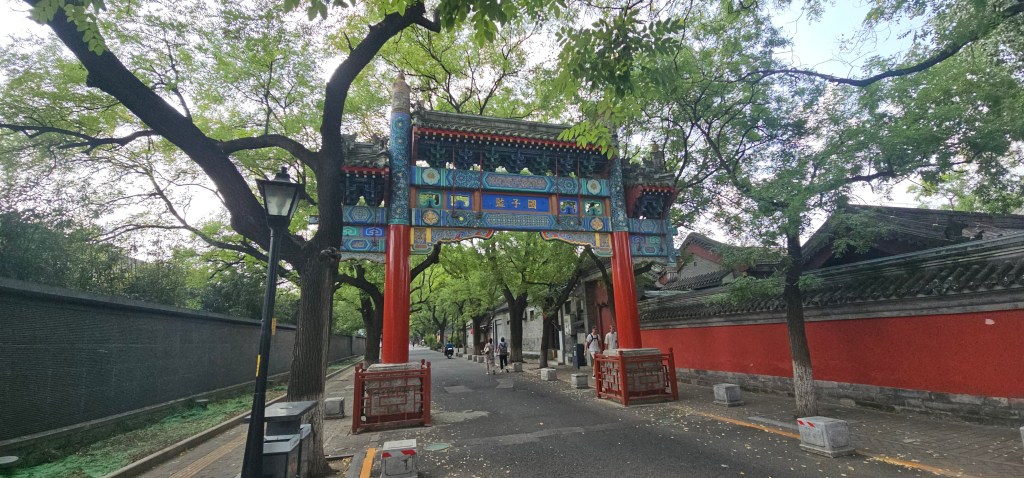
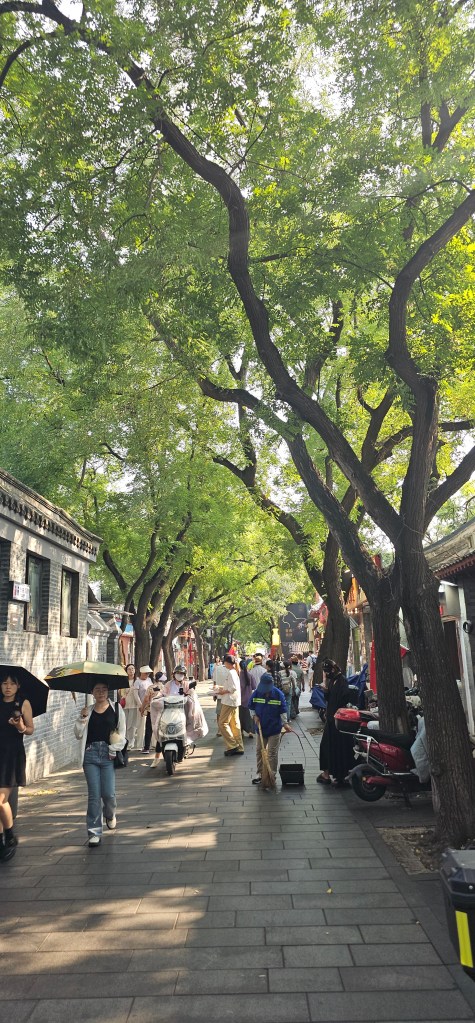
After wandering around for a while, I decided to break off and walk back toward the hotel by myself. Here, I wandered through a pedestrian/touristy area and picked up some treats.

Day four was making our way to Shanghai via train. It was about $130 for a bullet train ticket that would take 4 1/2 hours to get from Beijing to Shanghai. We left on the 10 am train.
 Chasing Summer -
Leave a comment