August 26-27th, 2025
One of Japan’s key ports in the south is Nagasaki. It is well known for its blend of Japanese, Chinese, and Dutch influences. Sadly, it is also best known as the second atomic bomb site.
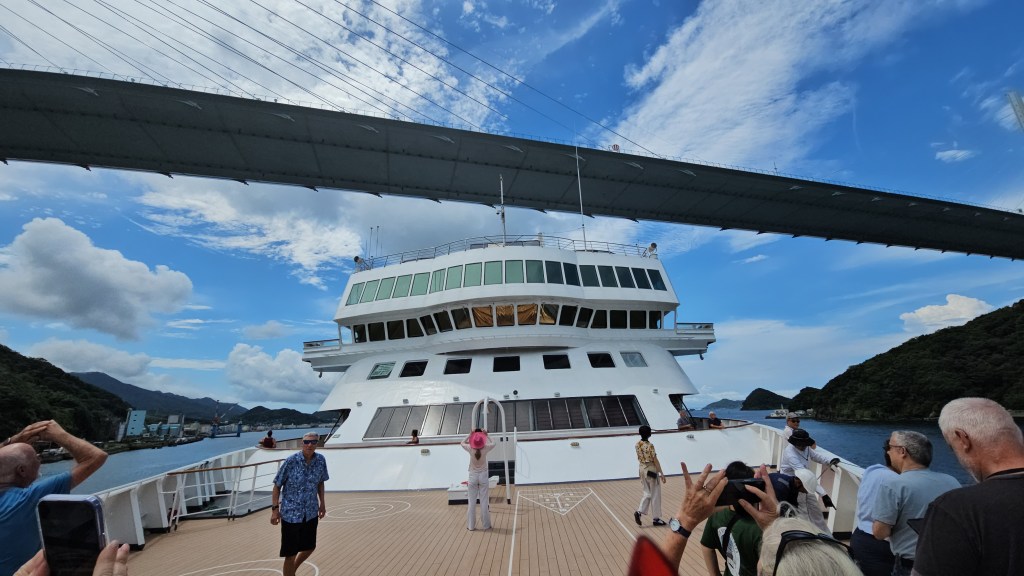
With all this rich history, there is plenty for the intrepid traveler to experience. There are basically 3 key tourism areas. The first is based on the atomic bomb and its aftermath. The second is religious or temple-based. Finally, there is the history of Western influence on the region.
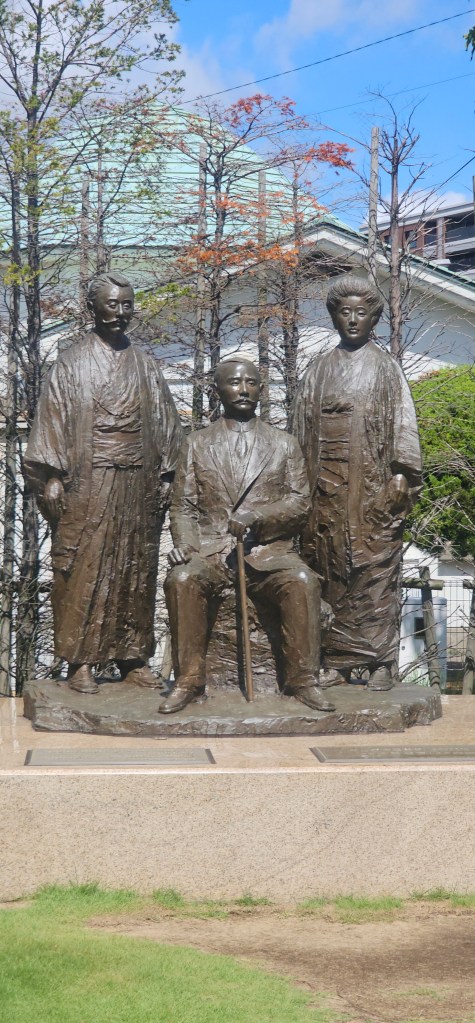
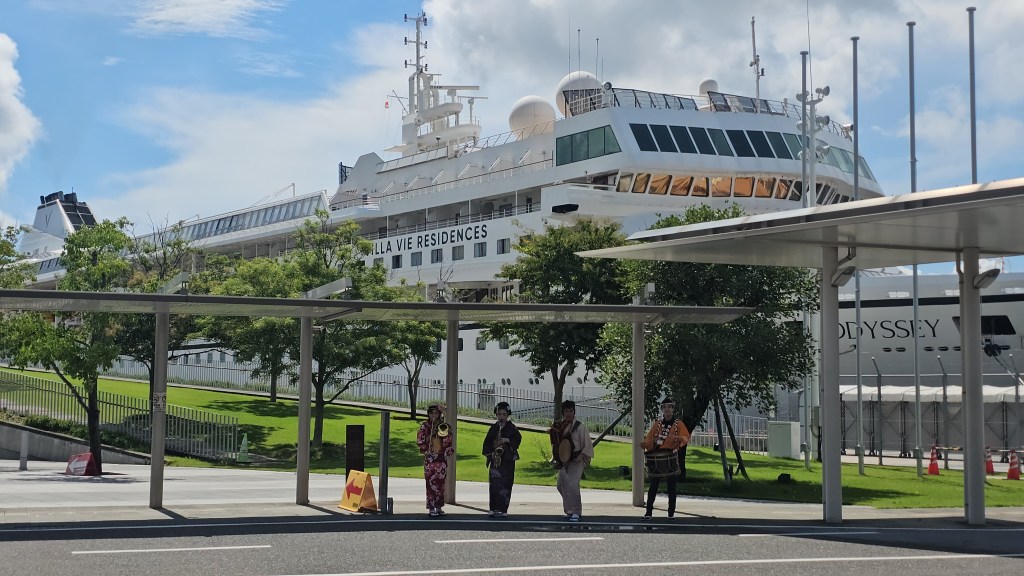
The Odyssey arrived at lunchtime, and passengers needed to clear immigration before we could disembark. So, Steve, Angela, and I ate our lunch and made our way off the boat, packed and ready to go. We decided to follow a history walking guide that I had found on Japan-guide.com. There was a small welcoming committee playing music for us as we left the immigration building.
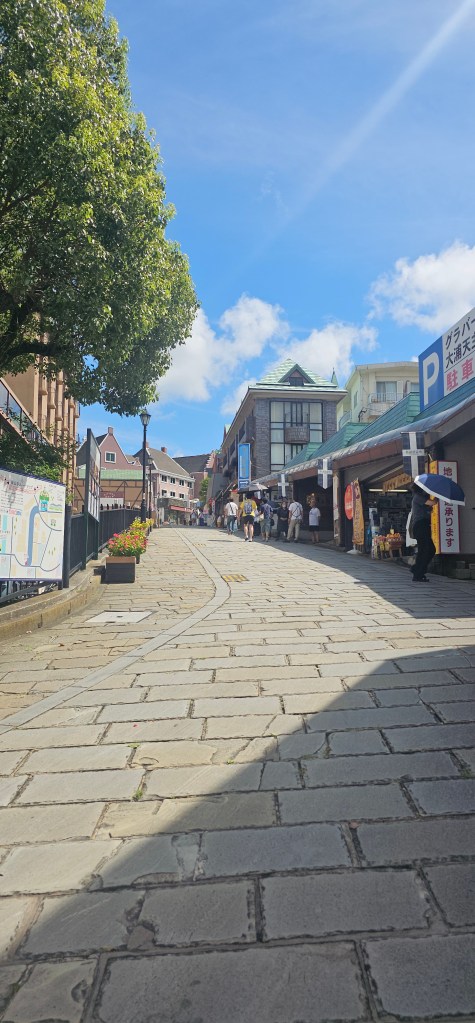
After clearing customs, we made our way across the street and began walking up a slope, or ramped street, towards Oura Church. Oura Church is Japan’s most famous Christian church and its oldest.
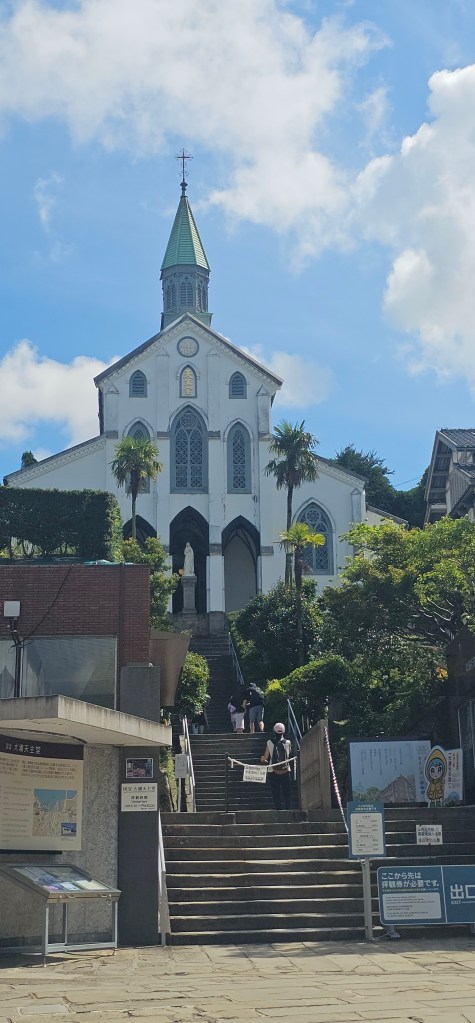
It is not a free entrance, and we decided not to go in. It is beside another attraction Glover Garden. Glover Garden is an open-air park exhibiting Western mansions and costs 660¥ to enter.
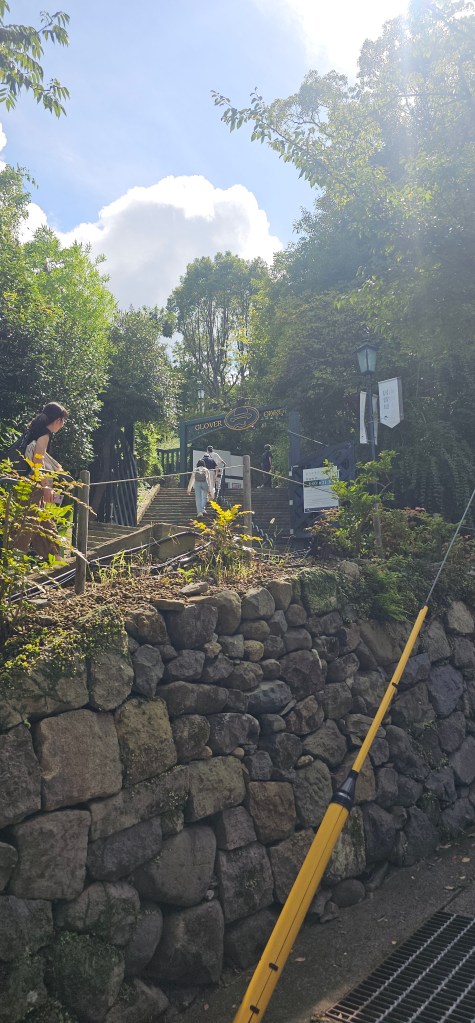
On the way up the slope, we passed by several duty-free shops, as well as a picture book museum.
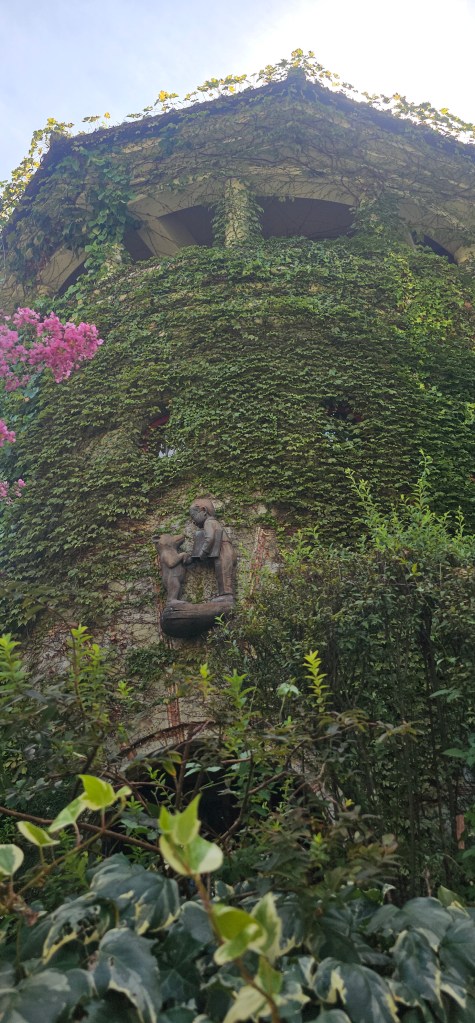
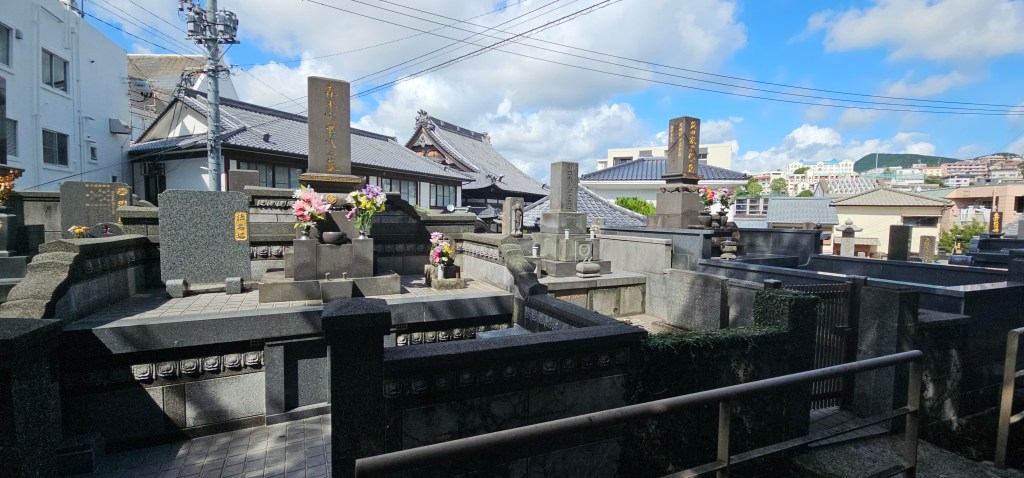
We detoured to the left around the church and passed a small graveyard towards the worship triangle, where a church, a temple, and a shrine all meet.
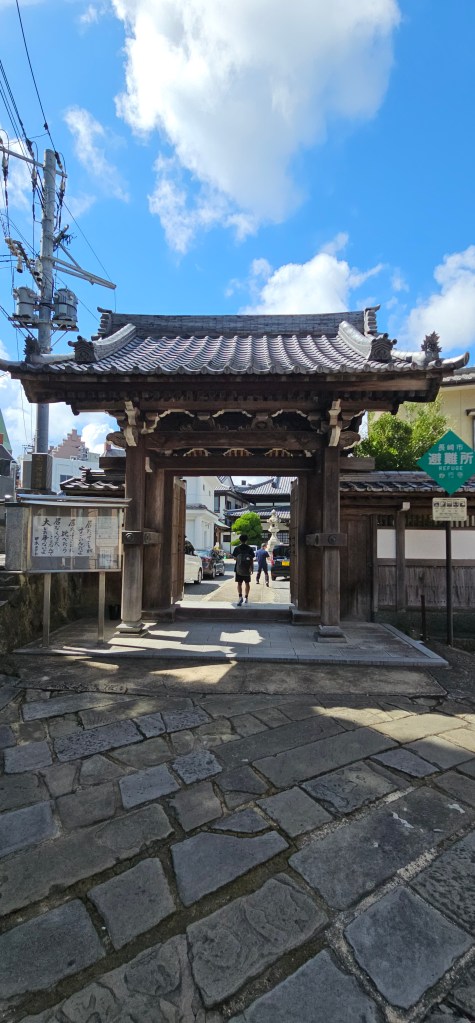
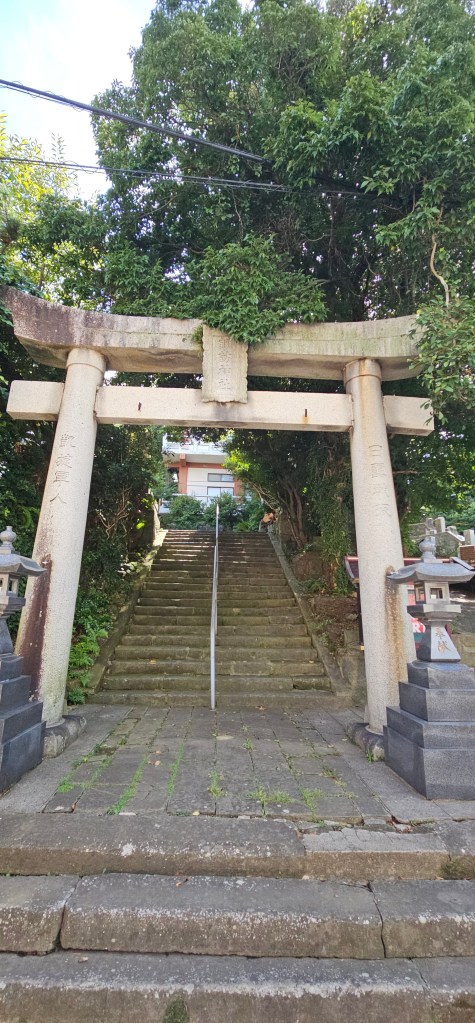
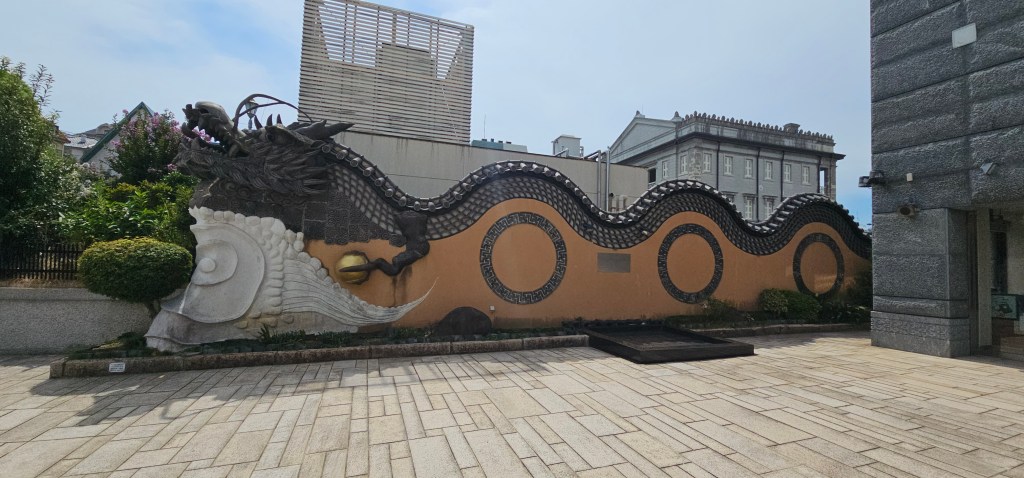
We walked another 10 to 15 minutes and came to Nagasaki Confucius Shrine. This is a shrine dedicated to Confucius and also has a small museum. The interior of the shrine houses dozens of different Buddhist statues as well as a small pond with koi. Guests can access free Wi-Fi in the museum. The cost was¥600 to enter.
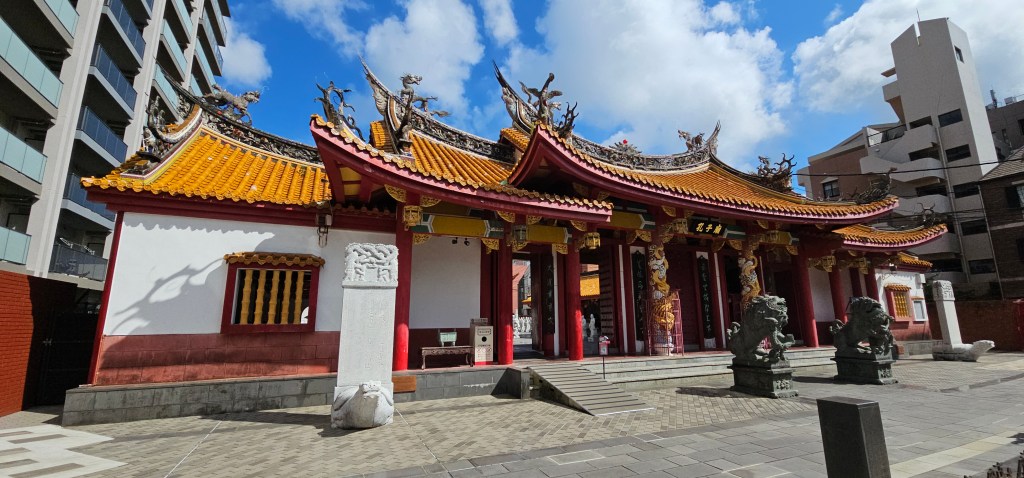
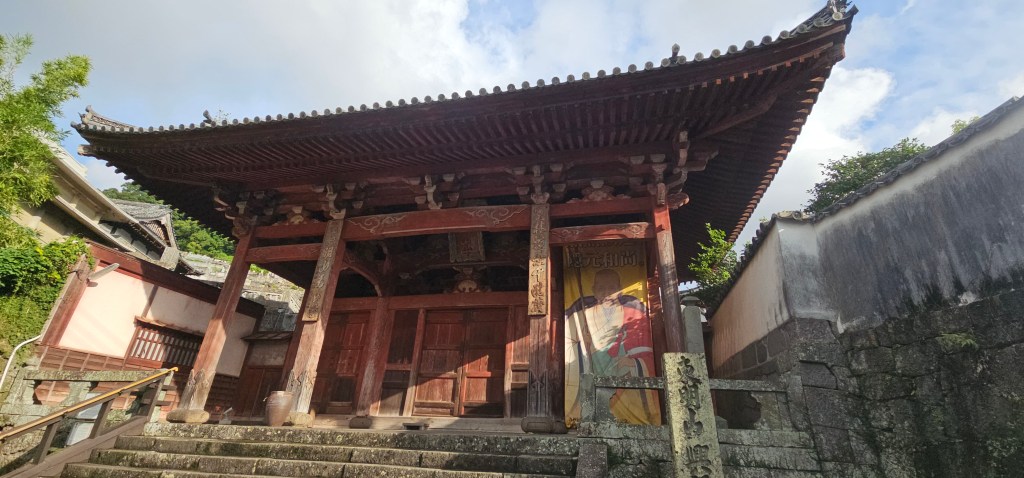
I loved the bright colours and intricate designs on the roofing and sides.
We left Nagasaki Confucius shrine and walked another five minutes towards the Dutch slope. The map was confusing because Google Maps called it the Dutch slope, but their own markers called it Holland Street. On our way, the cloudy skies finally opened up, and it was pouring rain. After securing the passport in a waterproof bag, we decided that rather than walking up the Dutch slope to another western-style house, we would just continue on our way towards Chinatown.
Tojin Yashiki and Chinatown Shinchi both have attractive Chinese-style architecture and shops. Luckily, the rain let up, and we were able to explore without the downpour.
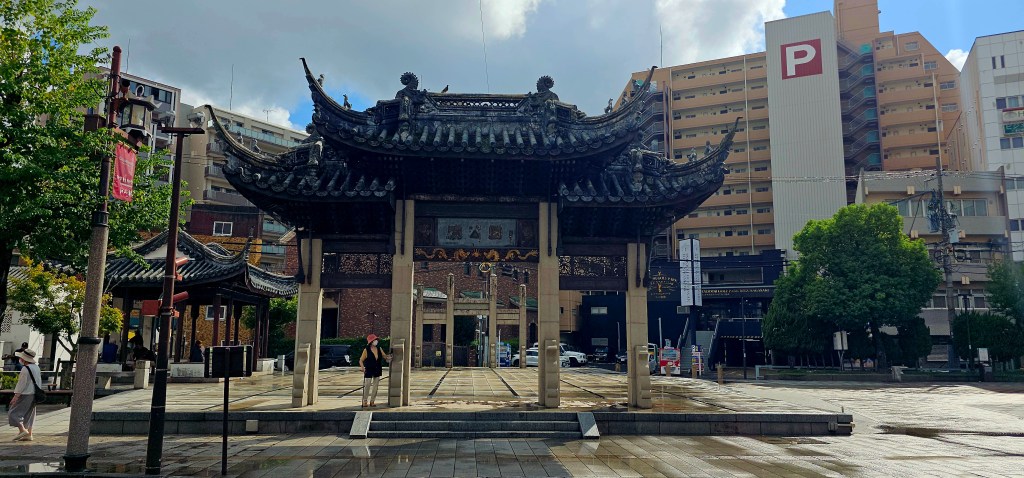
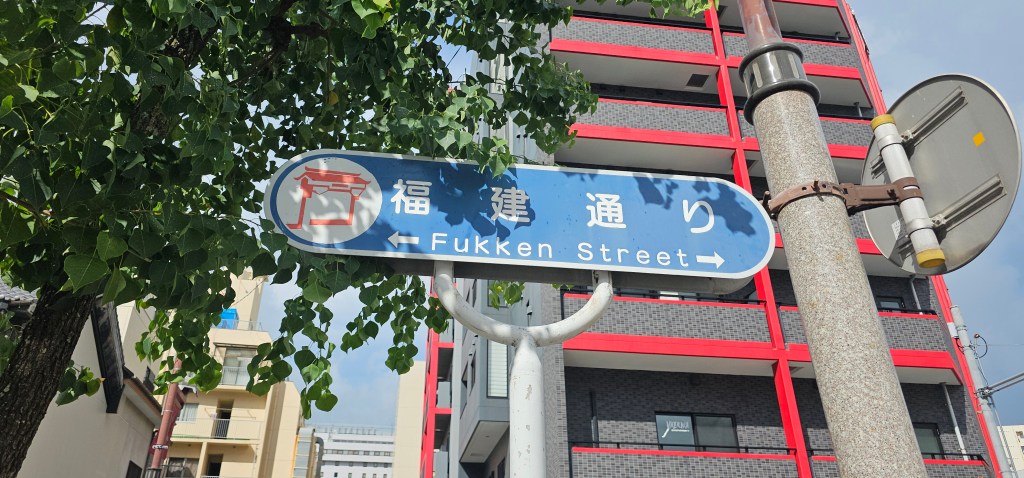
My favorite street was found here. It is called FUKKEN Street. Yes, it appeals to my junior high mentality. We went in and out several of the stores here but refrain from buying since we’re going to China in just a couple of days. Nagasaki’s chinatown is the oldest one in Japan.
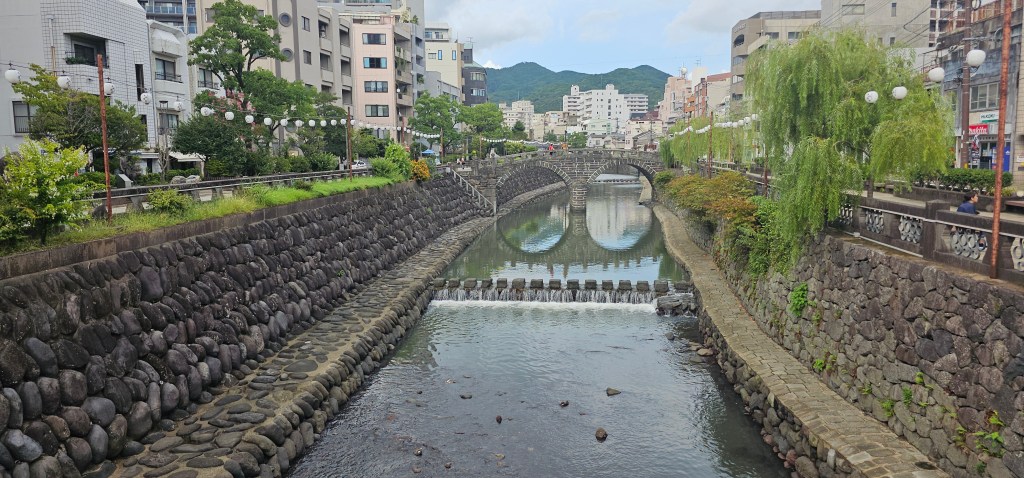
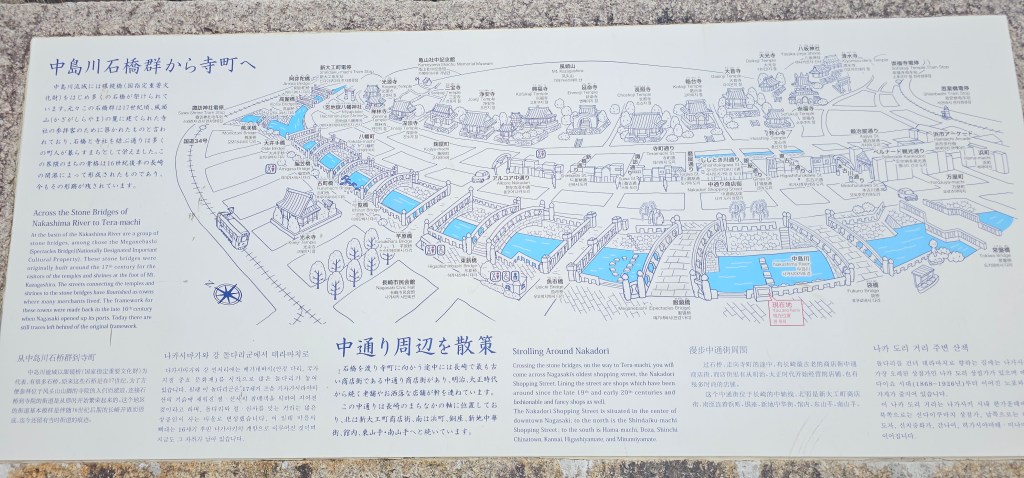
From here, we walked through a pedestrian shopping area and made our way to Meganebashi Bridge. Meganebashi Bridge is also known as Spectacle Bridge and is an elegant rock bridge in central Nagasaki. I was under the impression that it was the only bridge there, but there are about eight to ten other rock bridges connecting the two sides of the road in this area. All of them are constructed differently but have the same old-world charm.
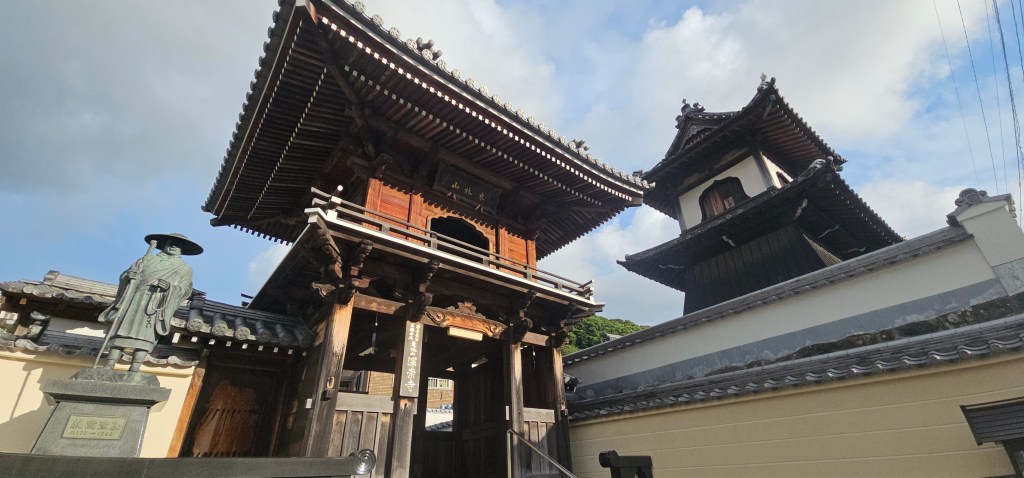
About two streets to the left of this bridge area, there is a temple area. Along the street, there are 10 different temples, and while many could be entered, we chose to just admire them from the outside.
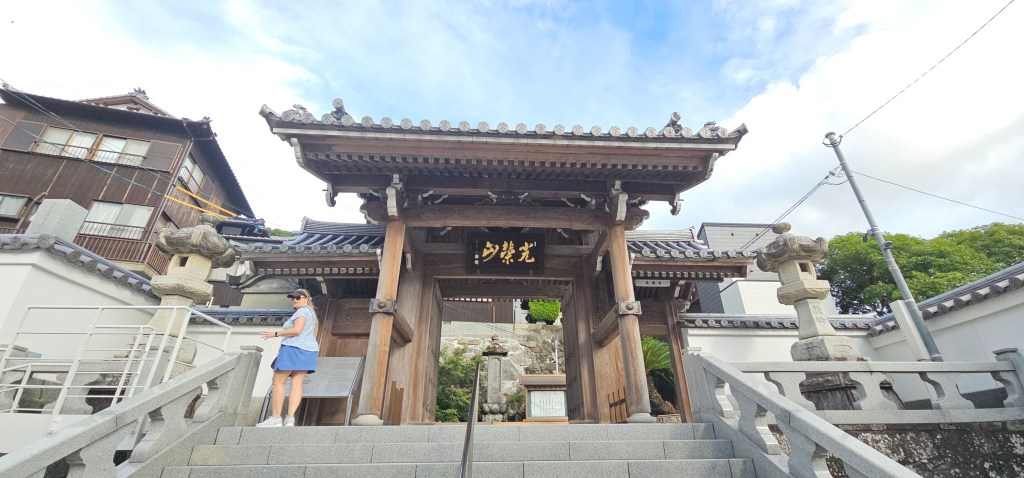
The main temple that was recommended is the Kofukuji Temple. This is the only one that we went into to take some pictures. It is one of several Buddhist temples in the Teramachi district.
It was beginning to get late, and we wanted to go to another section of Nagasaki to the Observatory and night views, so we chose to leave this area by tram and get off at the stadium. The tram is a flat rate of 150 yen, or you can purchase a day pass for 600 yen. Since we were only planning on doing the one trip today, we entered the back of the bus and then paid when we got off at the front of the bus.
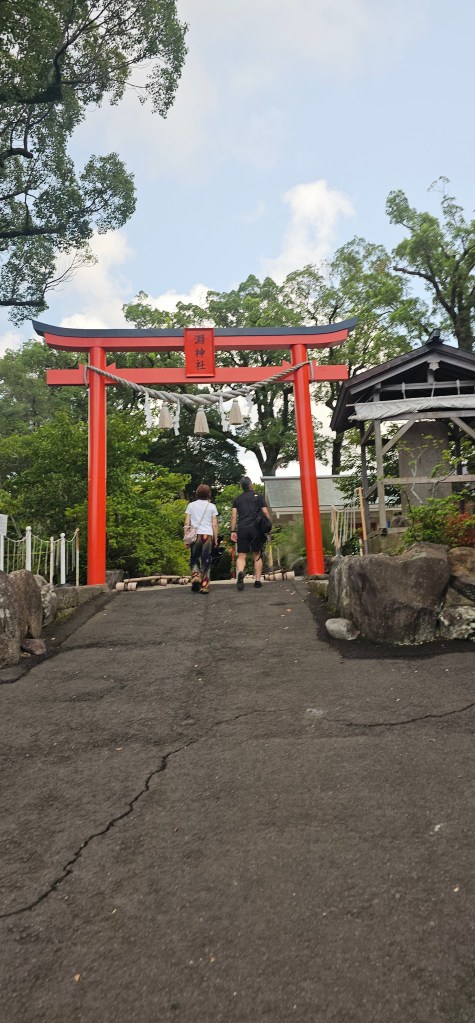
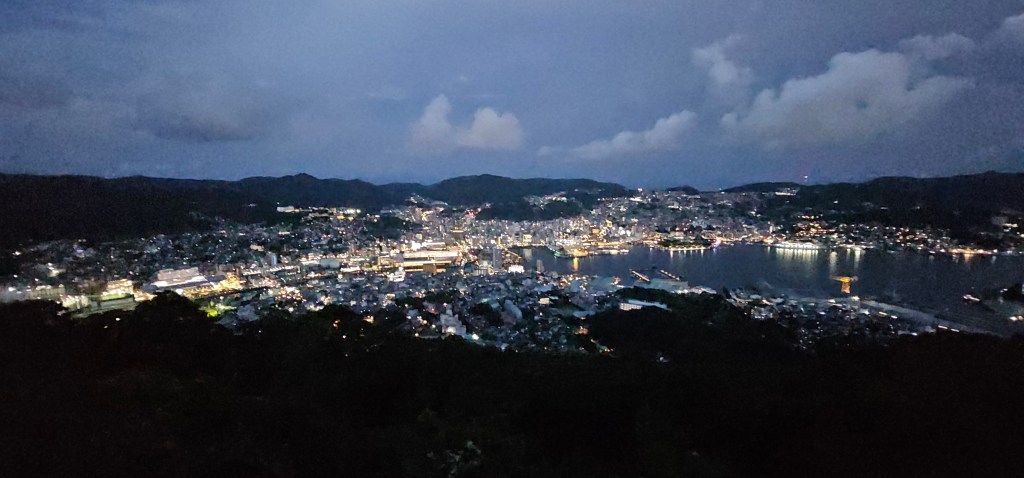
Mount Inasayama Observatory brags to be one of Japan’s top three night views. Mount Inasa is 333 meters high and can be reached on foot, by car, slope bus, or cable car. We chose to use the cable car and it 1250 yen for a round trip. It is 800 yen one way.
From the top of the cable car, there is a short walk to the observatory where you have 360 views of Nagasaki and the surrounding area. At the top of the observatory, we waited for the sun to set and darkness to fall.
After snapping all the pictures that we wanted, we made our way down as many, many more people were making their way up. The cable car ran every 20 minutes before dark, but every 15 minutes after dark. The cars were definitely much fuller, and a line formed at the bottom once the sunset. There is a small cafe up top that was not open as well as a restaurant that was also not open.

A lack of dinner and a late arrival back at the boat meant we needed to do a 7-Eleven dinner. I bought their ever-famous egg sandwich as well as a bag of chips and a drink of water.
The next day, we headed out to visit the shopping district as well as one more temple.
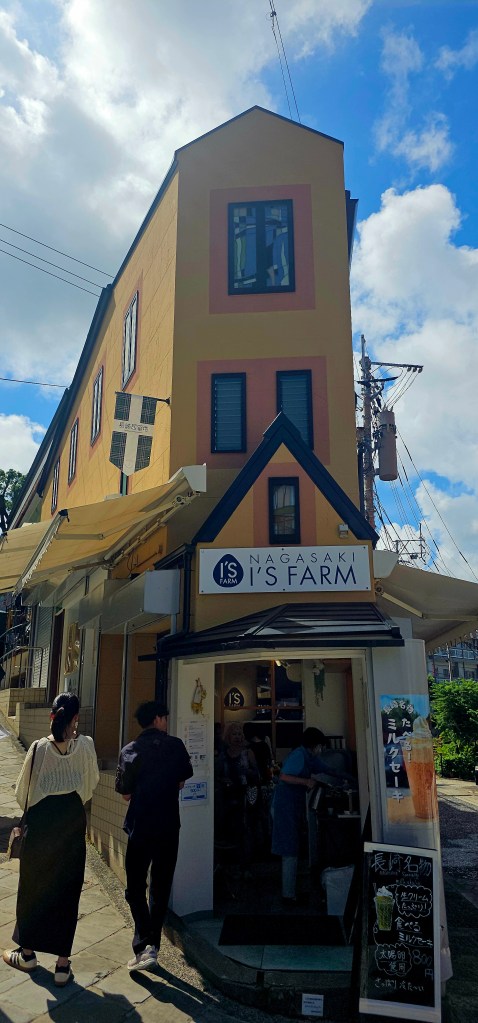
The temple we went to see was about a 40-minute walk from the boat. It is called Fukusa Ji and is a Buddhist temple with a massive Kanon statue atop the spirit turtle. All of the photos do not do it justice for its imposing presence and grandeur.
The humid, hot temperatures made us want to finish the day here. A cooler climate or an extra day would be needed to see the Peace Park, Hypocenter Park, and Nagasaki Atomic Bomb Museum. Since we had just visited Hiroshima, we chose not to go to these sites in Nagasaki, but others reported they were very well done. The Hypocenter was ground zero where the atomic bomb was detonated in 1945 and is beside the Atomic Bomb Museum. The Peace Park is near the Hypocenter as well and has a massive statue to support peace.
If you ever go to Japan, Nagasaki, it’s definitely a place that should be on your list to visit.
 Chasing Summer -
Leave a comment