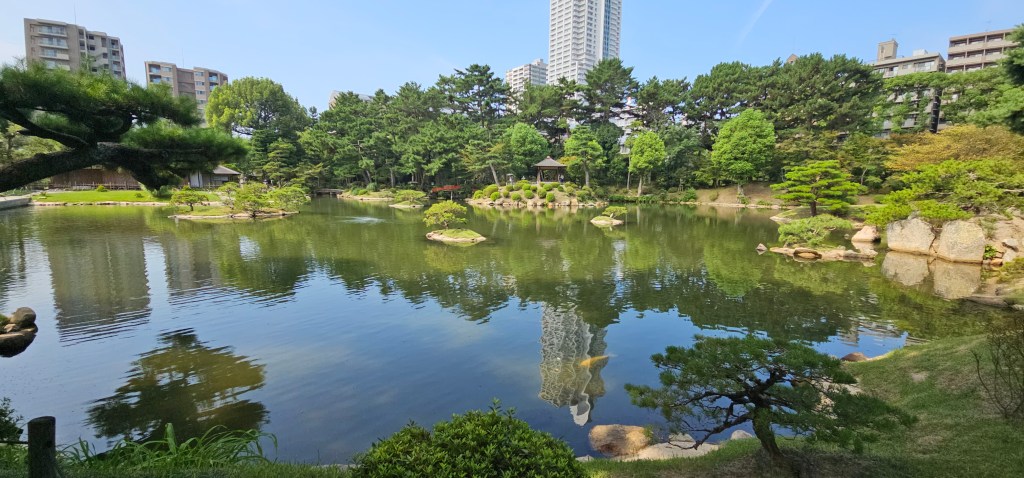
August 22-23rd, 2025
We arrived in Hiroshima after lunch on the 22nd. After clearing port and being allowed off the ship, several people went into town. This wasn’t my first visit to Hiroshima, and instead, I spent the day on board.
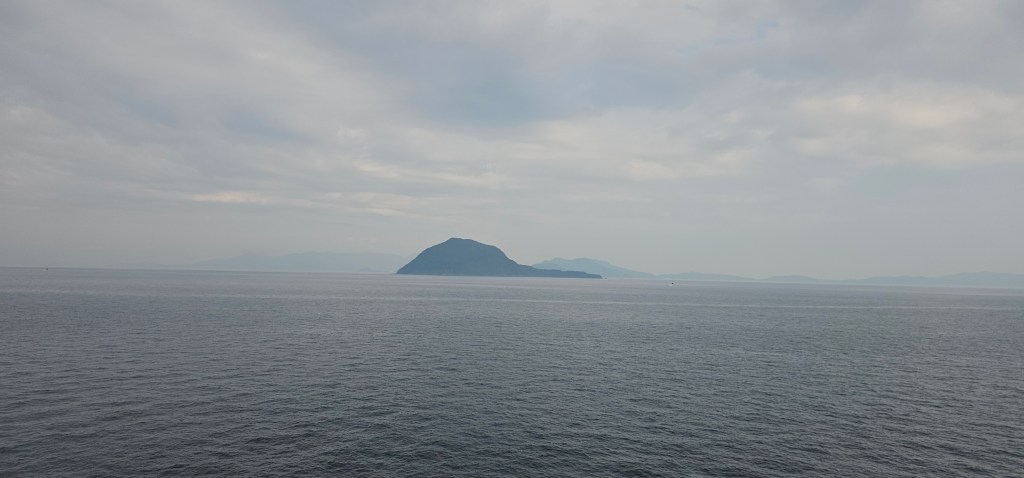
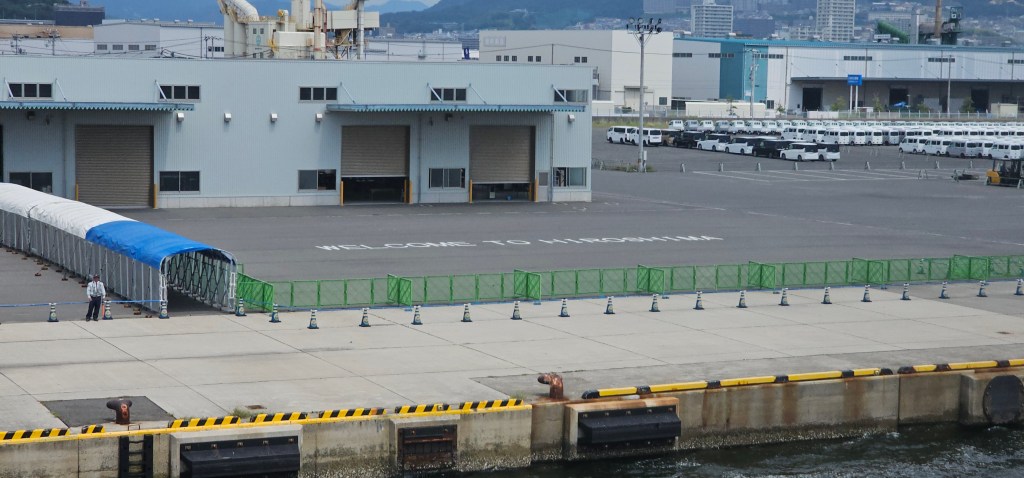
The next morning, I decided to head out and visit a few things that I hadn’t seen before. It was a little bit tricky because our ship was not at the Hiroshima port but at the next port down, Itsukaichi. Getting to town involved a short shuttle ride to the nearest station for transportation, but only about 27 people fit on the shuttle, and it ran only hourly.
The first shuttle was to depart at 8:30, so I got down there by quarter after and was the first person to not fit on the shuttle. The shuttle company kindly decided to drop off the first load and come back for a second, so I was able to leave at the departure time of 8:30.
I caught a train to the Hiroshima Station, which took approximately half an hour. From there, I got out and walked to the Shukkei-en Garden, about 17 minutes away. The garden cost 350 yen to enter and was well worth the price of admission. This is a historic Japanese garden that was first developed in the 1620s during the Edo period. During World War Two, when Hiroshima became a target of the first atomic bomb, the garden was badly damaged. In the aftermath of the bombing, the Garden served as a refuge for victims of the war and was rehabilitated and restored. It was reopened to the public in 1951.
The landscape is carefully tended with many ponds bridges, and traditional structures. It is open daily from 9:00 AM to 6:00 PM.
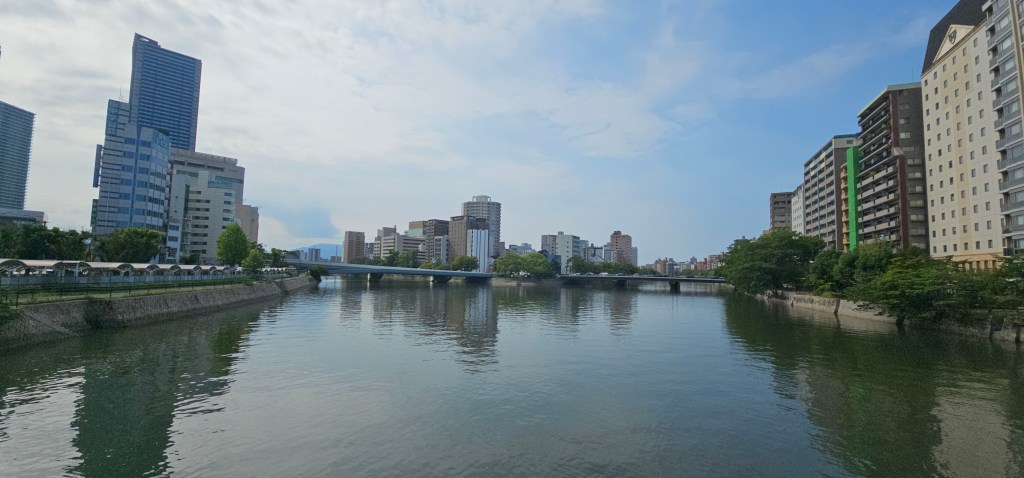
After leaving the gardens, I walked towards Gokoku Shrine. It was originally established in 1868. It too fell during the bombing over at War War Two and was reconstructed in 1965. This shrine also leads to the Hiroshima Castle grounds.
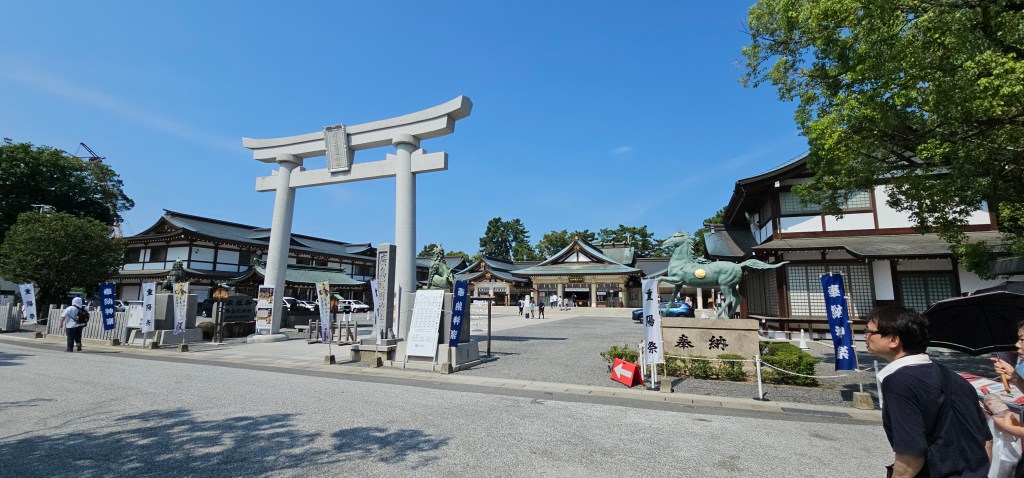
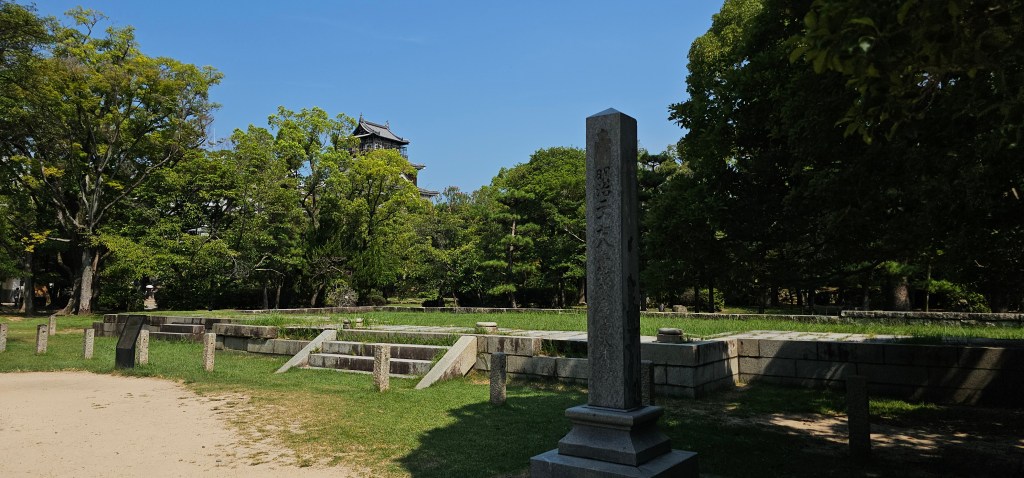
The Hiroshima Castle Park has the remains of the original settlement as well as the newly reconstructed buildings.
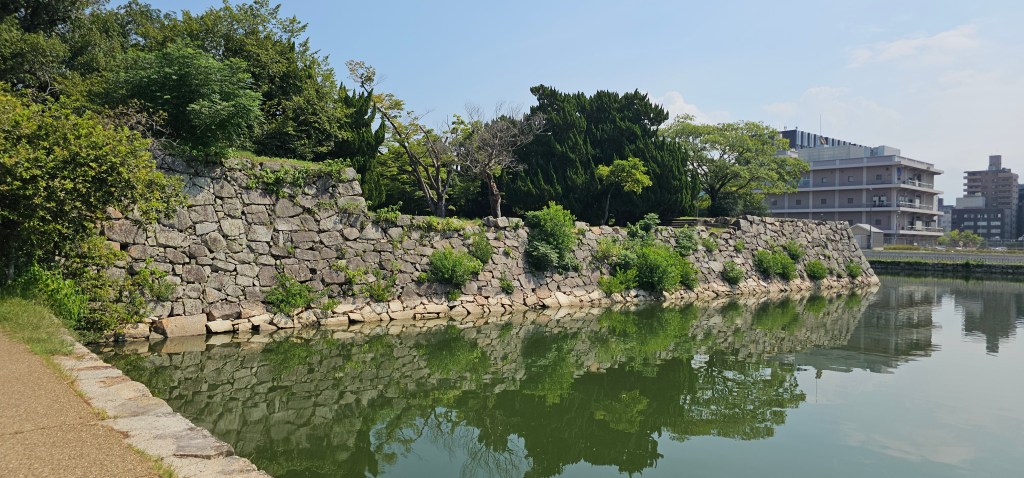
The Castle park has a natural barrier in the form of a wide ditch that surrounds the complex. This is also open from 9:00 AM to 6:00 PM.
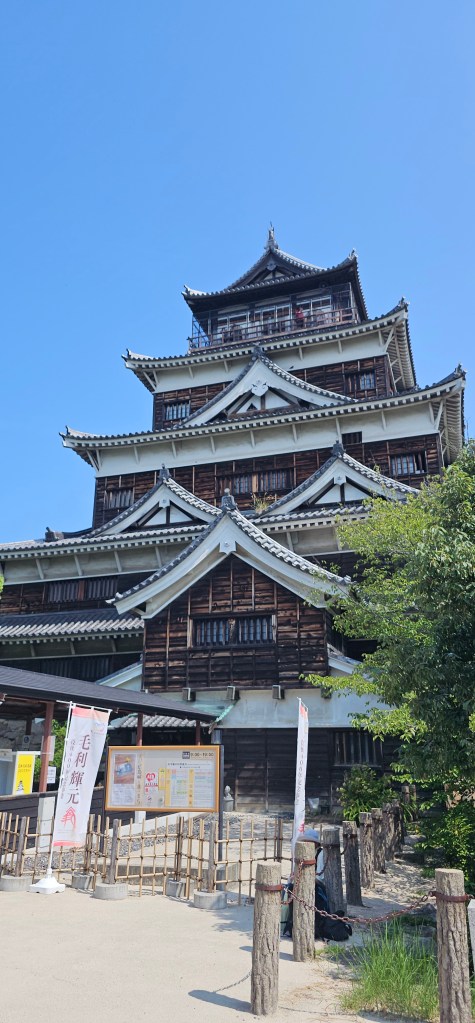
In the castle park is the Hiroshima “Carp” castle. It was originally constructed in the 1590s as a symbol of power in the region. The castle’s fate would change on August 6, 1945, during World War Two. The castle was obliterated, leaving behind only ruins. A replica of the original Hiroshima Castle was created in 1958, and today it serves as a museum chronicling the history of Hiroshima before World War Two. It is open from 9:00 AM to 6:00 PM and costs 370 yen to enter
Wandering away from this area, I made my way towards the Atomic Bomb building and Peace Park. This entire area is a testament to the atomic bomb, the citizens who lost their lives, and a reminder that peace should always be the answer.
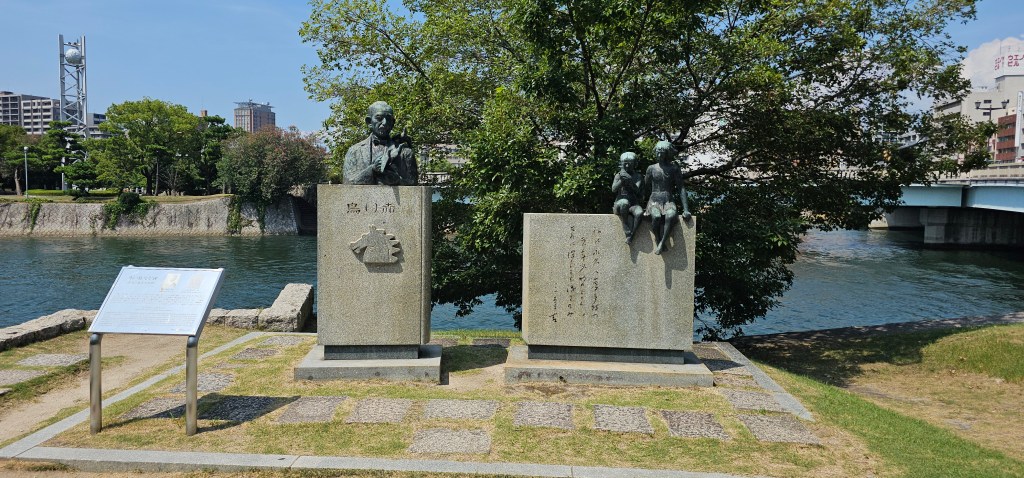
Since this was not my first visit to Hiroshima, I did not go into the museum or other interior structures that I had visited on my first trip. There was still plenty to see and do on the outside.
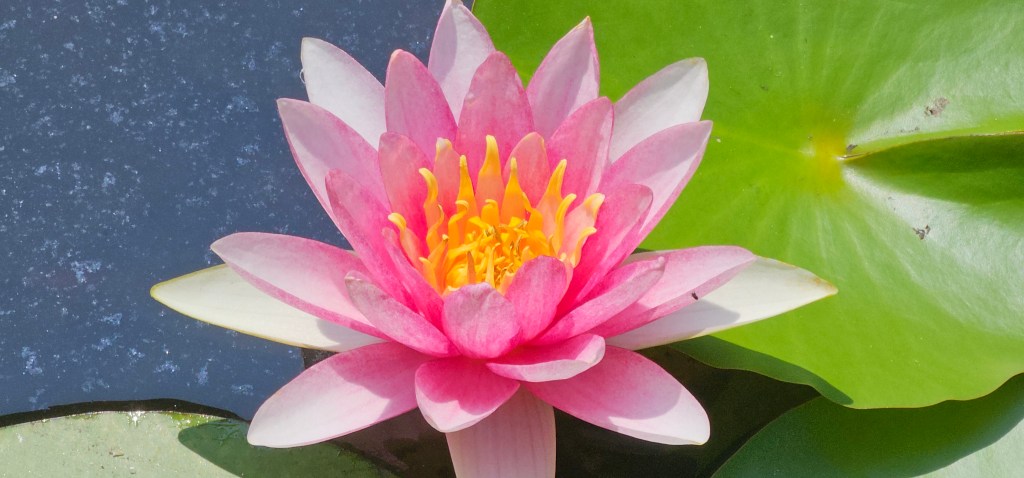
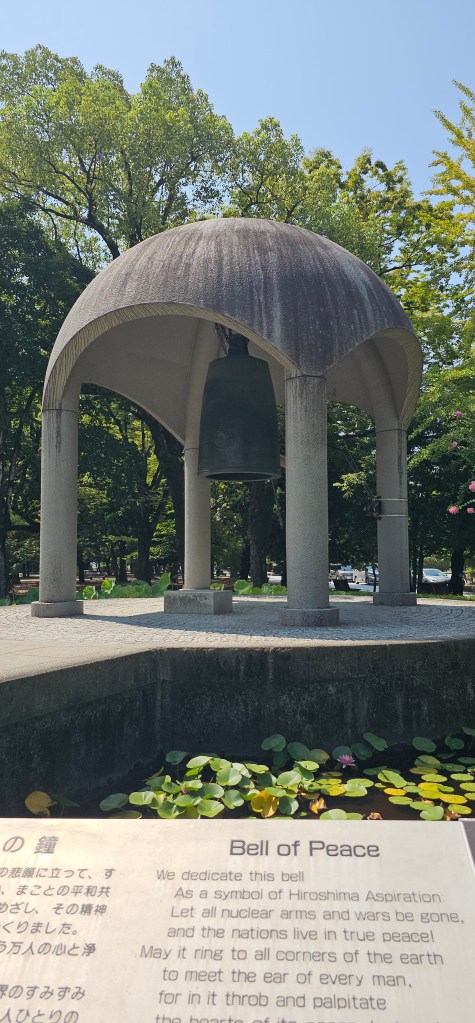
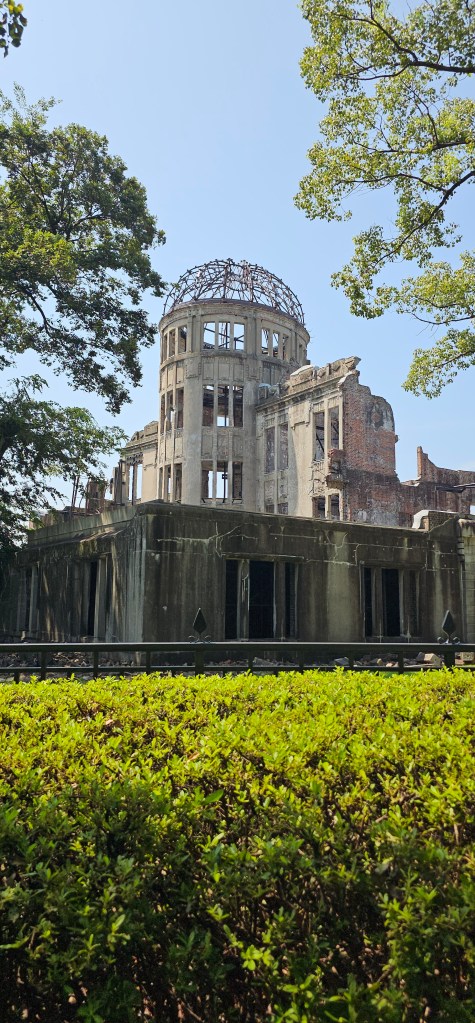
There is a Peace Bell, Flame of Peace, Memorial cenotaph, several museums, Children’s Peace monument, and, of course, the Atomic Bomb Dome.
The children’s Peace monument stands in honor of the innocent victims of the atomic bombing of Hiroshima, with a special focus on Sadako Sasaki. Sadako is the story of a young girl who developed leukemia after the bombing. There was a legend that if you create 1000 paper cranes, your wish will be granted. Sadly for Sadako, like many other children, she died of her disease at age 12, and the people wanted a monument to represent these unfortunate souls. On May 5th, 1958, on what is Children’s Day in Japan, the main statue of the monument titled “A-bomb Children” was unveiled to the public.

The Atomic Bomb Dome, also known as the Hiroshima Peace Memorial, stands as a remembrance of the fateful event. It’s been a UNESCO World Heritage site since 1996. On August 6, 1945, at 8:15 AM, the first nuclear bomb was detonated almost directly above the Atomic Bomb Dome. The actual centre of the explosion was 490 feet away and 1968 feet above ground. Despite being at the centre of the blast, the Dome’s skeletal remains withstood the force, making it a symbol of resilience and hope.
After a very full and emotional morning, I decided to go visit a local brewery to decompress. I had lunch and sampled a couple of local brews.
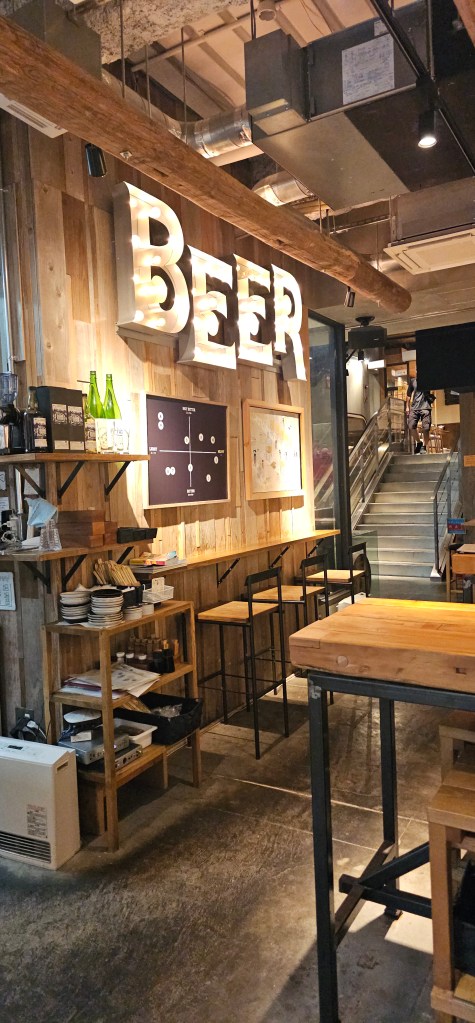
Hiroshima Neighbour Brewery or HNB
I then needed to make my way back towards the ship in order to go through immigration, since we were departing Japan for a quick side trip to Korea to pick up some needed supplies.
We’ll be back in Japan for a couple more stops before I fly to China for a short 10-day land adventure.
 Chasing Summer -
Leave a comment