A 40-minute train ride from central Frankfurt is the smaller city of Mainz. There are regular trains going back and forth between the two cities all day.
I went on a train app and mistakenly thought that there were only a few and bought my tickets accordingly, but if I had just google mapped directions I would have seen that S8 and S9 make regular transits between them every 15 minutes or so and probably for cheaper- I didn’t check.
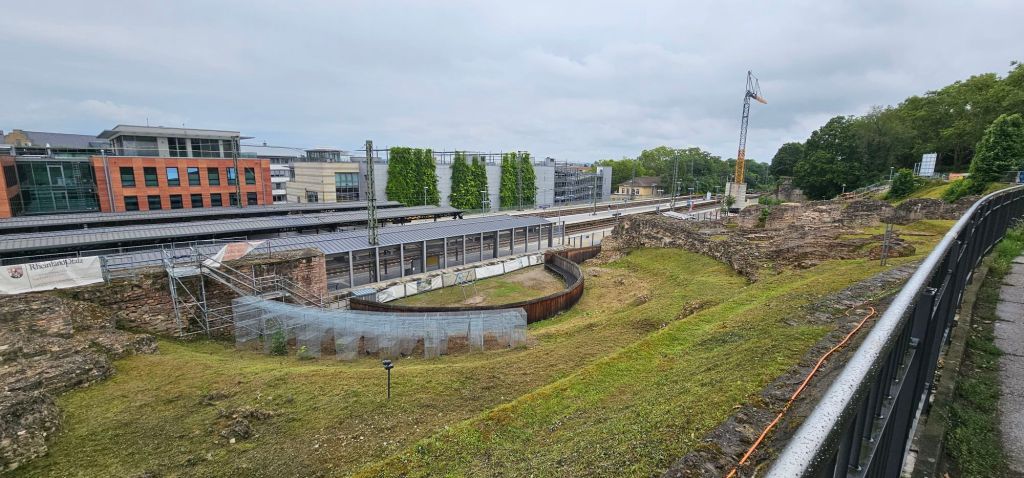
My other piece of advice if you go is to get off at the Roman Theatre station, not Mainz main station. The train station is basically sitting beside what is left of a Roman theatre excavated in the 1990s and makes an easy first stop for a self-guided walking tour.
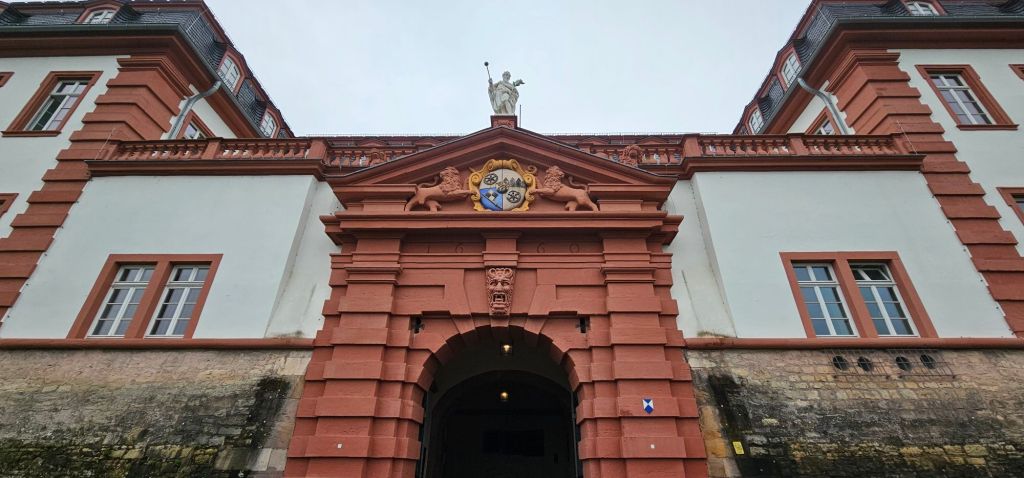
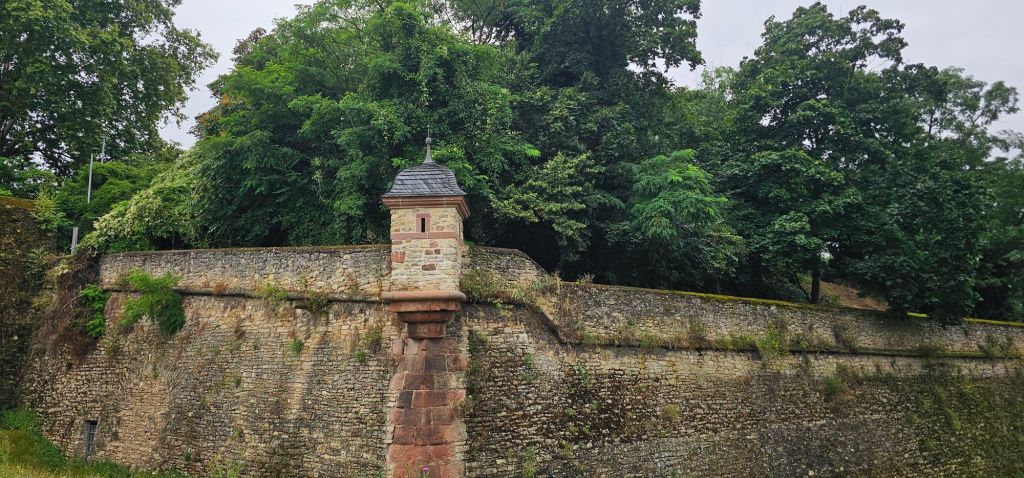
From there, it is a short walk to the Citadel on Jakobsberg Hill (Yes, Hill means climbing up) built in the 1660s. The Citadel was built on the site of a Benedictine abbey from the 1050s. In one corner is a big ol’ stone called the Drusus stone erected in 9 AD. So, basically, people have been building things here for a really long time.

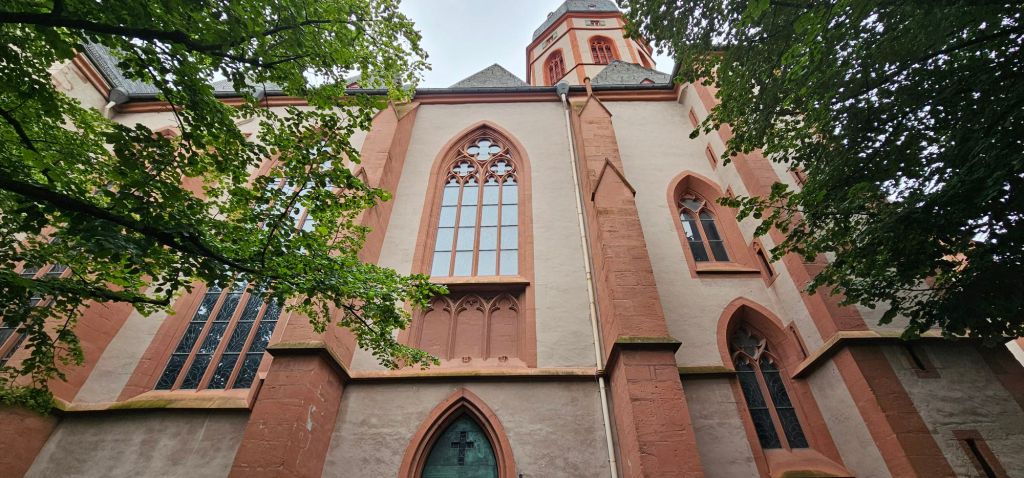
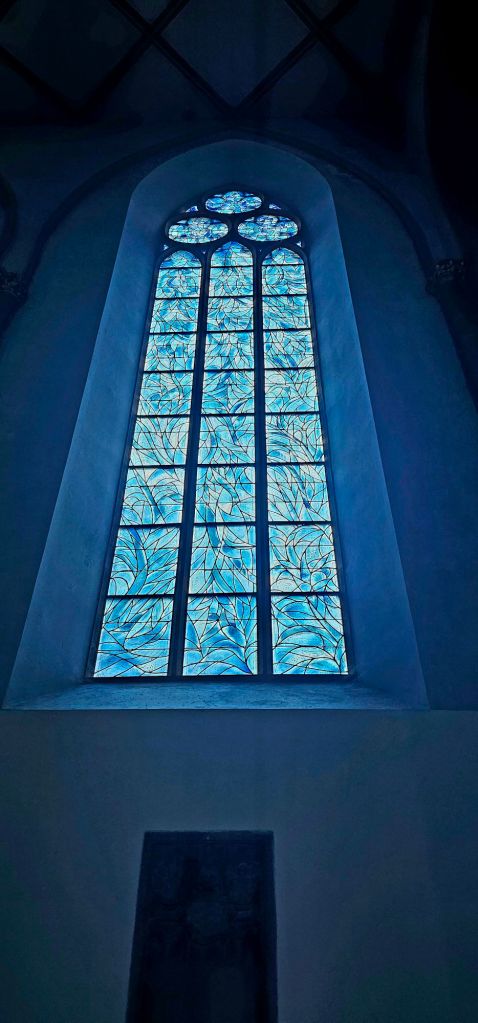
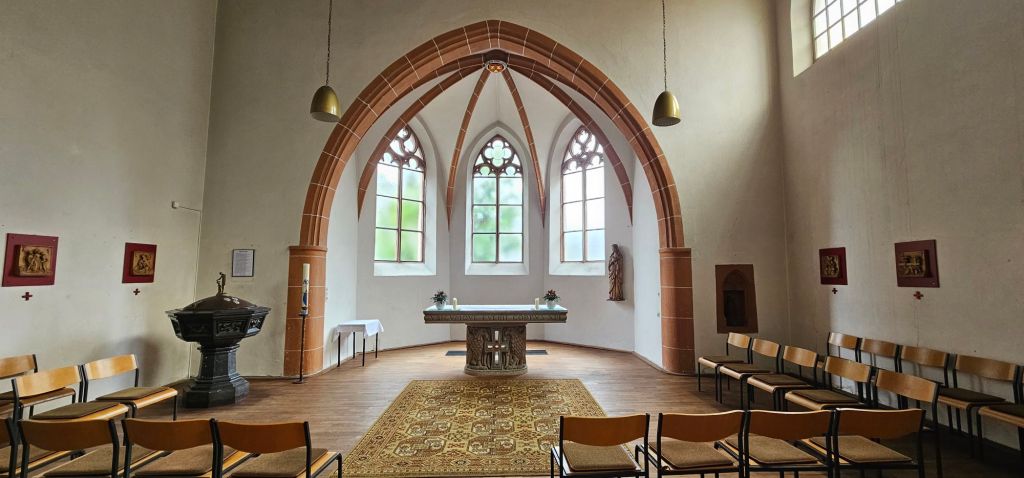
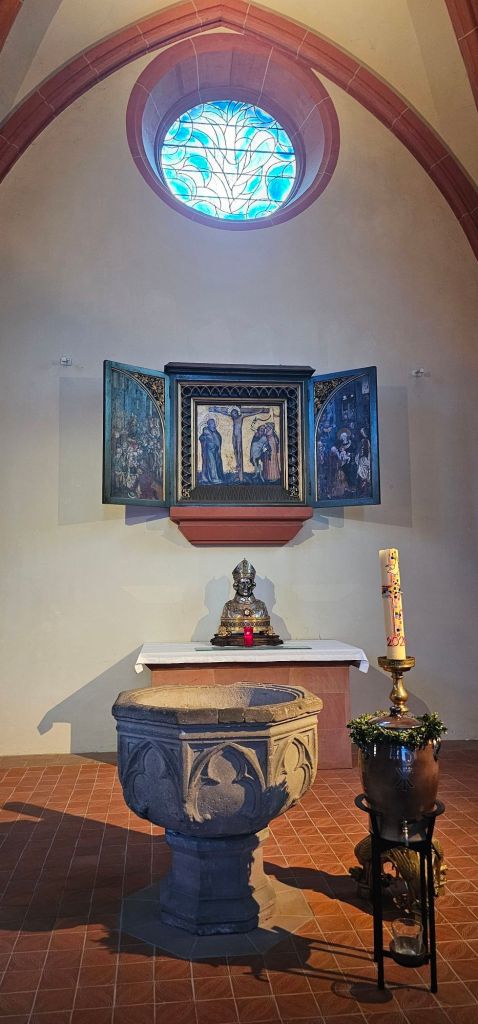
Staying up hill, a couple of blocks away is St. Stephen’s Church. The current church was built in 1340. One of my favorite things there is the stain glass windows, which are mostly blues and purples. They make the whole interior bluish.
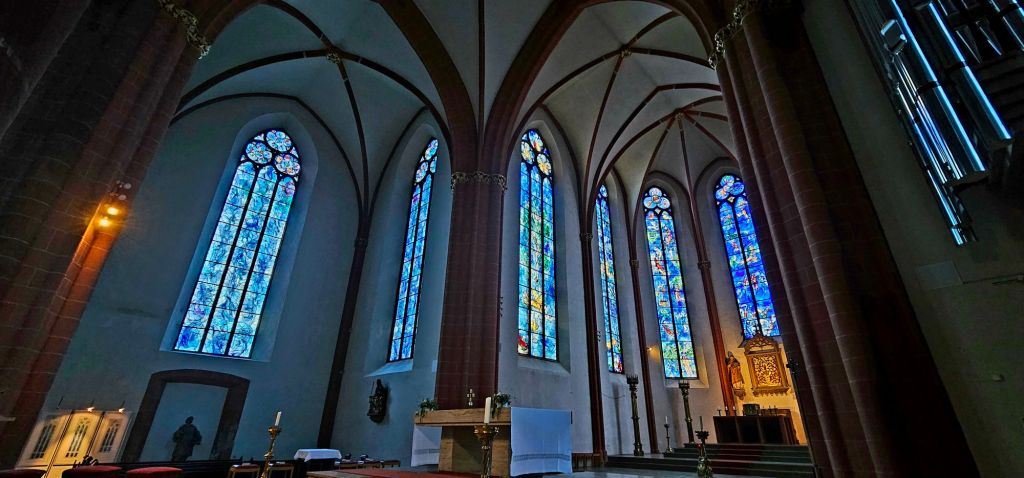
The windows were created by Marc Chagall, a Jewish artist. The first window was placed in 1978 when he was 91 years old and the final ninth window at 97. There are 19 other windows by Charles Marq, who worked with Chagall.
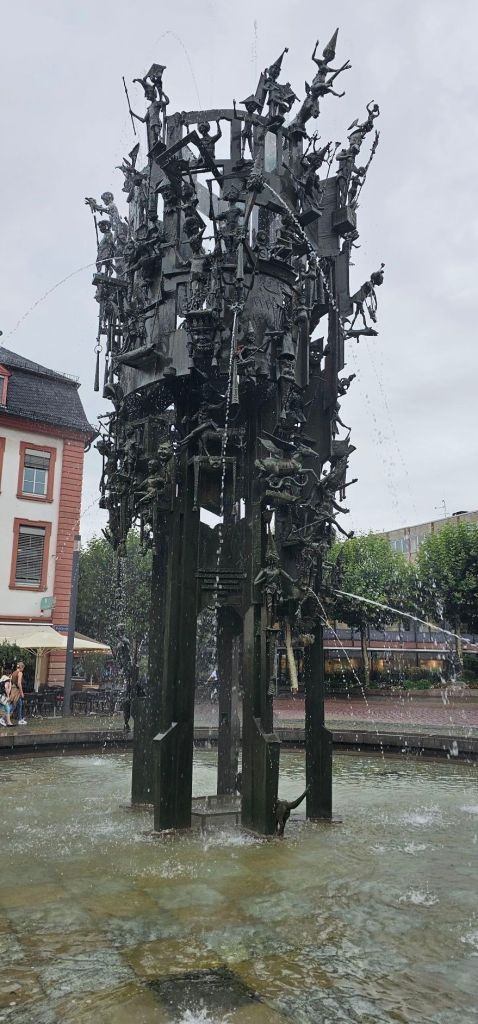
Down the hill a bit is Schiller Square. While it is surrounded by many nice-looking buildings, the best bit is a fountain in the middle of the square. The fountain is 9m tall and has over 200 bronze figures portraying the carnival story. There is also the Schiller statue.
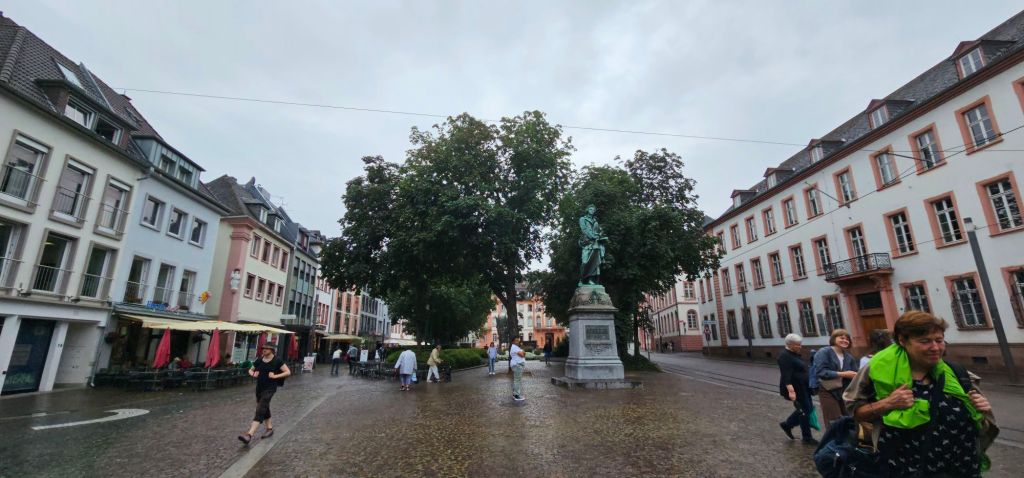
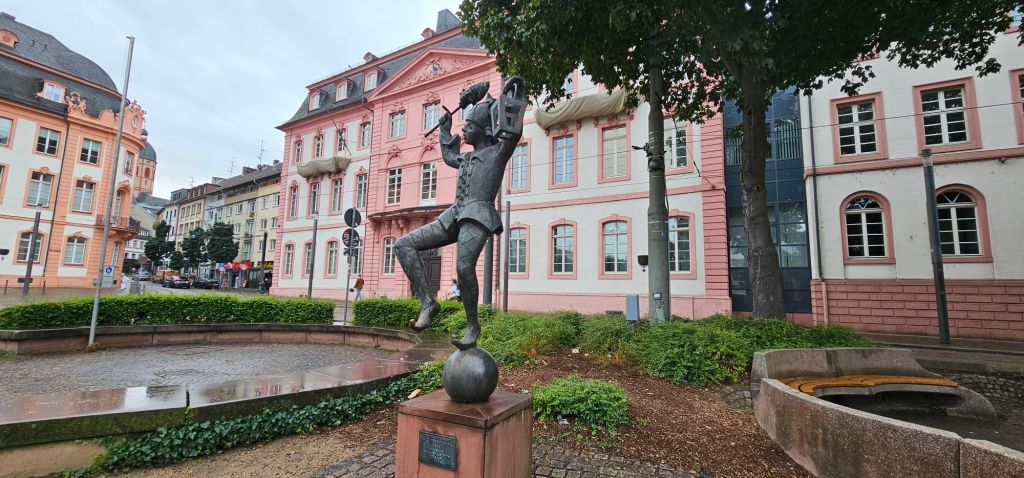
The Osteiner Hof is one of the mansions along Schiller Square. It was built in 1747-1752. On November 11, at 11, past 11, the start of the carnival season is proclaimed from the balcony of the mansion.
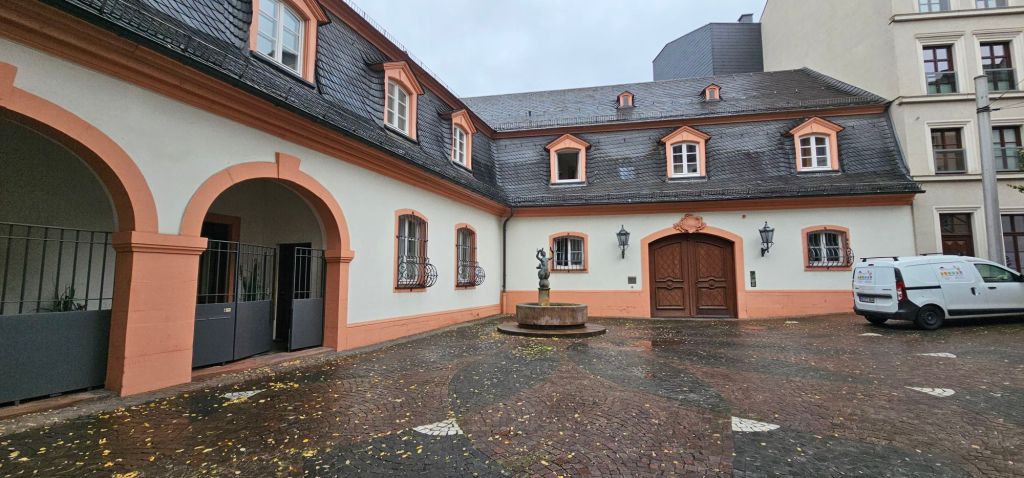
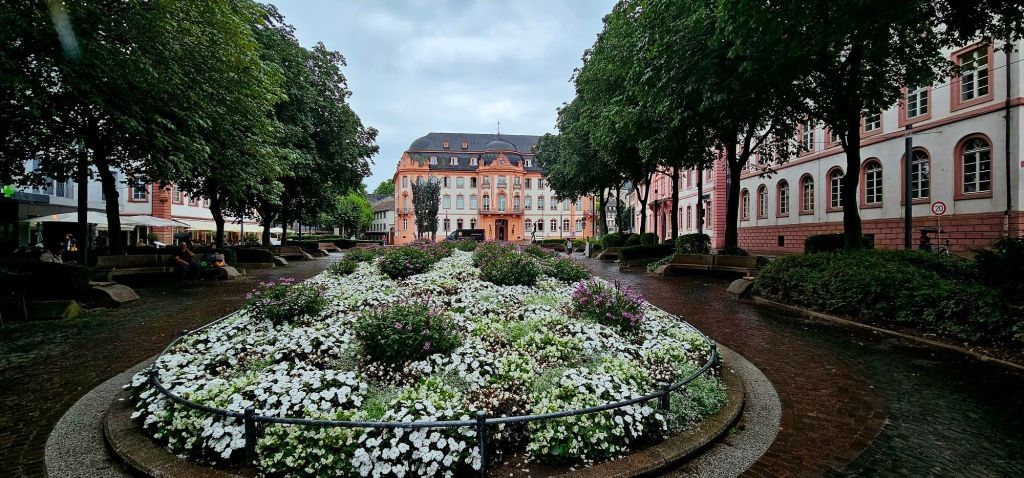
Easlily spotted from its high tower, it’s a few blocks walk to Mainz Cathedral. Fire has damaged this cathedral 7 times over the centuries since 1009, including on its inauguration day.
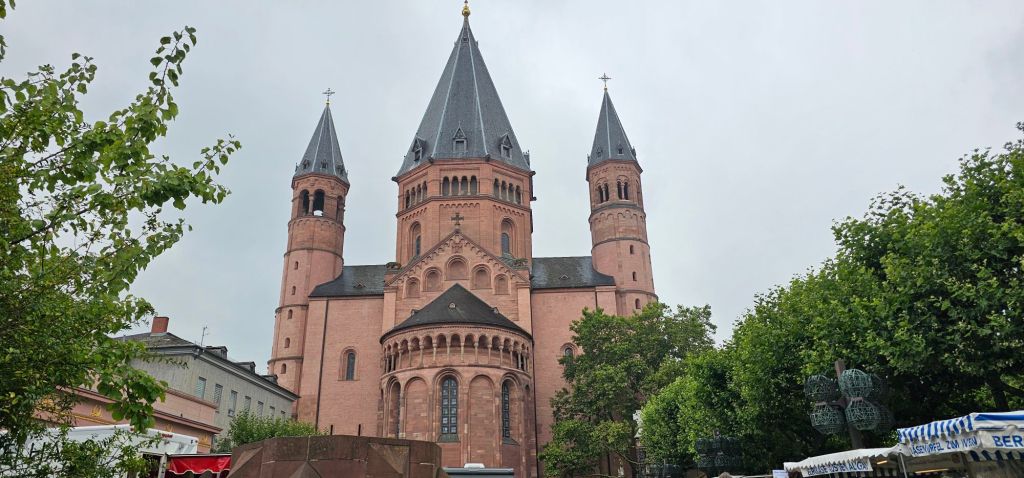
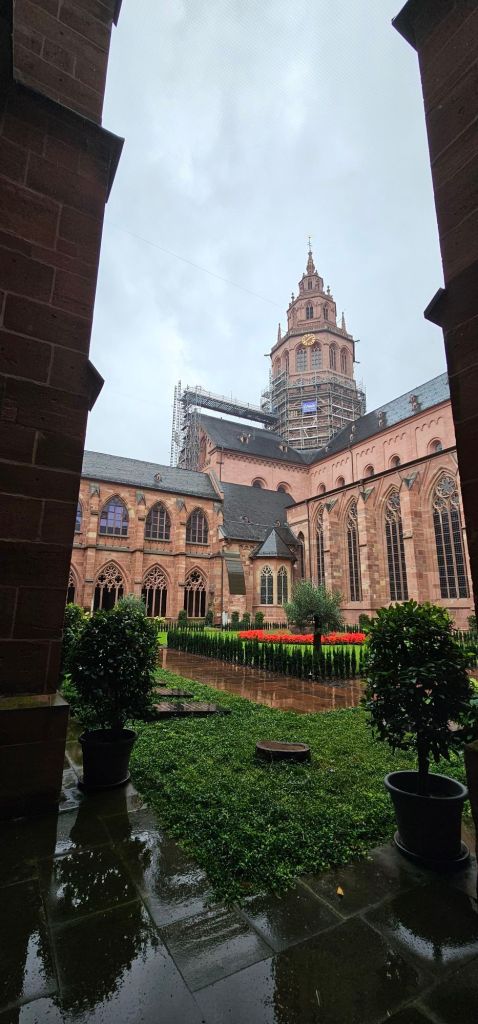
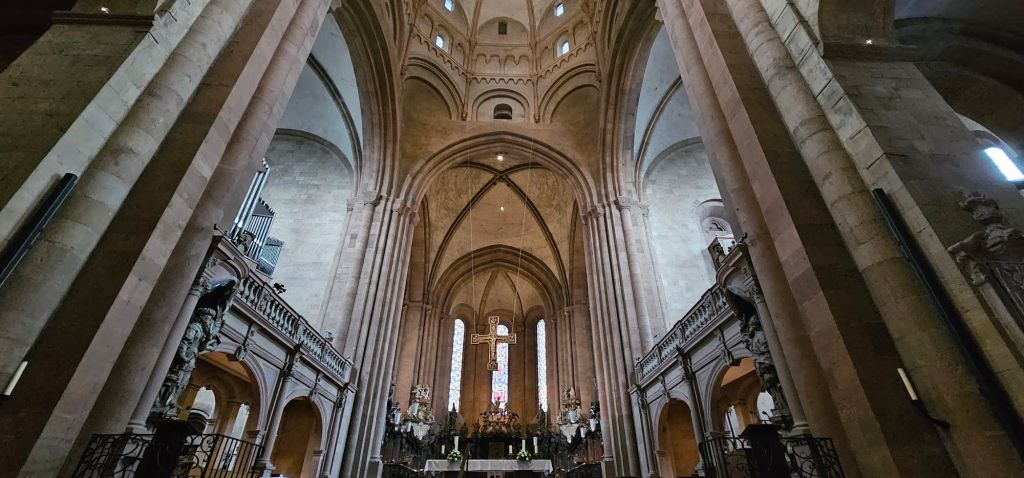
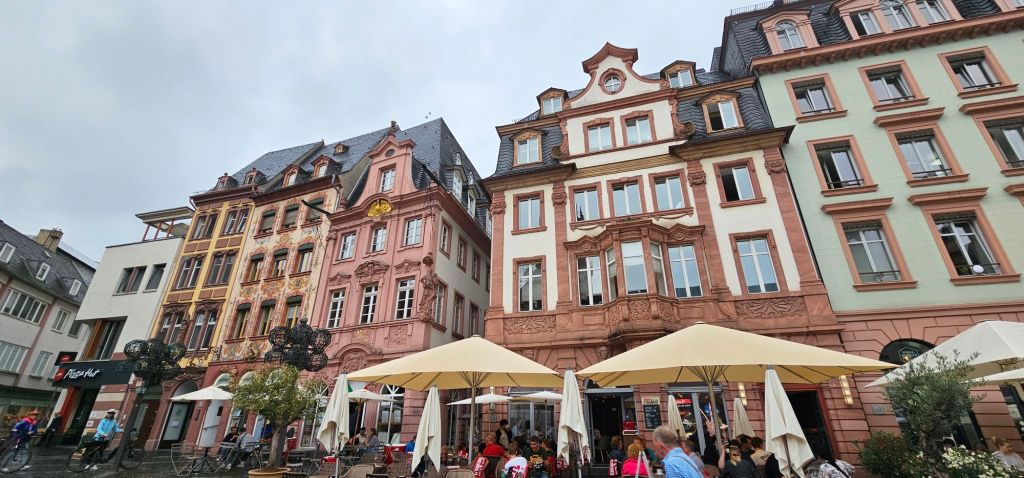
In front of Mainz Cathedral is Markt (Market Square), and there was a farmer’s market set up and doing good business despite the rain.


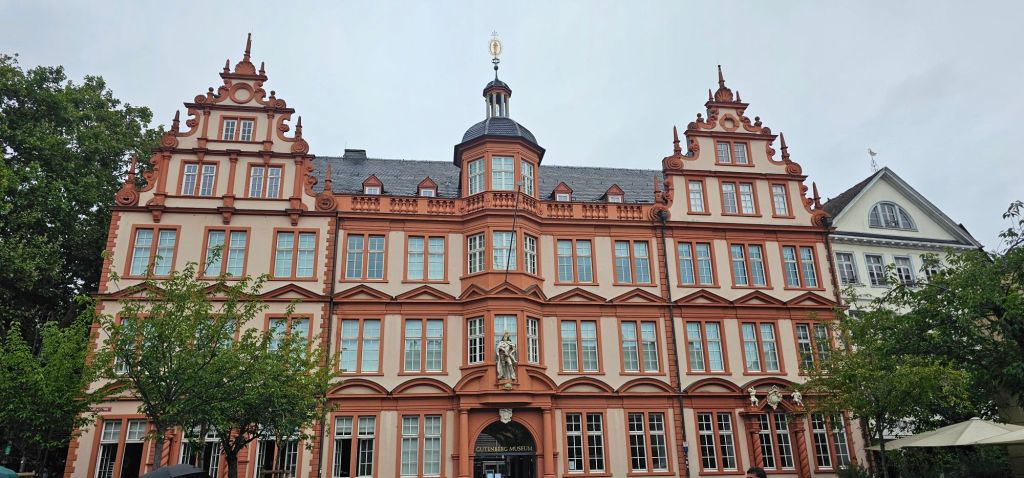
To the right of the cathedral is the Gutenberg Museum, which if I had more time (I was making the train that I had already bought tickets for), I would have gone in. Inside, they have two priceless copies of the original 42-line Gutenberg Bible, printed around 1450. The museum is all about printing and books.
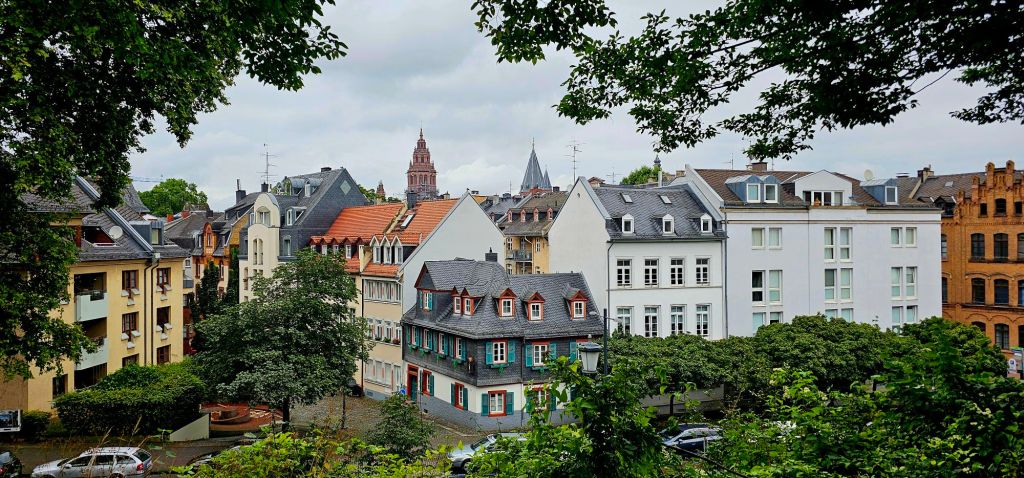
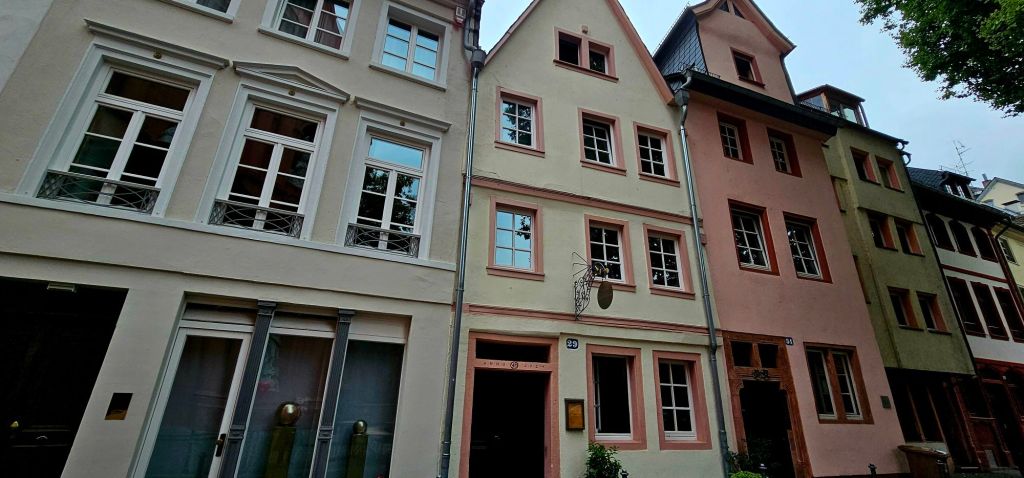
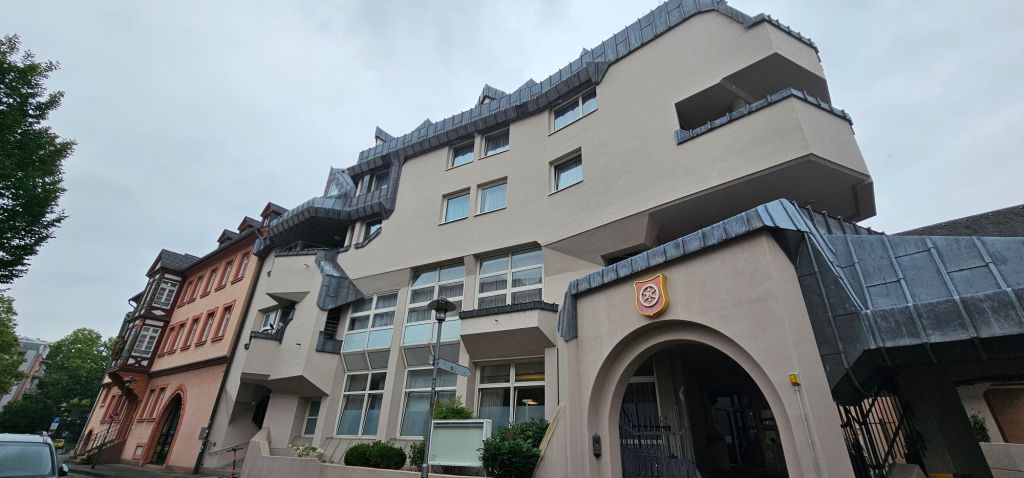
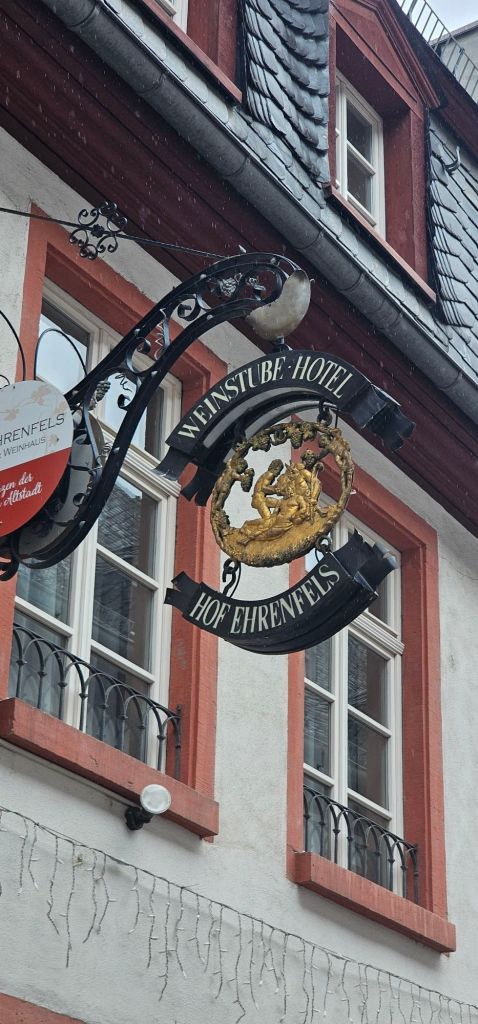
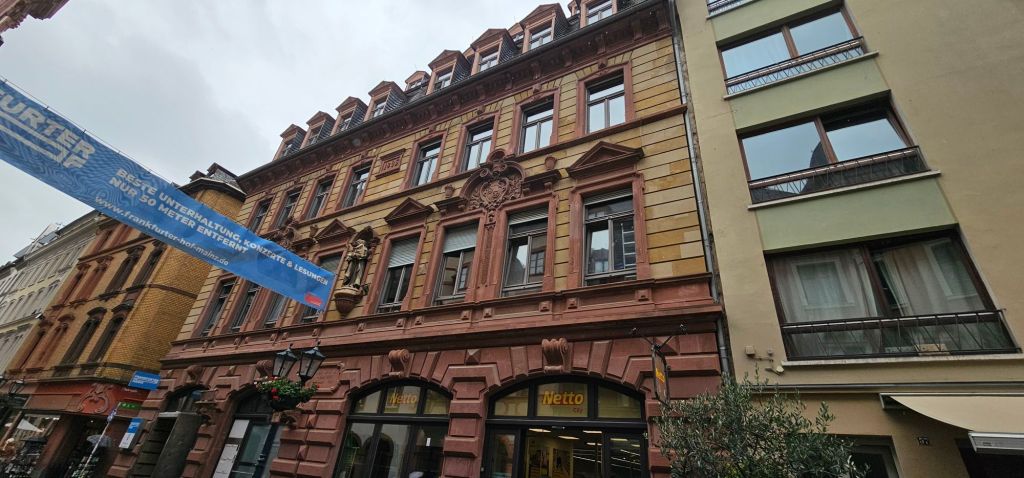
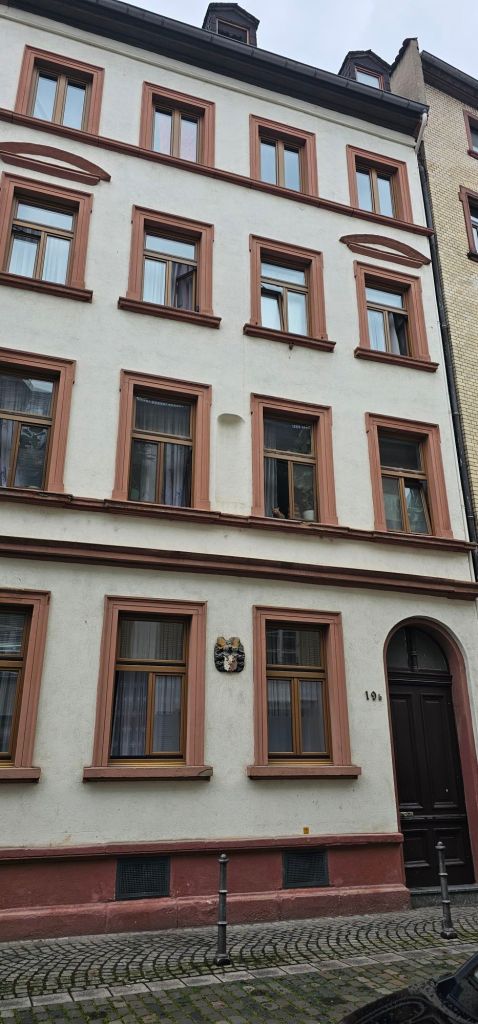
Walking through the Old Town of Mainz, there are many historical buildings with plaques in German to state their importance.
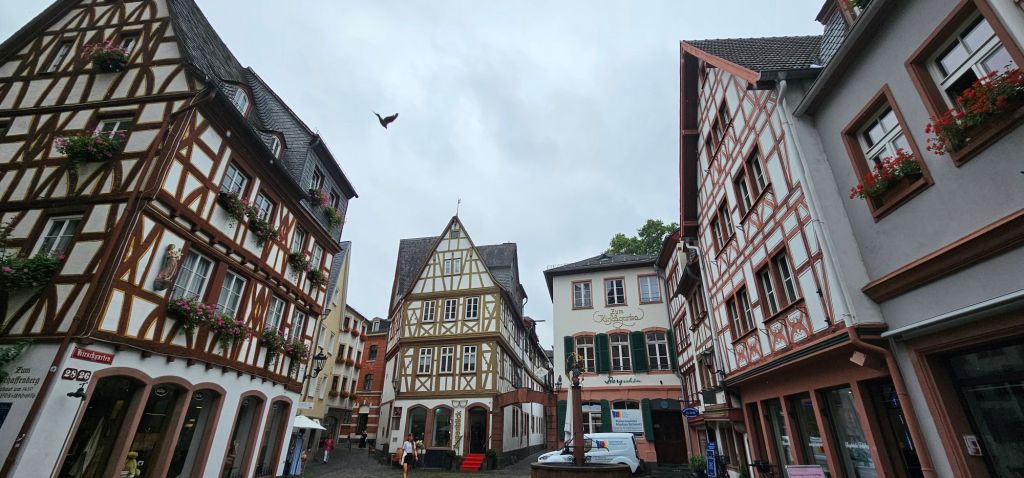
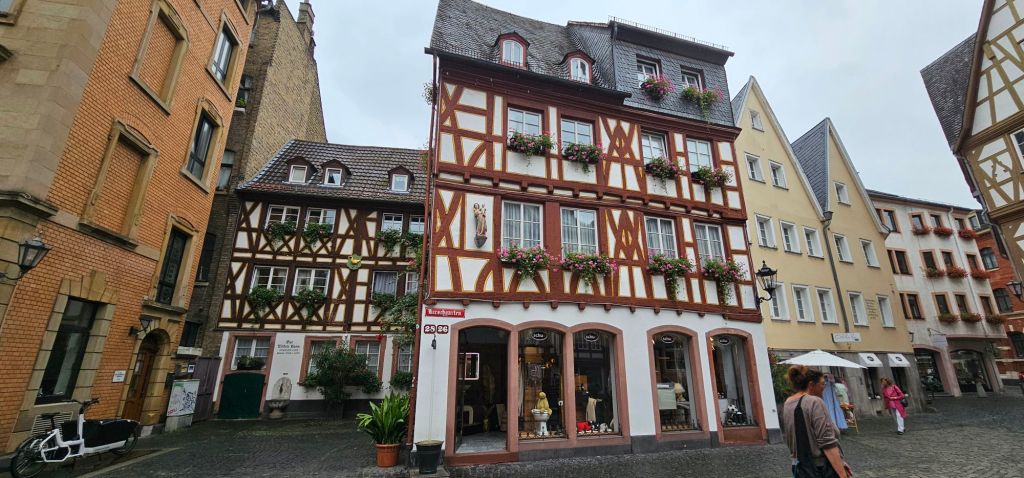
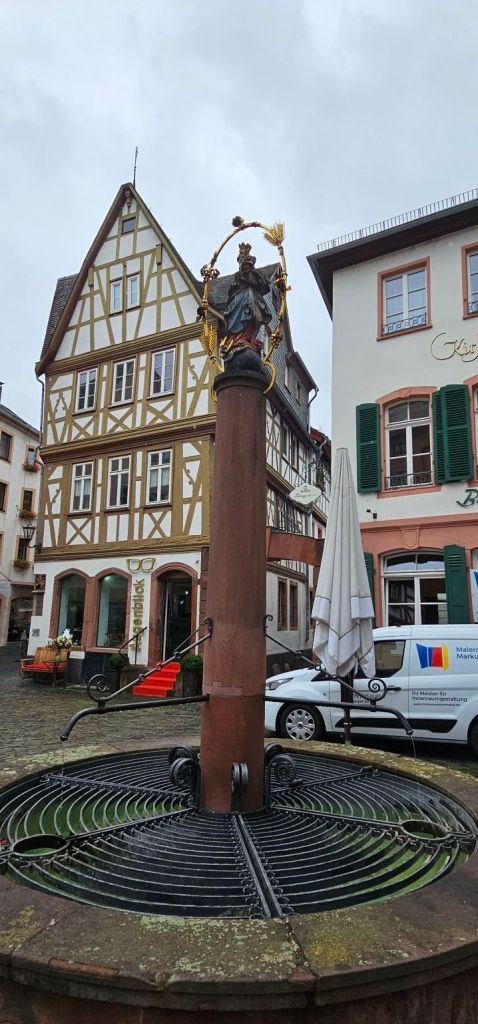
About five minutes away is Kirschgarten (Cherry Orchard). Here, there is a set of half-timbered houses that I’m sure have been featured in many instagram. In the center is the Madonna fountain.
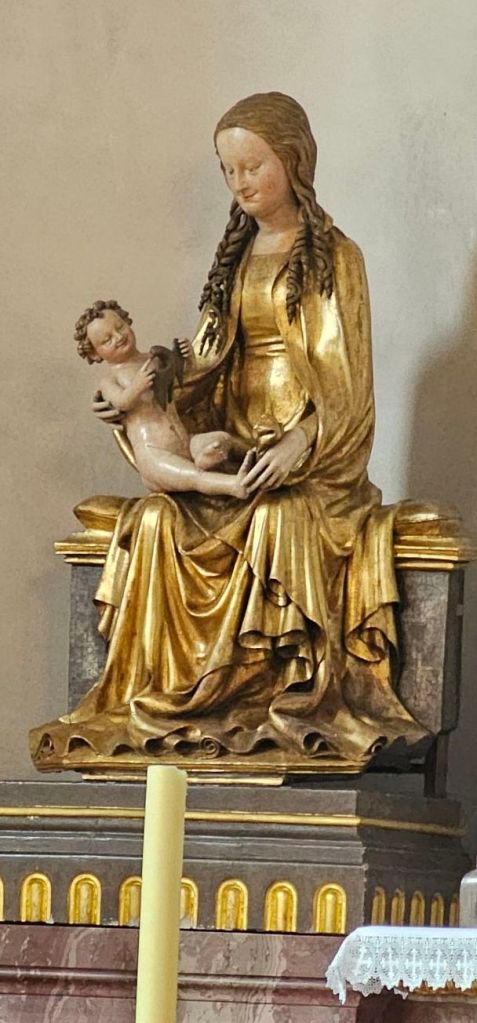
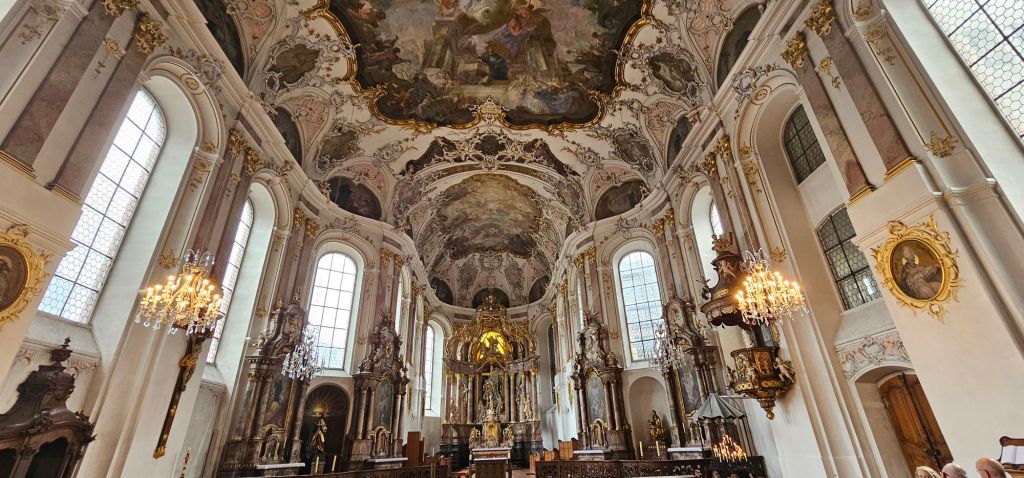
Continuing down the main street is St. Augustine’s Church was built by the Augustinian hermits between 1768 and 1771. It replaced the church that they had built in 1260. The interior is Rococo style, and there is a statue of Mary with young Jesus from 1420.
The Holzturm or Wood Tower is one of three remaining towers from the Middle Ages. It served as a watch tower, gate-tower, and later, as a jail.

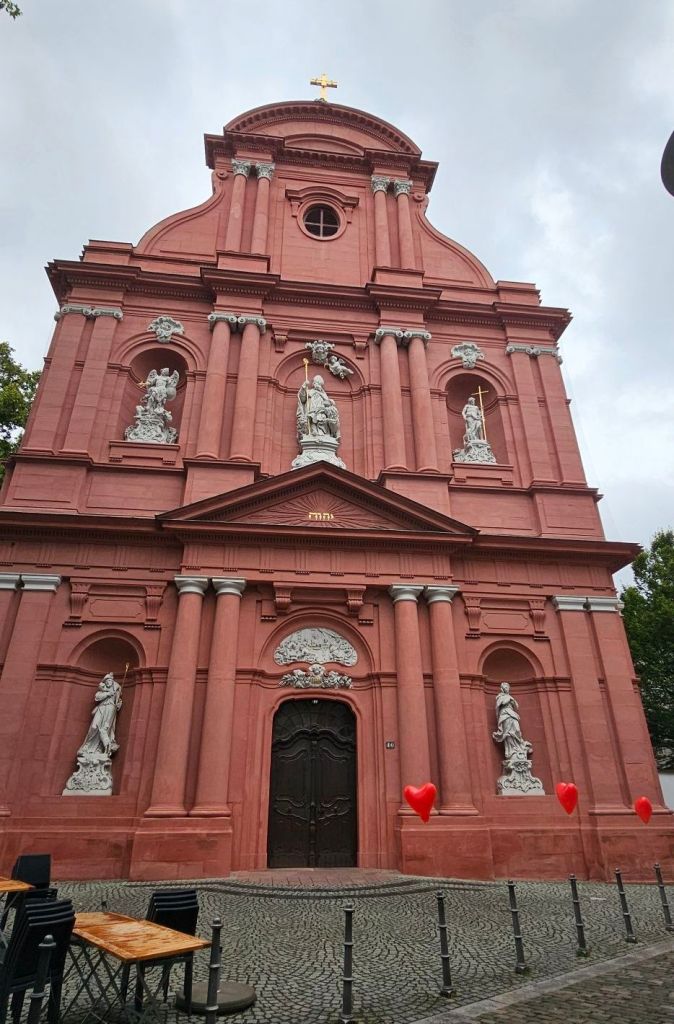
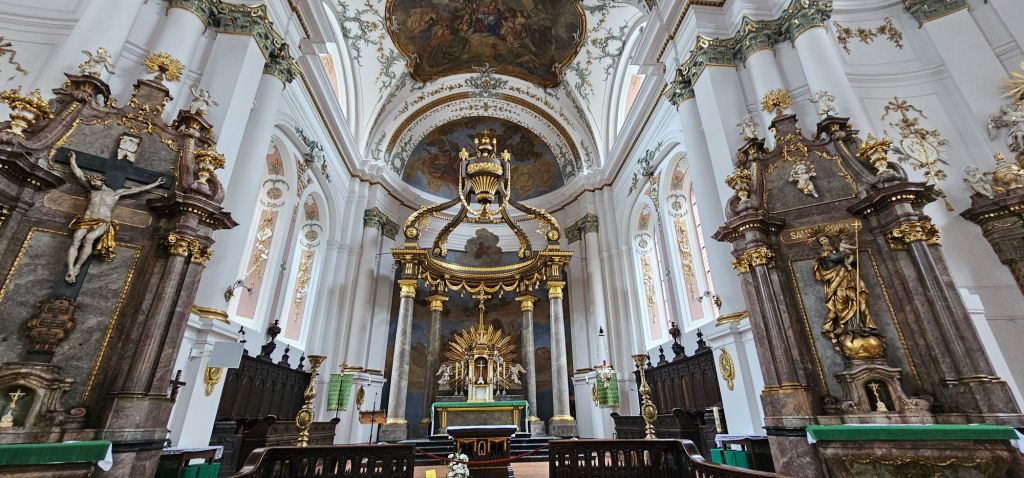
A few minutes away is the St. Ignaz Church, where it looked like it was getting ready for a wedding to happen. Its best feature is the ceiling paintings (1773-1776).

From here, wander the streets and avoid the rain before grabbing a bite to eat and heading back to Frankfurt. I came for 3 hours, which was a little too short. Another hour or two would have been good to explore a little bit more, but with the rainy weather, I was glad to be done anyway.
 Chasing Summer -
Leave a comment