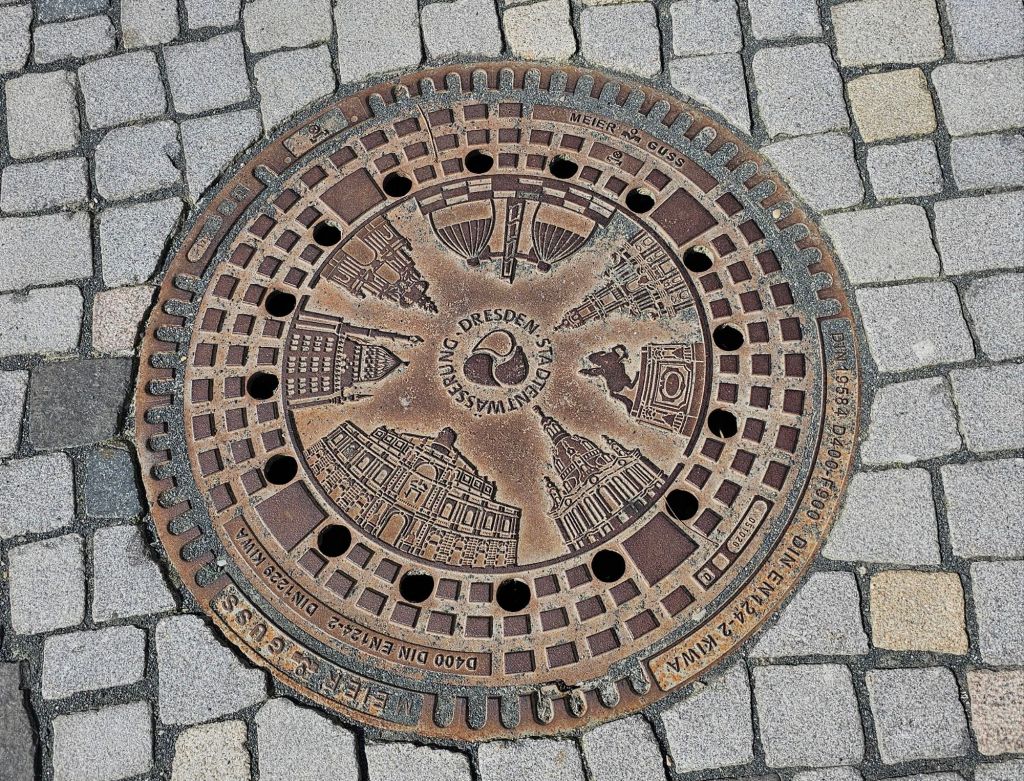
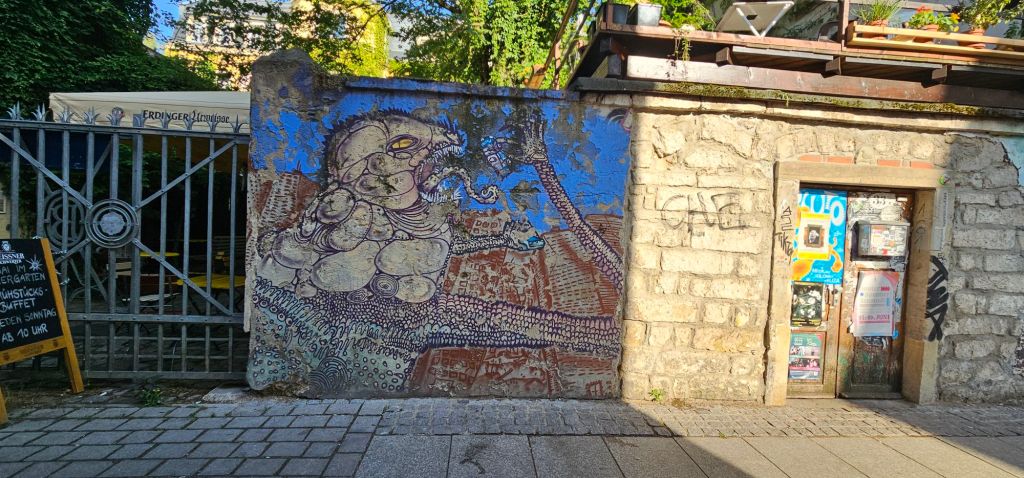
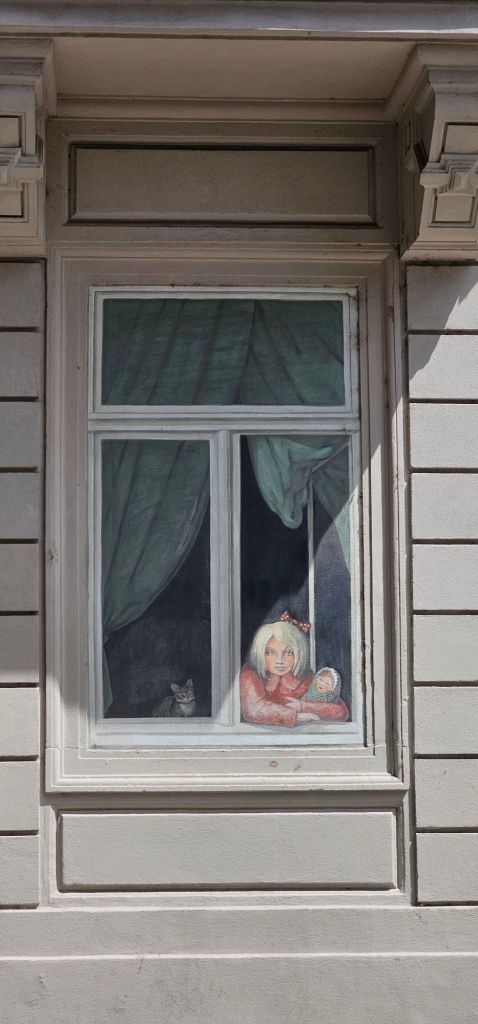
For this city, I wasn’t staying in the old city as it would have been too expensive, but rather in the city center, which was only a 30-minute walk to the old part. I must say the graffiti buildings were oddly appealing to me.

Early the next morning, I ate breakfast at my hotel and then began my exploration for the day by 8 am.
I know that this is too early for many buildings to be open, but with the daily temperatures being so high for the past few weeks, I love getting out there before it becomes unbearable.
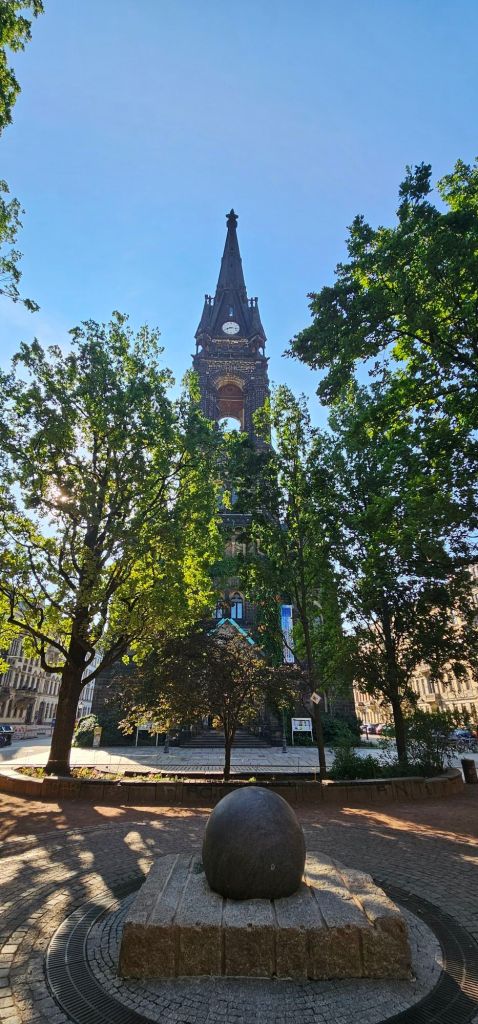
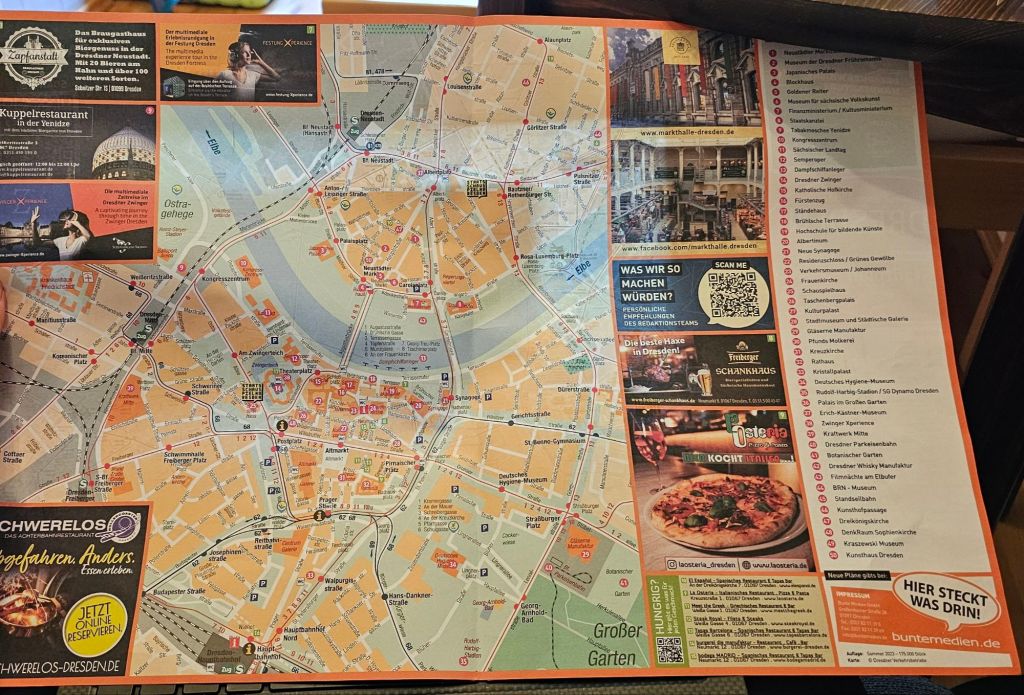
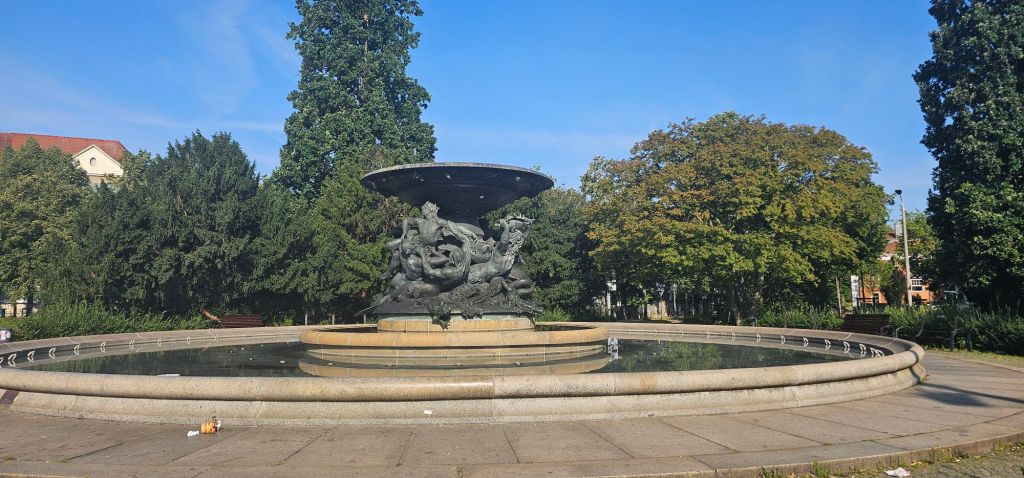
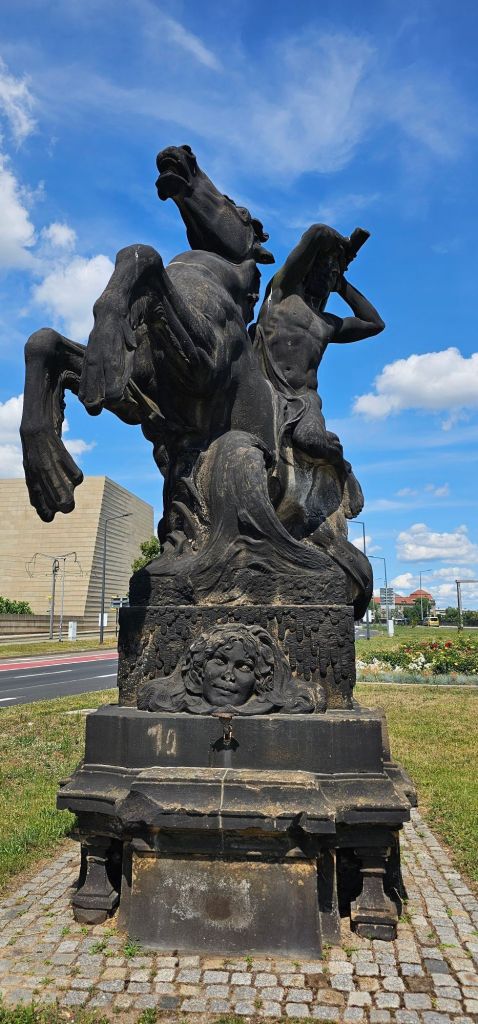
Before getting into Old Town, I reached Albertplat (Albert Square). This is a city square that connects New Town and Outer New Town. There are several statues and fountains around the circle.
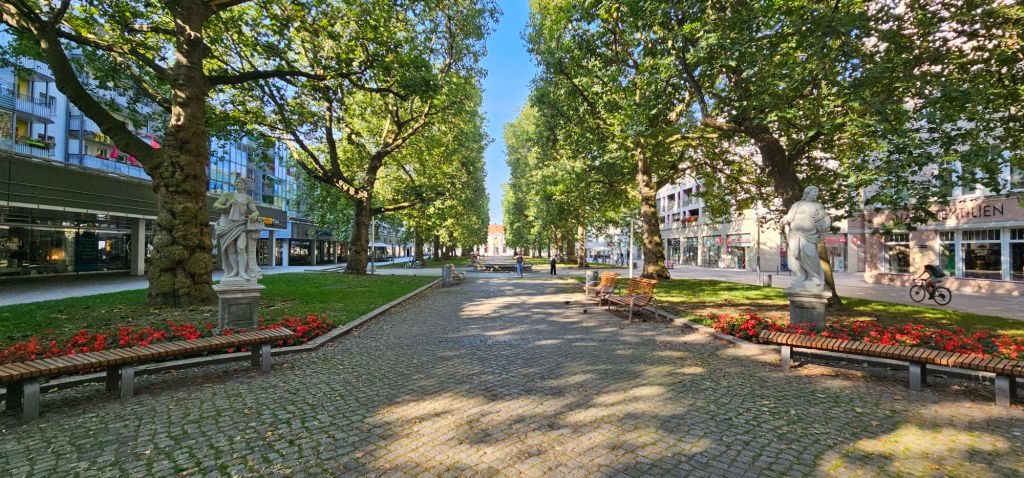
From Albertplat to the Old Town is a straight road with museums and statues on either side.
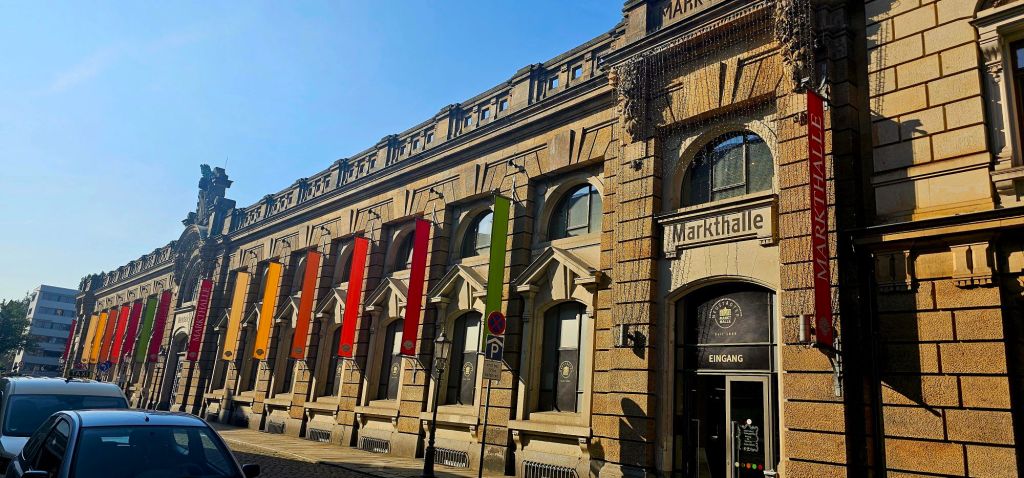
About half way down is the New Town Market Hall (Neustadter Markthalle), which opened in 1899.
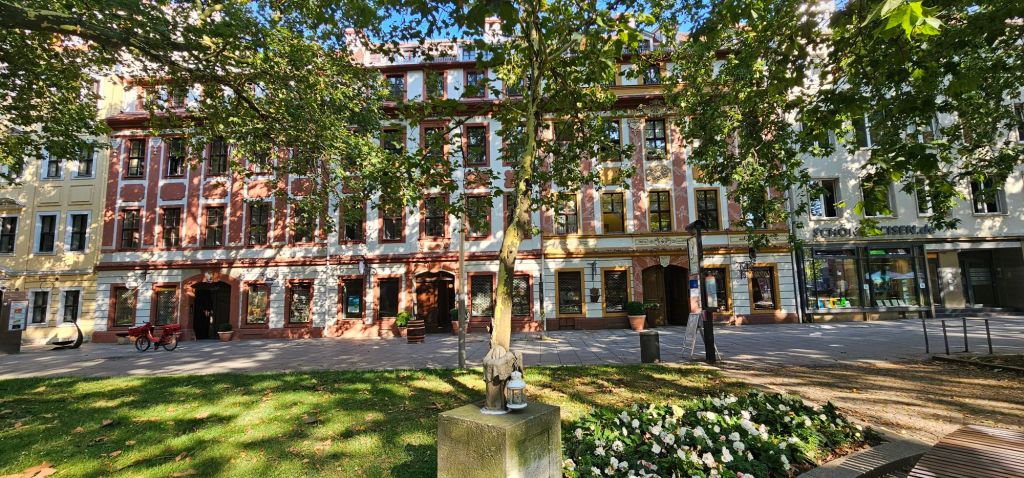
Across from the market is the Dreikonigskirche (Church).
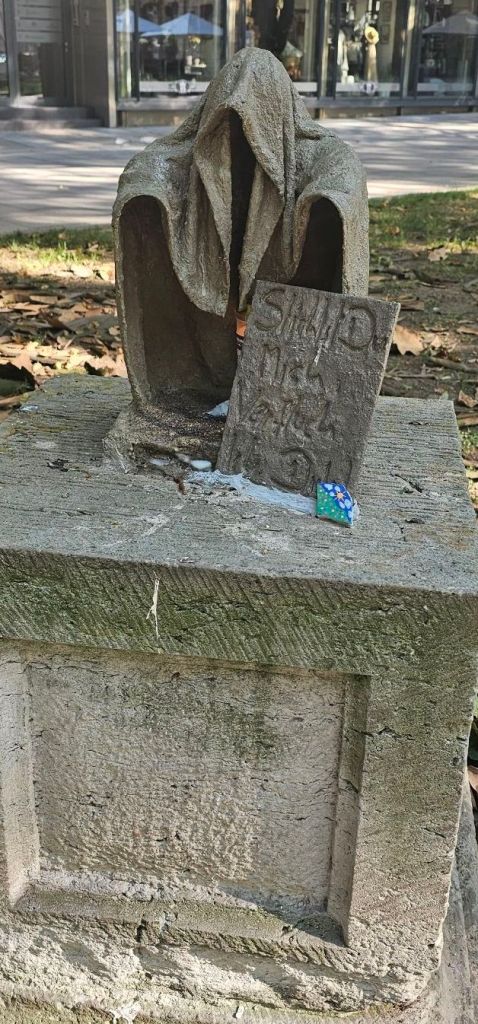
From this point to the end of the street is a tree-lined pedestrian path with statues. Several looks like the work of a prankster who glued their own creations onto the pillars lining the path.
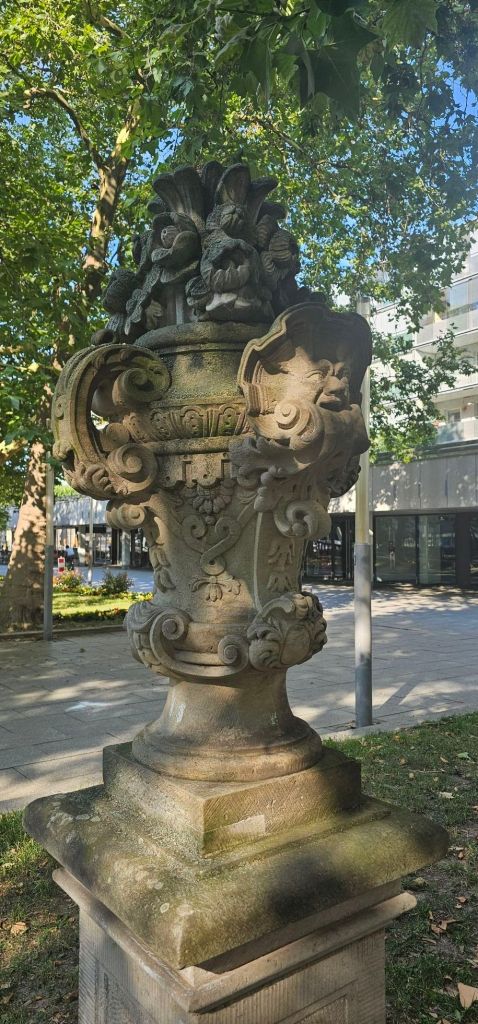
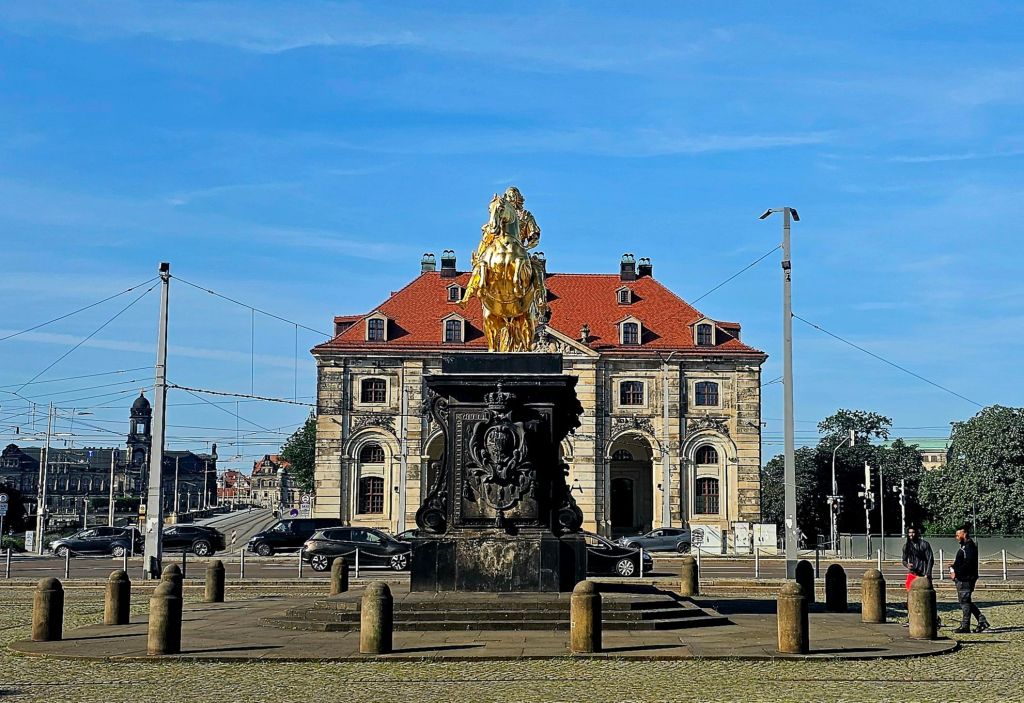
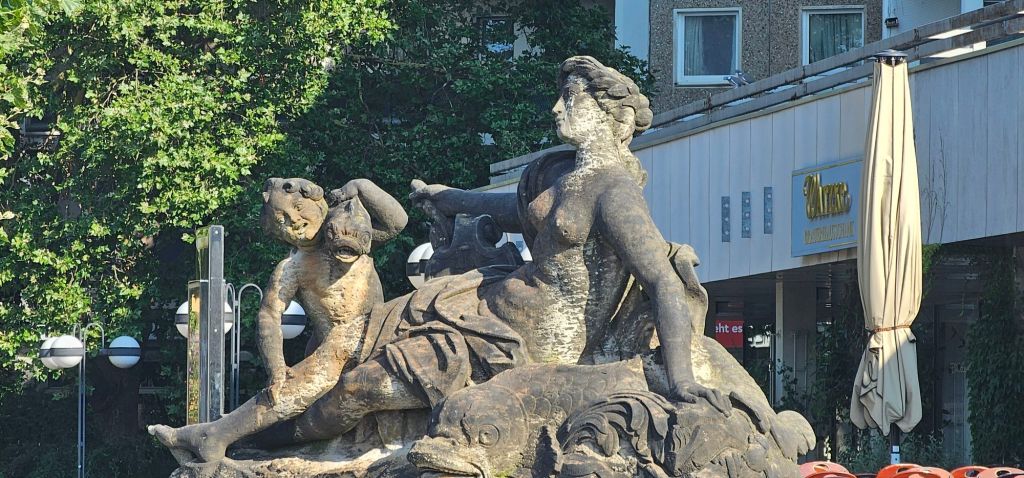
The end of the path leads to New Town Market Square (Neustadter Markt), where there are two nymph fountains, two concrete fountains, and the Golden Rider. The Golden Rider is a statue of August the Strong and erected in 1884.

From there, I needed to cross the road to get to the Augustbrucke. This is a bridge that crosses the river Elbe and connects the old and new towns.
The earliest mention of a bridge in this spot is in 1275, so again, I’m thinking that new doesn’t mean the same thing to me as it does here.
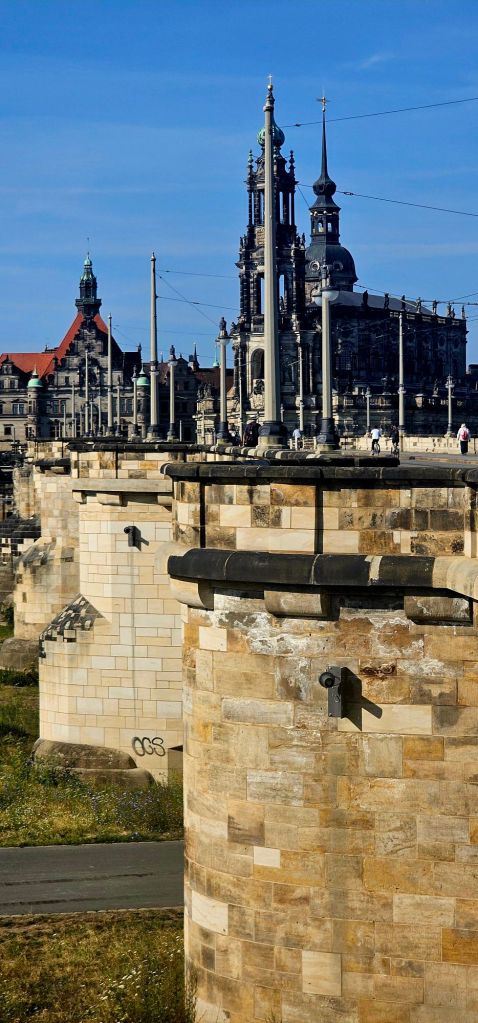
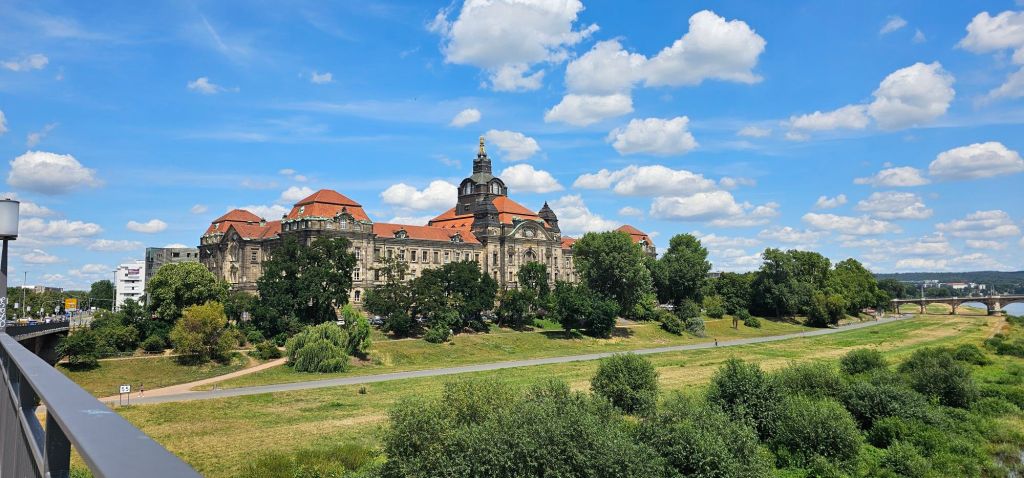
The terrace contains a statue for Johann Friedrich Bottger, who invented European porcelain. It also houses Saxony’s Supreme Court, the Academy of Fine Arts, the Albertinum, and the Sachsisches Standehaus.
When I arrived at the bridge, I could finally see the Old Town. It is so magnificent and overwhelming. I can imagine people approaching this city would have been absolutely stunned back in history.
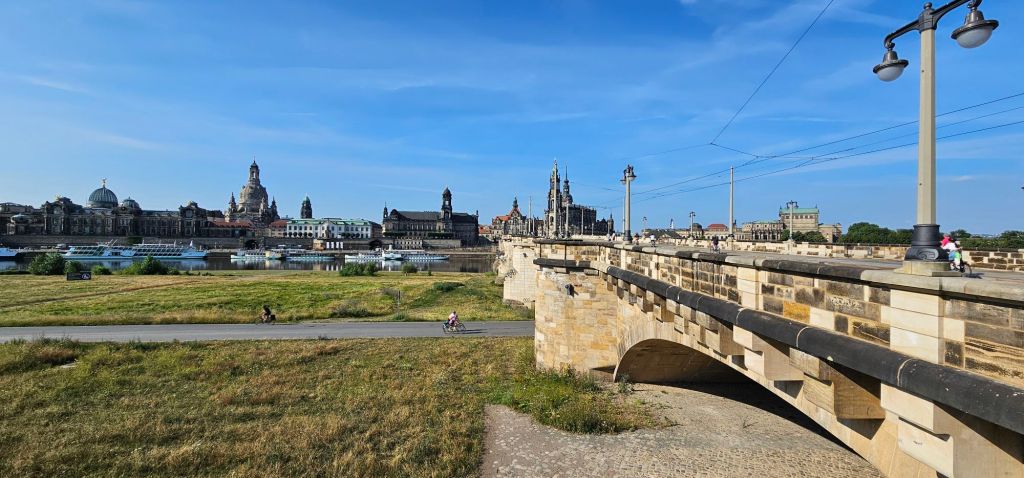
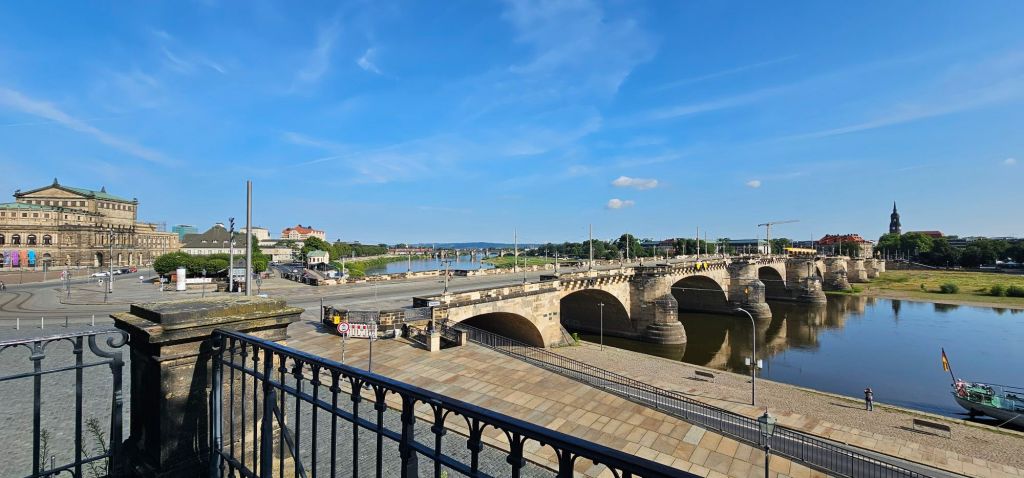
Directly across the bridge is the Dresden Cathedral, which was completed in 1751. Attached to the cathedral by way of the raised walkway is the old Palace.
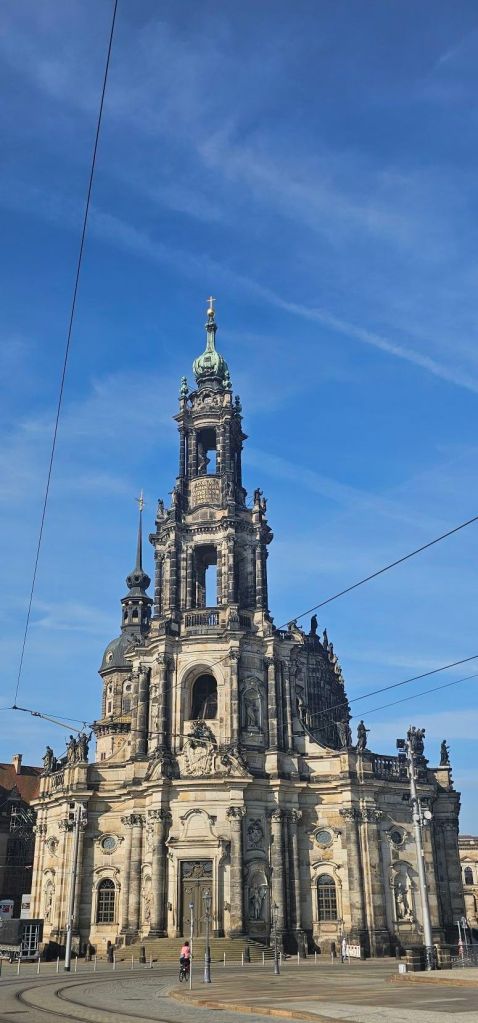
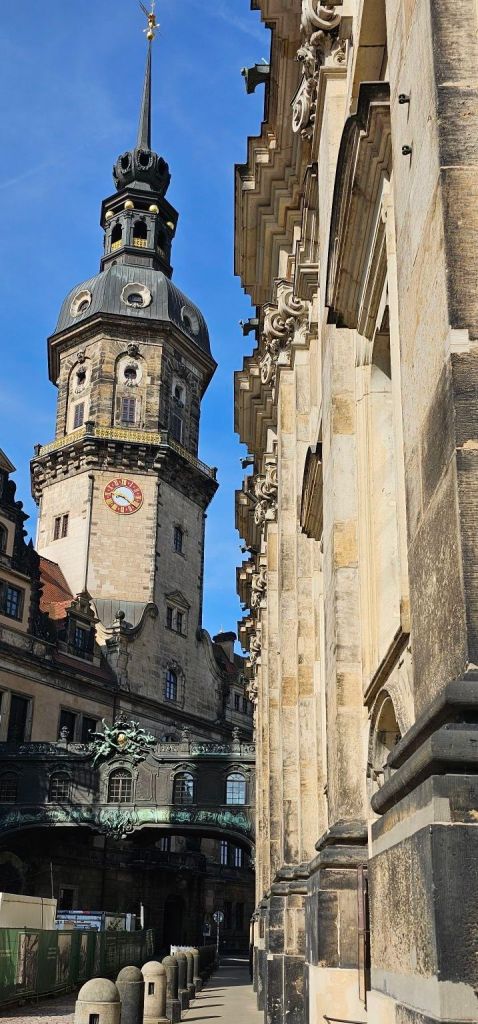
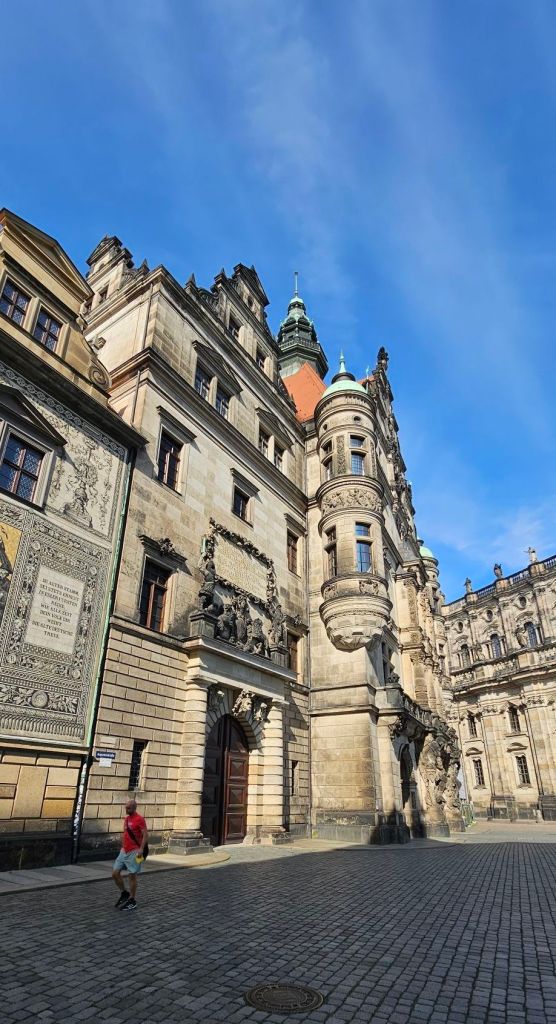
The old Palace began as George Gate (Georgentor). This was the original exit from Dresden to the river. In 1701, a fire destroyed Dresden Castle, and the gate was converted into Royal Apartments.

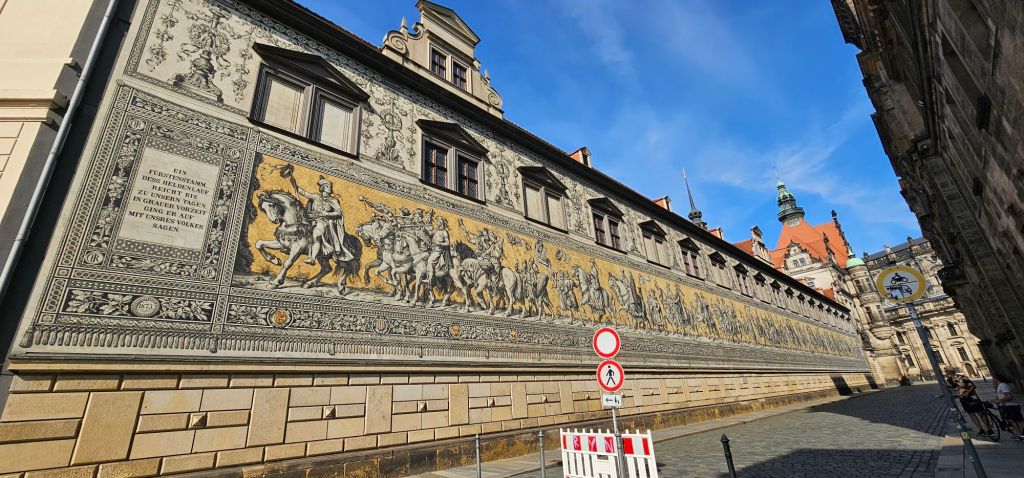
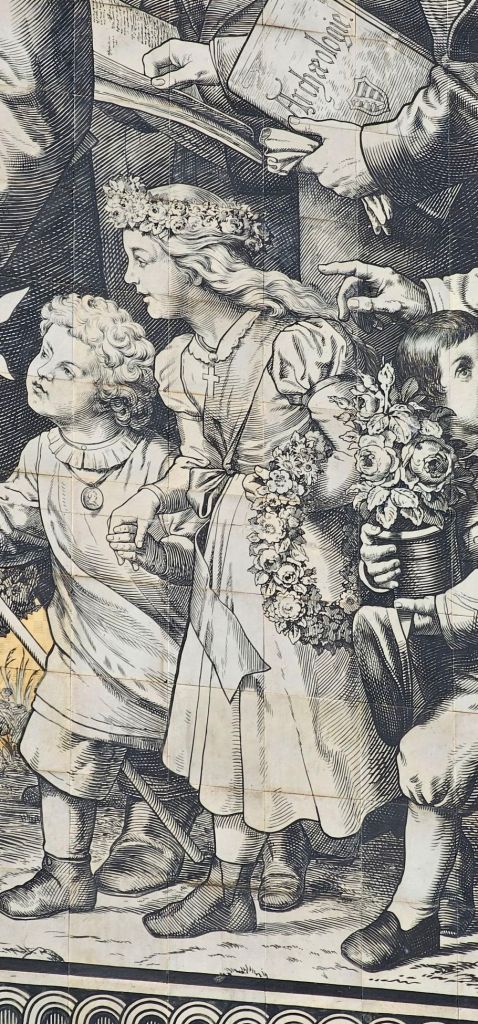
Along the wall of the gate is the Mural Procession of Princes. It originally was a painting completed in 1871-1876, but when the colors began to fade, it was replaced with porcelain tiles between 1904 and 1907. It shows the kings from 1127 until 1904. There is only 1 female in all of the figures, a young girl.
To the right and across the Castle Square is Bruhl’s Terrace. It originates from 1547. As with most buildings here, it was heavily damaged in WWII during the Dresden bombing and has been restored.

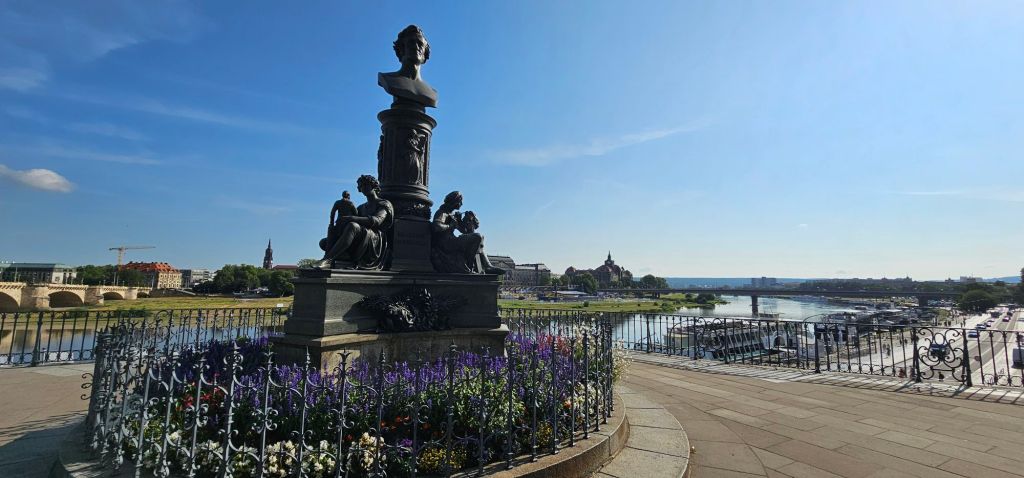
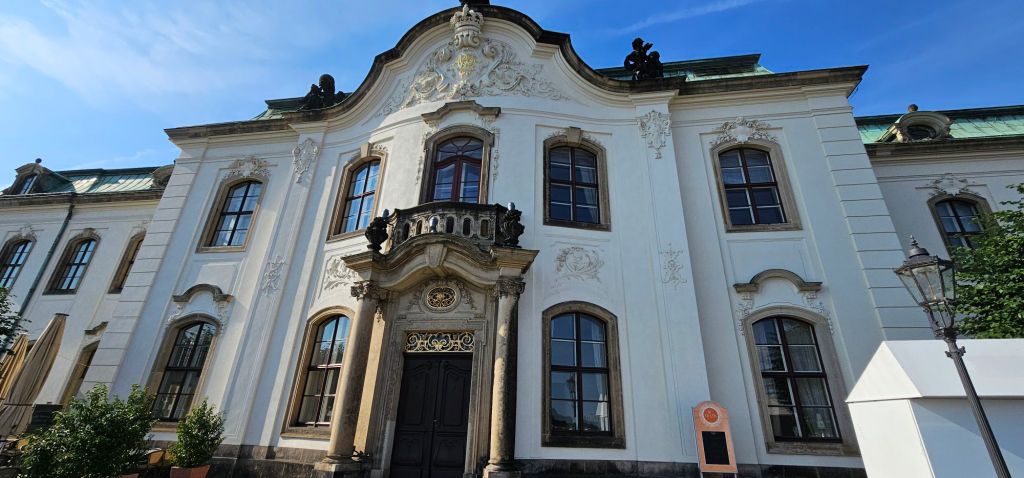
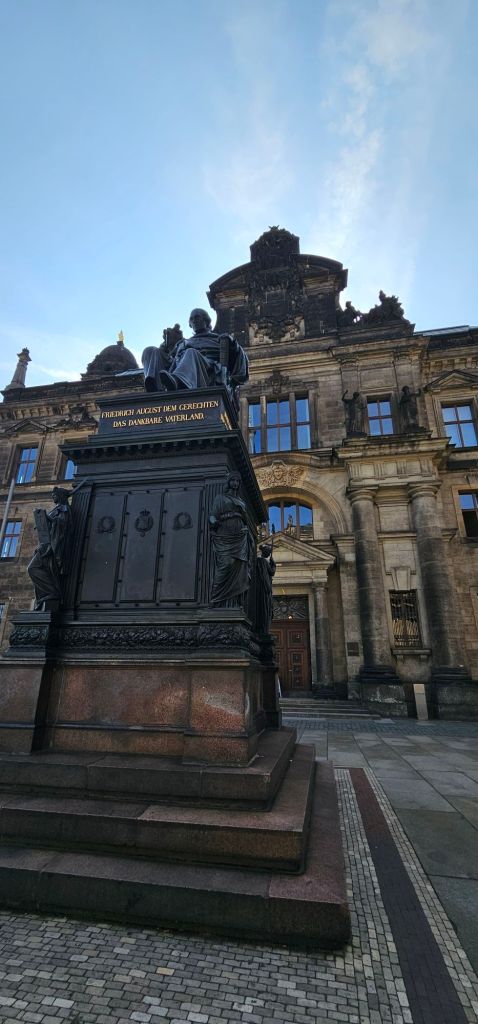
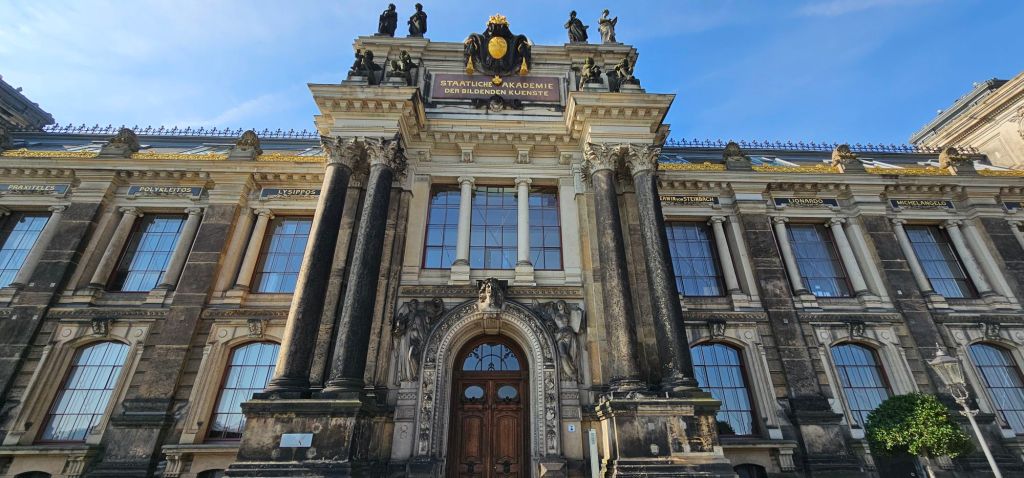
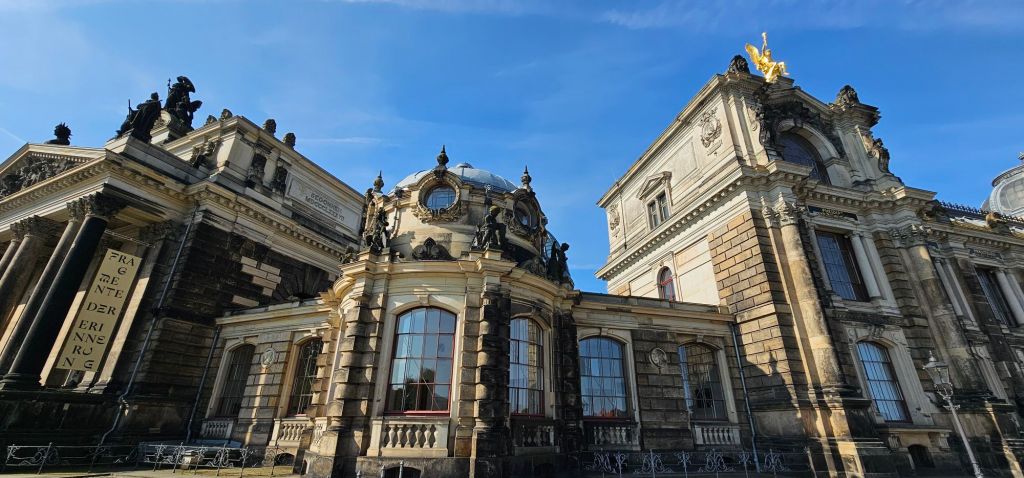
My favorite is the Academy of Fine Arts, which is actually three gorgeous buildings. They were originally built between 1887 and 1894. It has a glass dome that is called the lemon squeezer because of its shape.
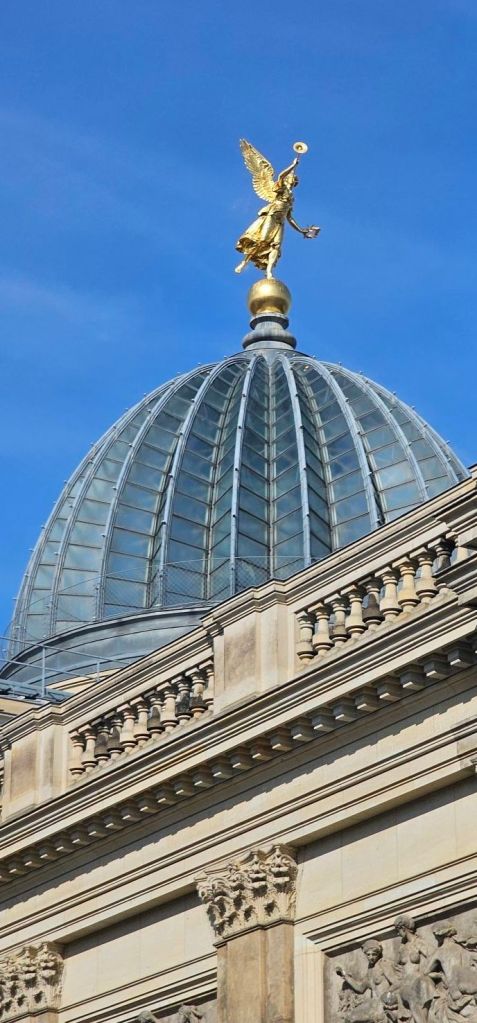
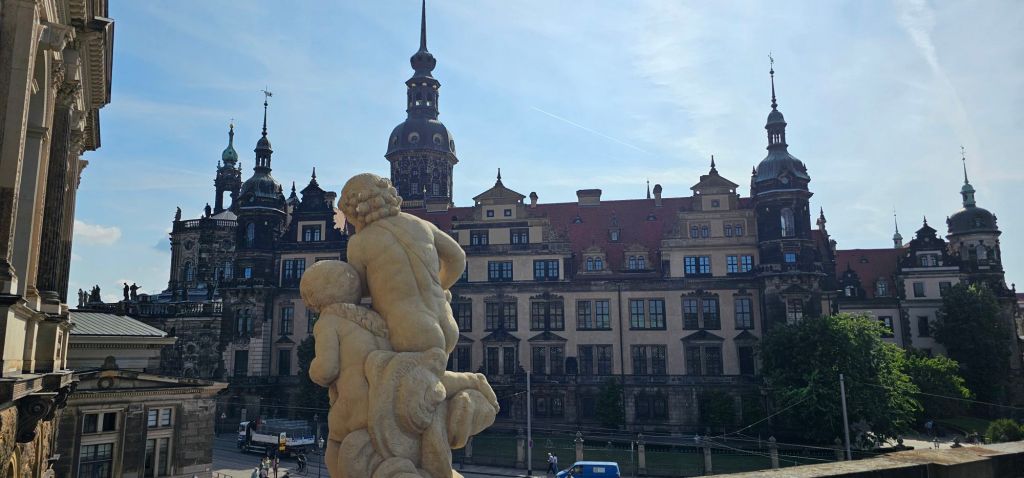
Behind the cathedral and George Gate is Dresden Castle. Today, it holds multiple museums.
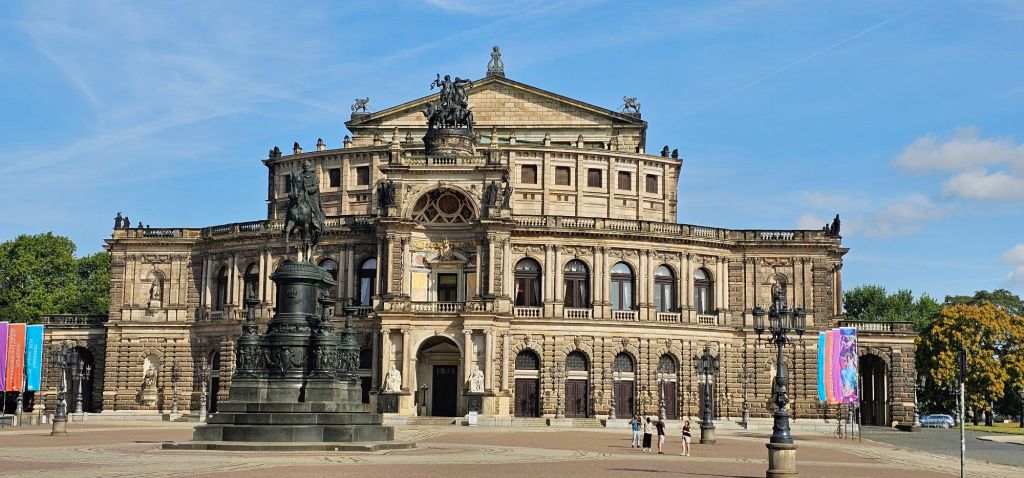
Across the road Is Theatre Square (Theaterplatz). Here is the former court theater and Semper Gallery.
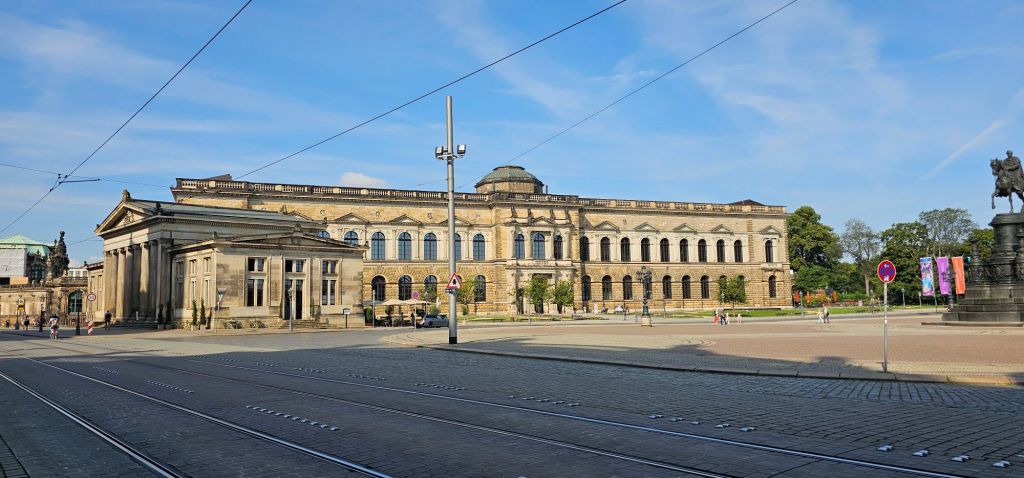
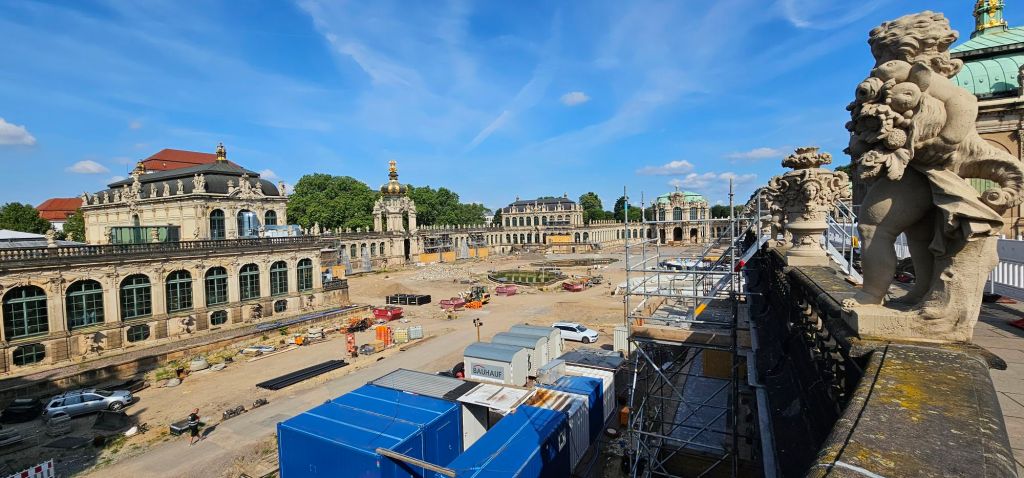
Nearby is the Zwinger (Palatial Complex), which is currently undergoing construction. It was an orangery, garden, and festival area built between 1710 and 1728.
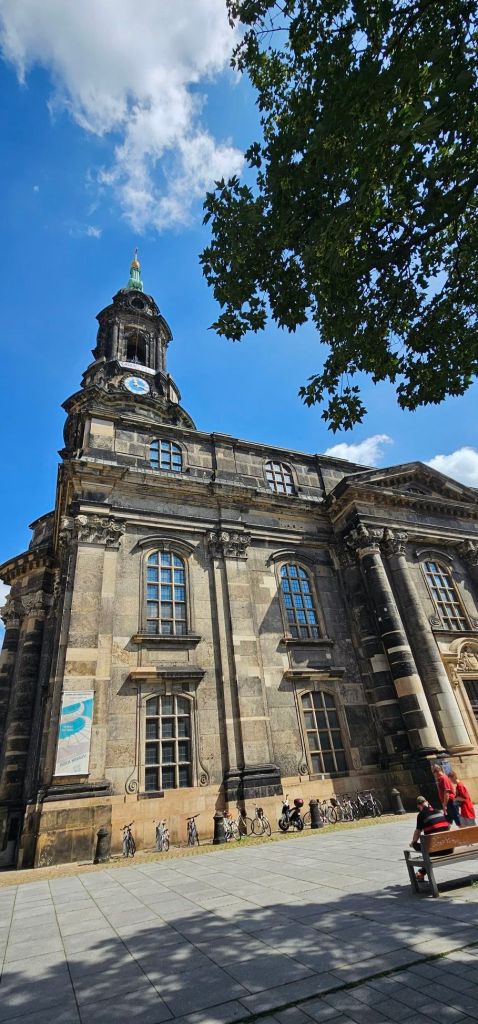
From there, I walked to the Old Market Hall (Altmarkt) and the Holy Cross Church (Kreuzkirche).
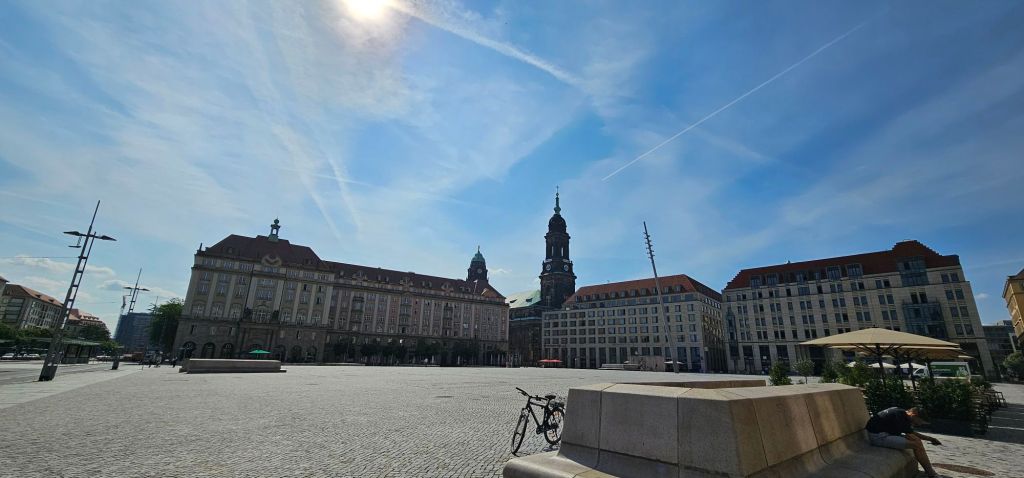
By this point, I was running out of steam. I made my way to the New Market Square, which became part of the city in 1530. (See what I mean about new having a different meaning, lol).
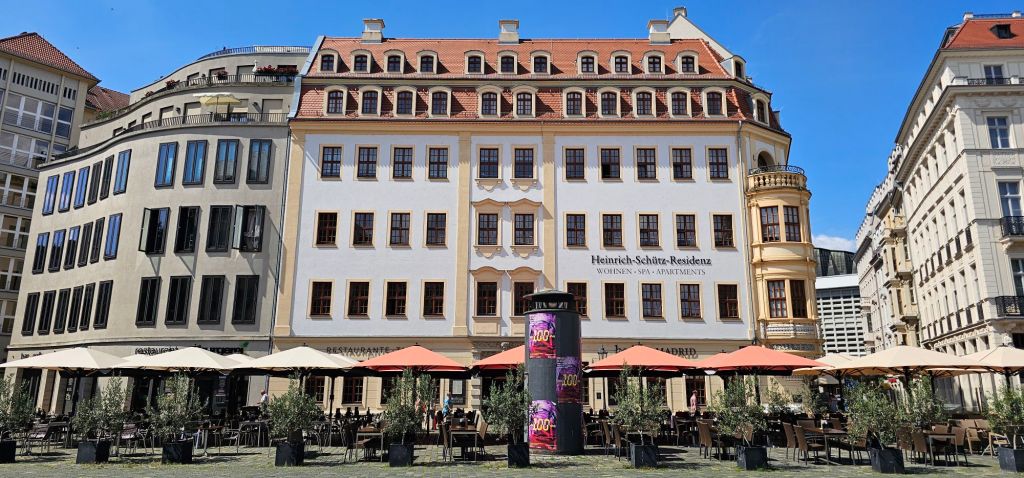
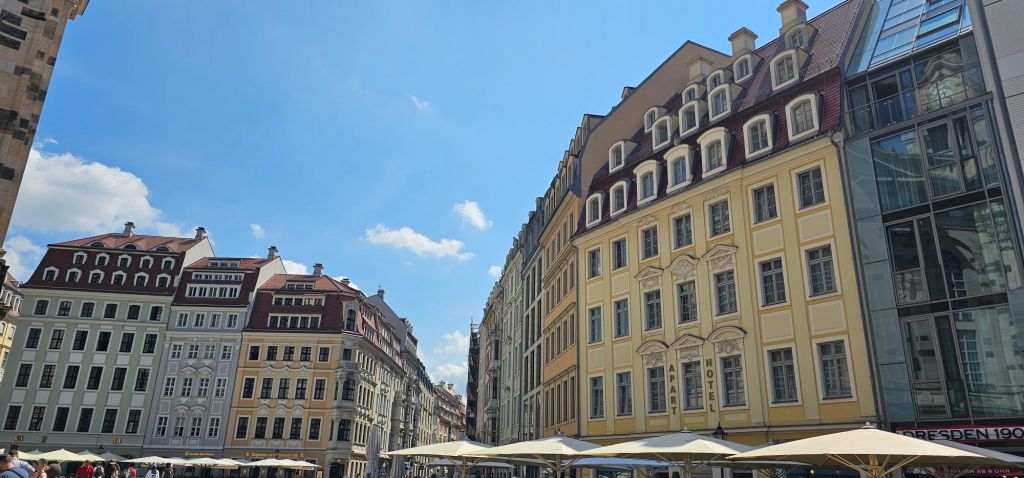
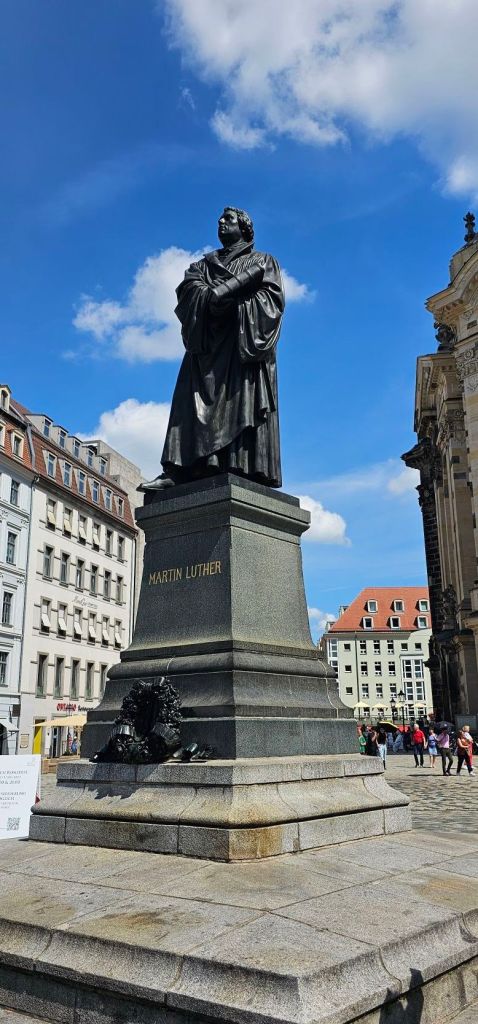
The one building that commands the most attention is the Church of Our Lady.
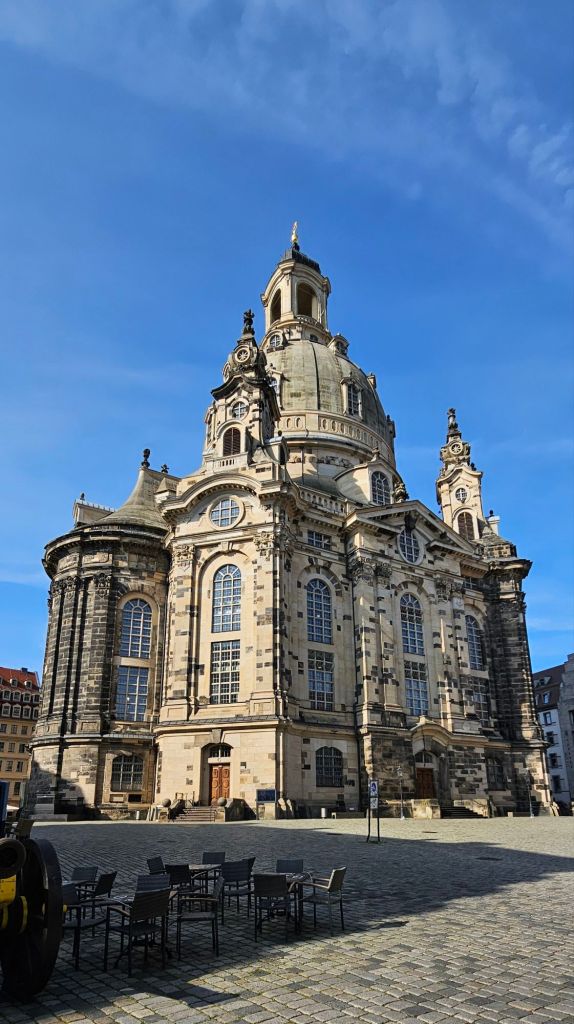
Luckily for me, the church was closed for an hour for lunch mass, so I sat and enjoyed a preztel and radler.
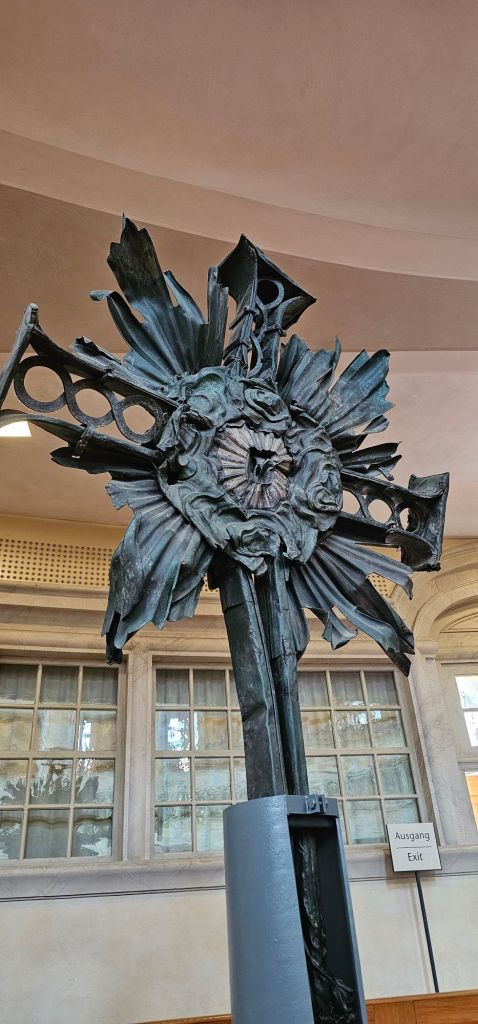
Inside the church, the original damaged cross stands inside the church’s altar. The church has been rebuilt like most of the Old Town due to fire bombing in WWII.

At this point, I was done. I’m sure I could have seen more, but I was happy with what I had explored and decided to walk back to my hostel to cool off.
 Chasing Summer -
Leave a comment