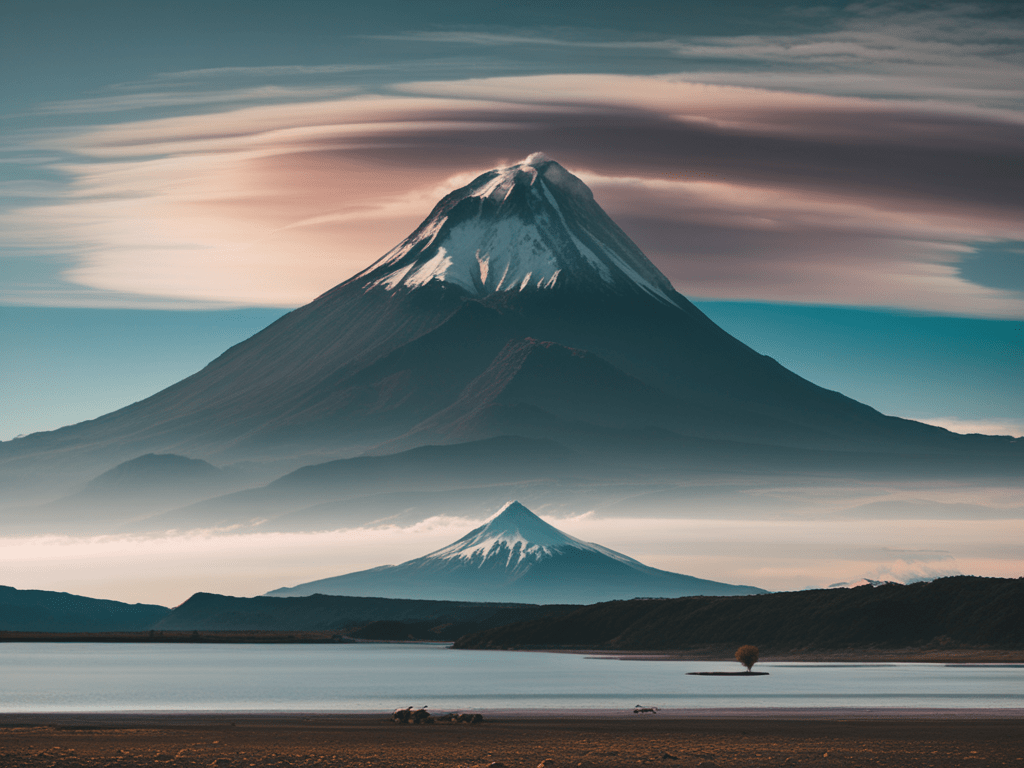
Today was a 12 hour traveling day. It involved 2 countries, 4 buses, 3 catamarans, and two cars. I went from Puerto Varas to Bariloche, but the long way.

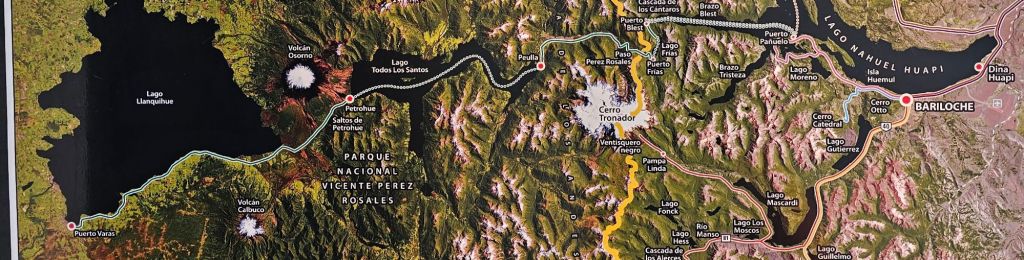
The route originally started as a way to ship wool to Puerto Montt and then on to Europe in the 1800s. The building of the Panama canel bankrupted the company, and it was bought and transformed into a tourist route in 1913.
The route can be done in either direction: from Chile to Argentina or Chile to Argentina. Some people do it over two or three days, overnighting at one of the islands we crossed. Others just do a portion and then return back to the start. And some bike and boat.
I did Chile to Argentina in one day. This is a pretty expensive tour so locals tend to take the regular bus which is quicker or drive. It costs a foreigner $325 US for a one-way one-day ticket on the tour.
First, I needed to be at the office in Puerto Varas at 8 am. I checked in my luggage then and grabbed a seat close to the front driver side. The company handles transfers of luggage from busses to boats, so I didn’t need to worry about them after this.
My poor tour guide had only me as an English speaker, so he would do his speil in Spanish and then do a much shorter version in English. Once, he just looked at me after a long discourse in Spanish and joking said, “The same in English.” All the tour workers were calling me Canada 🇨🇦 all day.
We drove about an hour around Lake Llanquihue towards Volcano Osorno to get to our first stop, Saltos del Rio Petrohue.
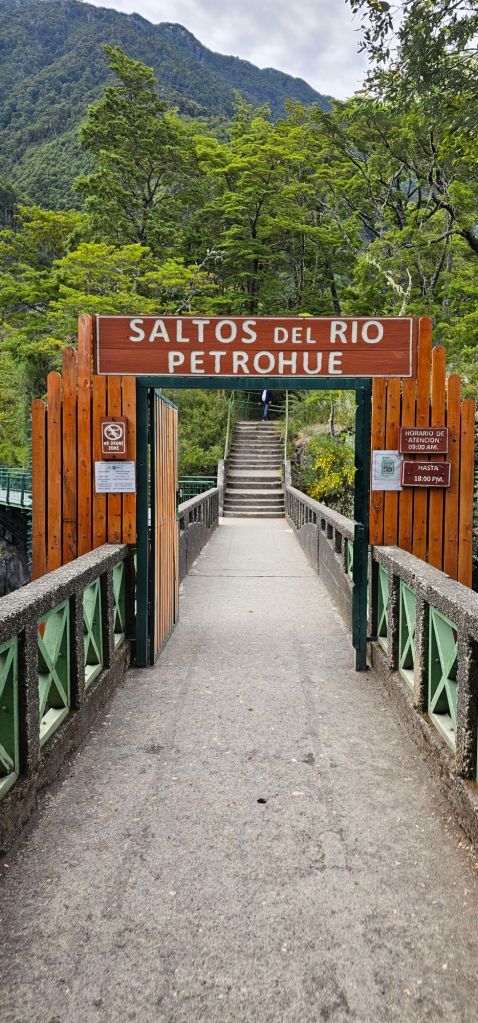


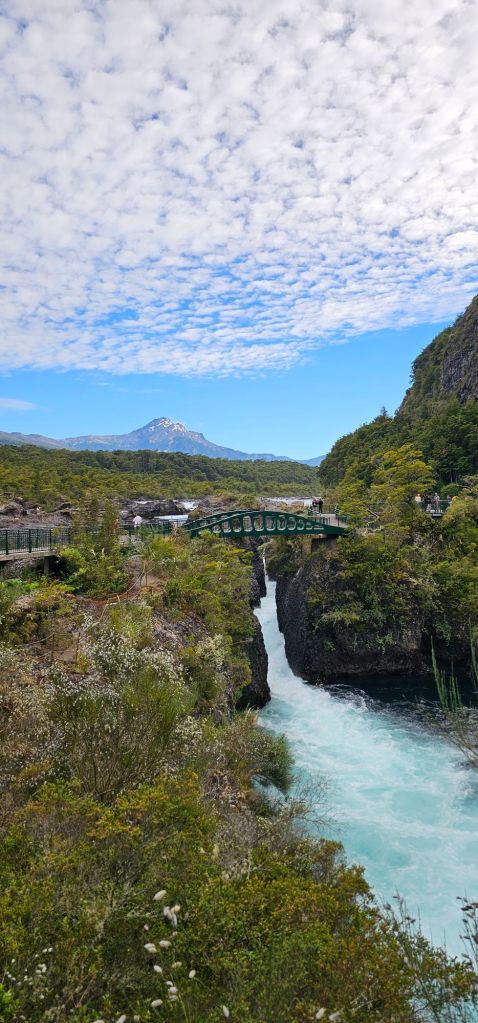
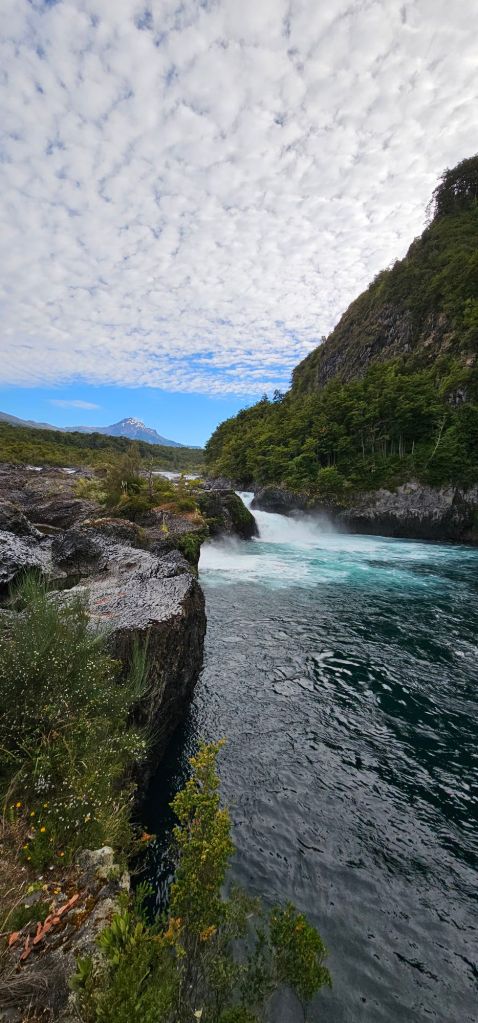
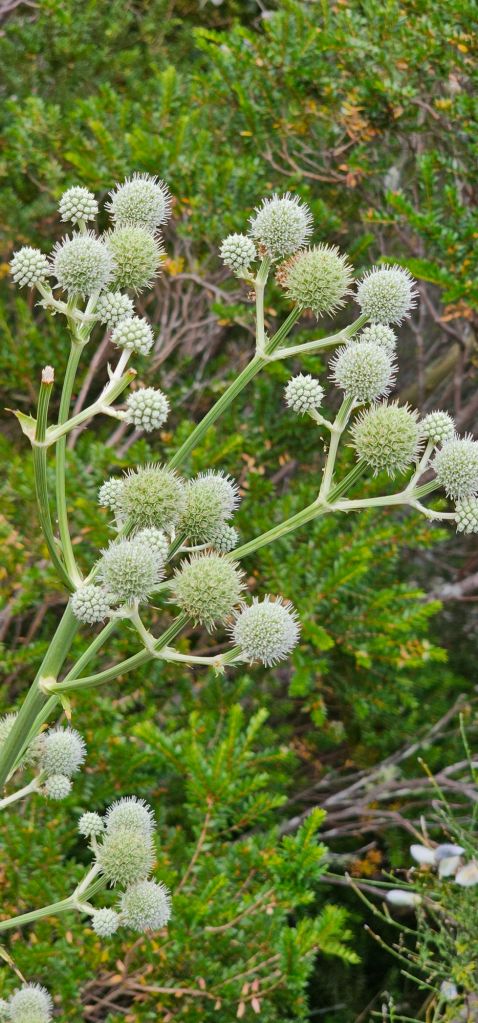
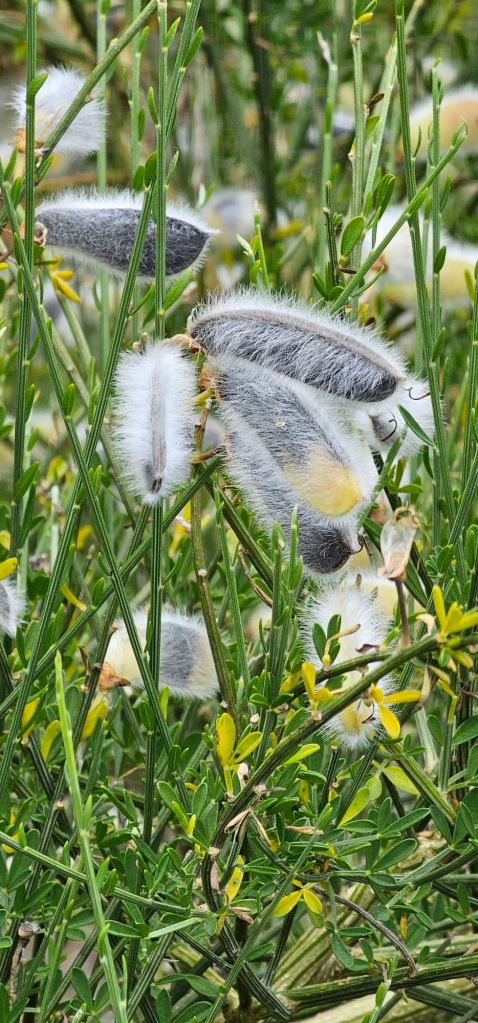
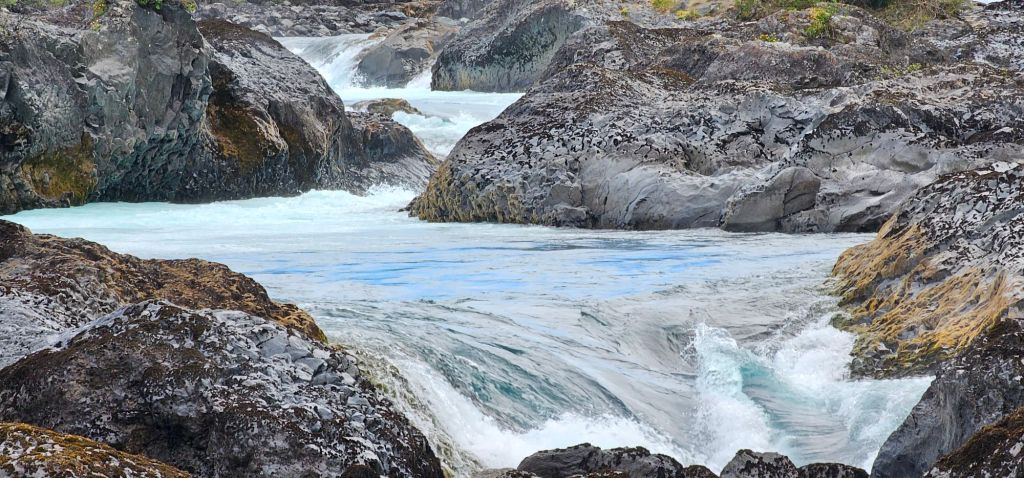
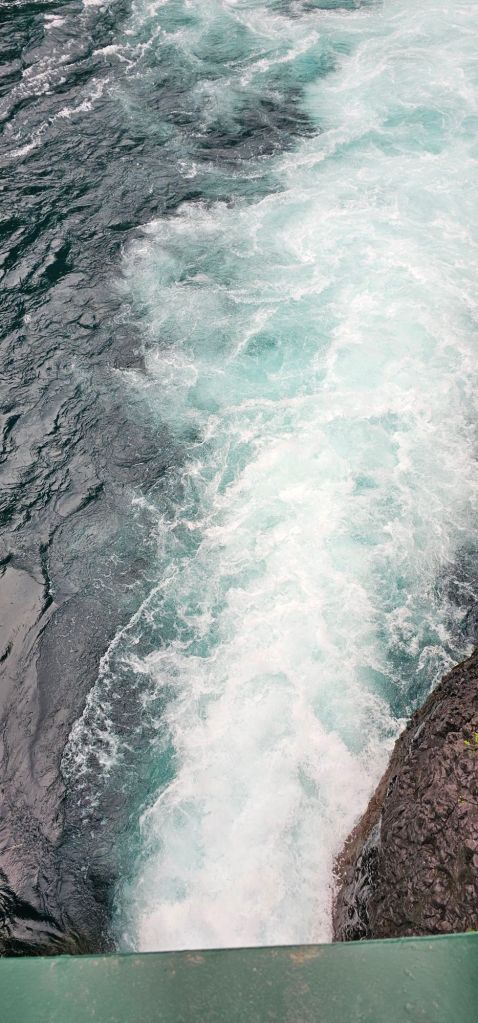
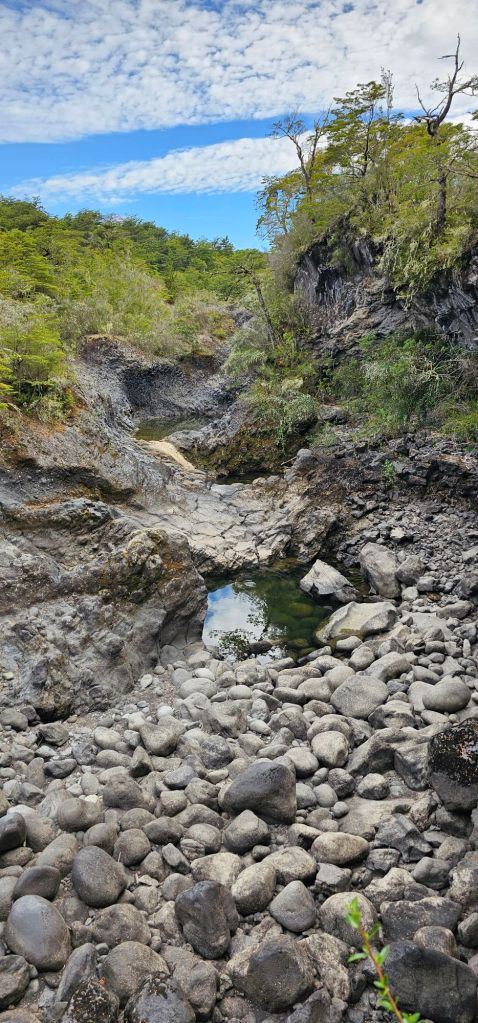
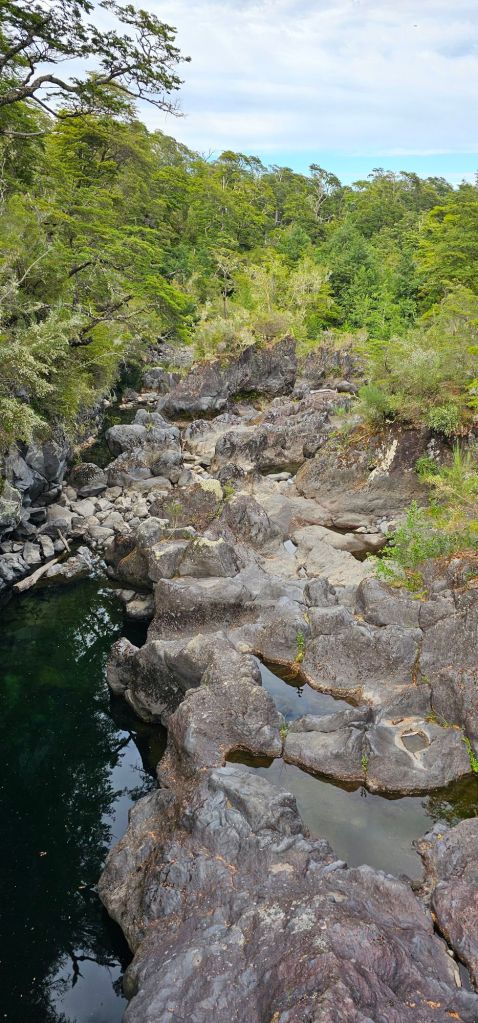
This stop cost extra, 7,500 pesos using your card.
It was a short 10 minutes after we left that we reached our first port at Lago Todos los Santos.
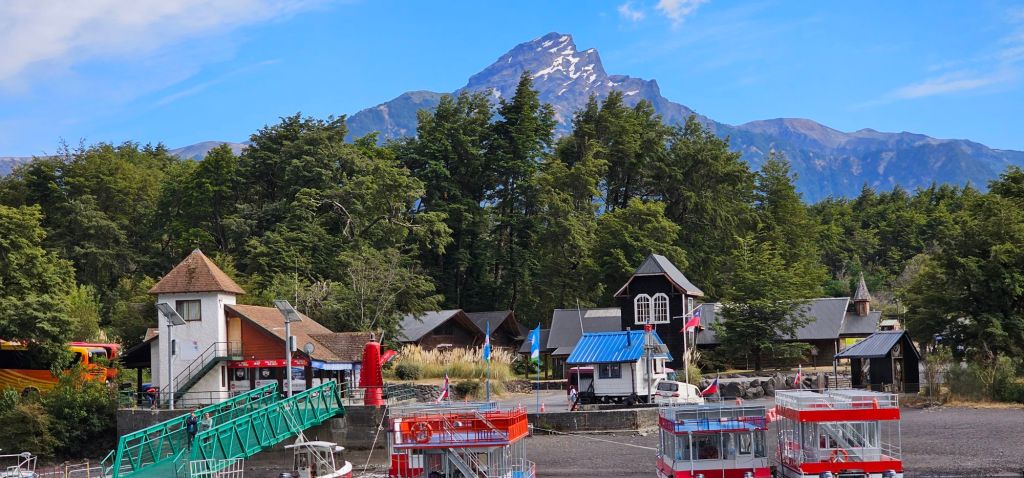
There, I spent 90 minutes crossing the lake. To views of Volcano Osorno and Volcano Puntiagudo.
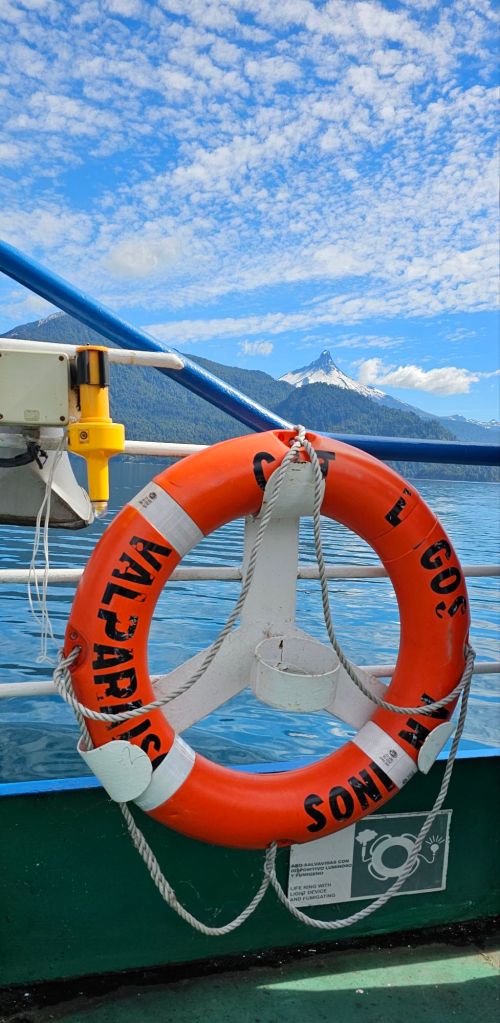
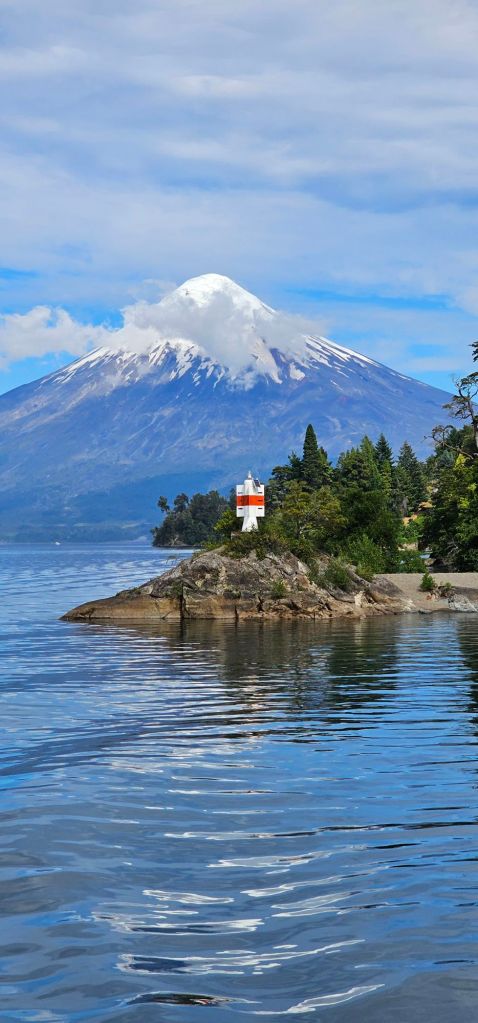
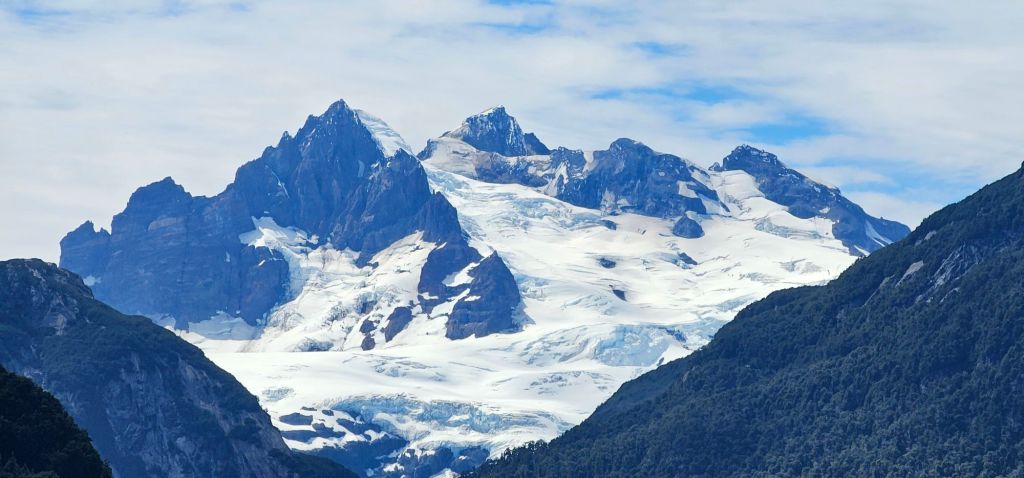
Along the route, there is one spot where local people might get off, but the boat doesn’t reach a pier. Another smaller boat just comes alongside for the pickup. It was just a mail drop off today.
We also turned in our passports if we were continuing on to Argentina. The company would take care of exiting us from Chilean immigration.
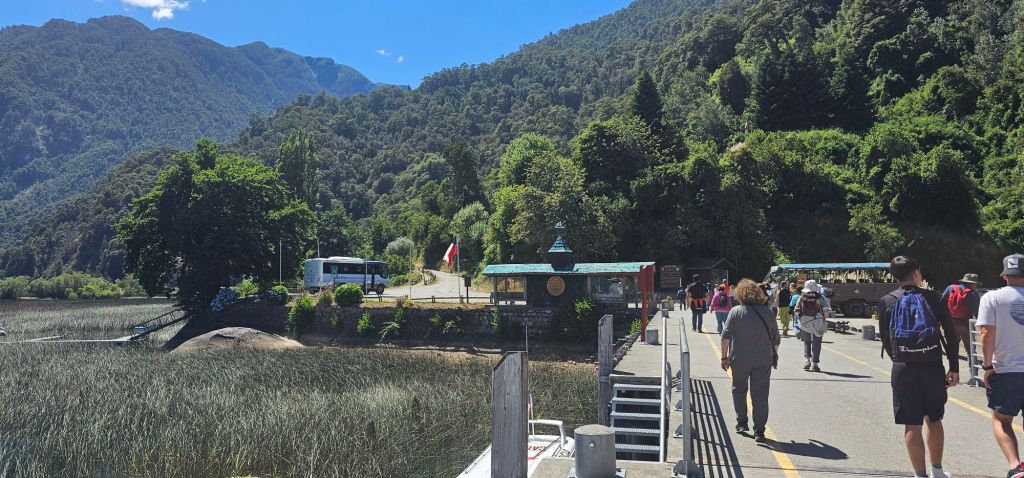
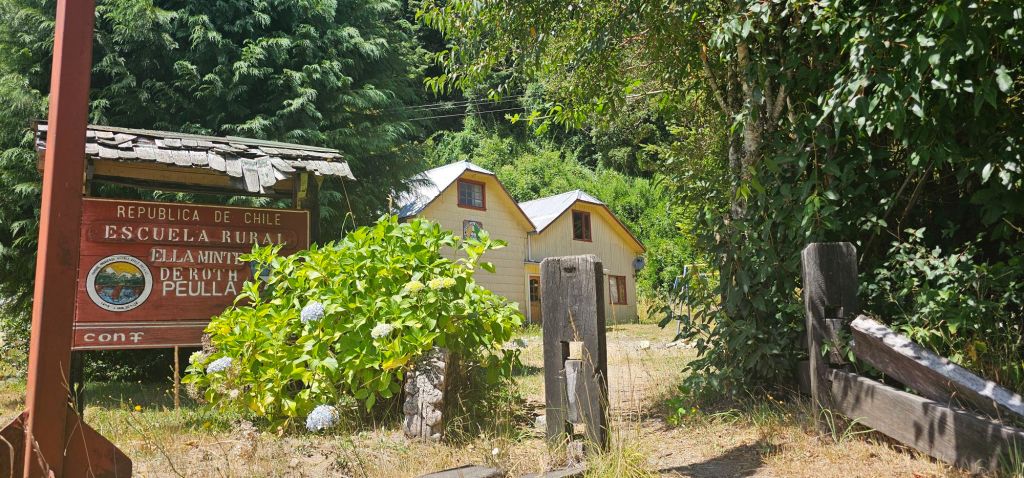
The boat docked at Peulla, and passengers had 2 hours 15 minutes for lunch at the only restaurant there is or going on a short excursion on the island.
There is a small village here of about 50 people and they are all there working for the hotel, estancia or Chilean immigration – there is nothing else there. This is where a large chunk of the group would be turning back since we would be leaving Chile by going further.
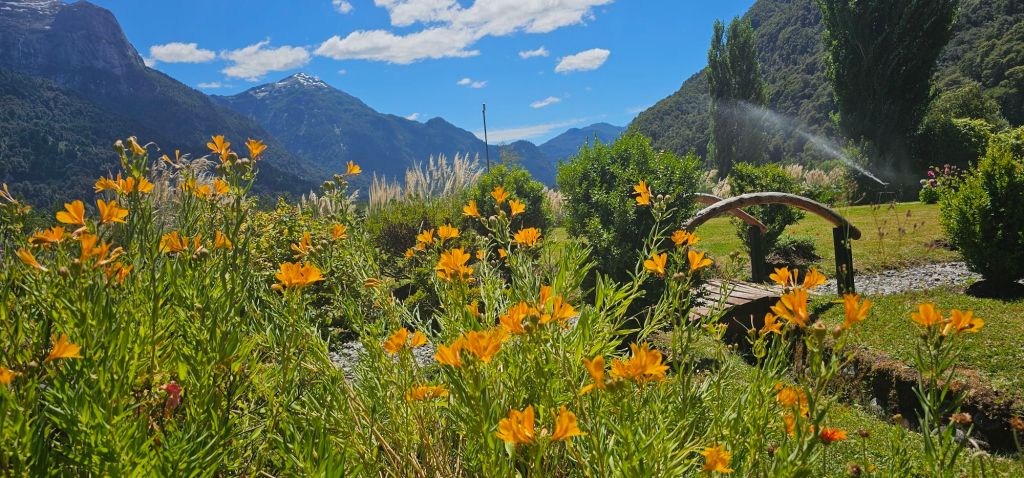
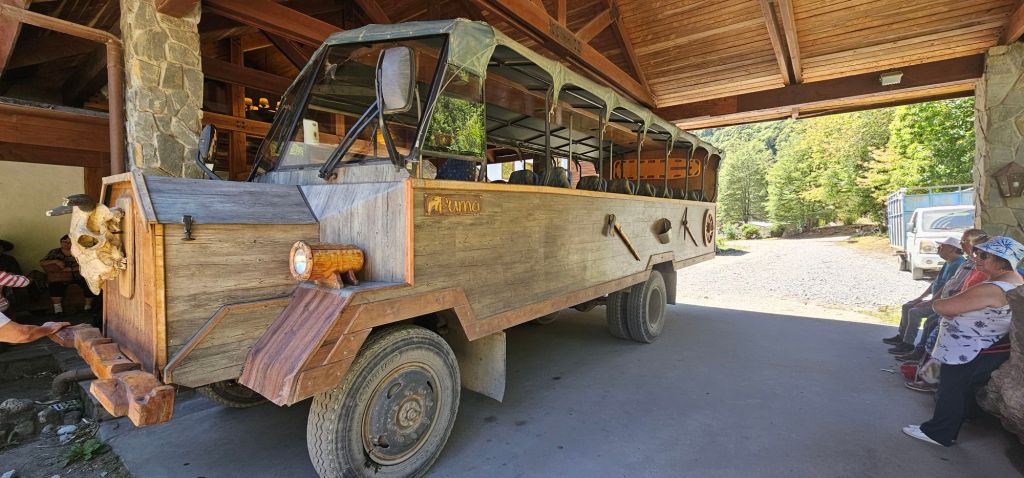
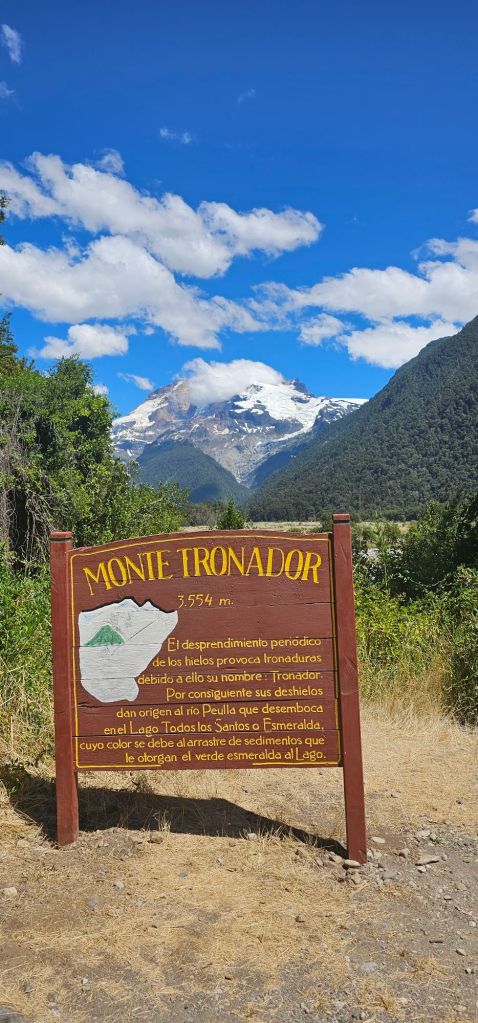
I got back on another bus to take us to Argentina and the next lake. Another bus, another guide, and I was still the only English speaker. This guide would finish his talk in Spanish and then quiz me to see what I understood. Along the way, we stopped to take a picture of Mt. Tronador and the crossing of Chile into Argentina.
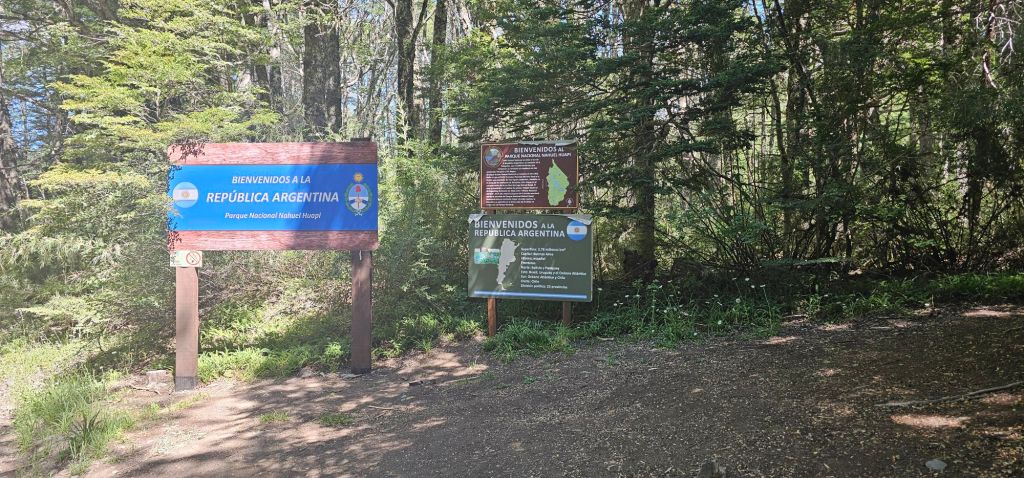

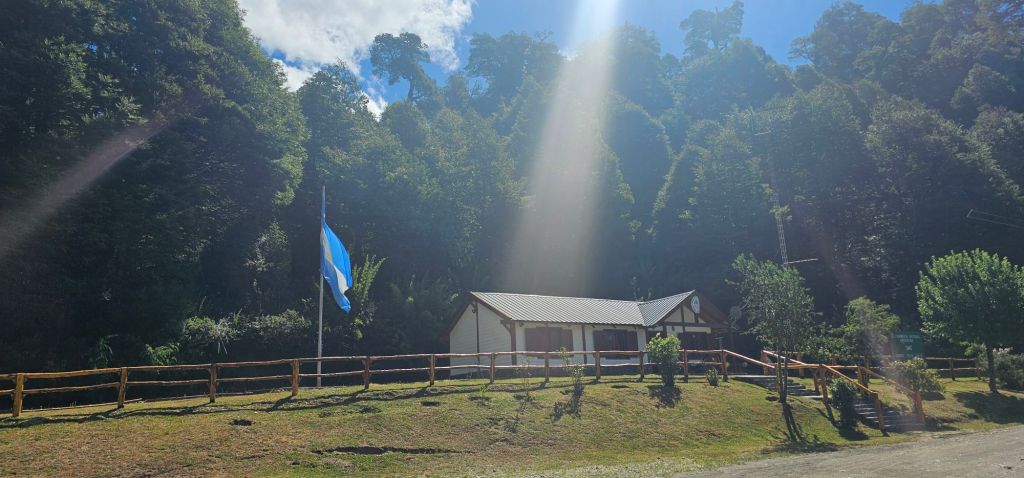
At Frias, we had to go into the immigration office to have our passports scanned. They also randomly pulled a few pieces of luggage to check – no x-rays here. One of mine was chosen so I had to open it for a brief check before trying to close that sucker again.
There was a small snack bar here, and this is the only place I’ve encountered that is cash only. The only.
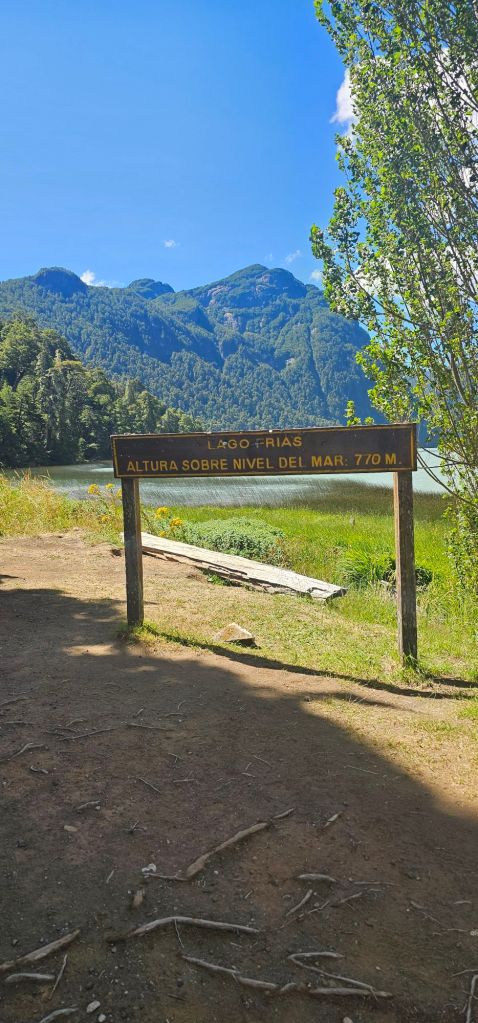
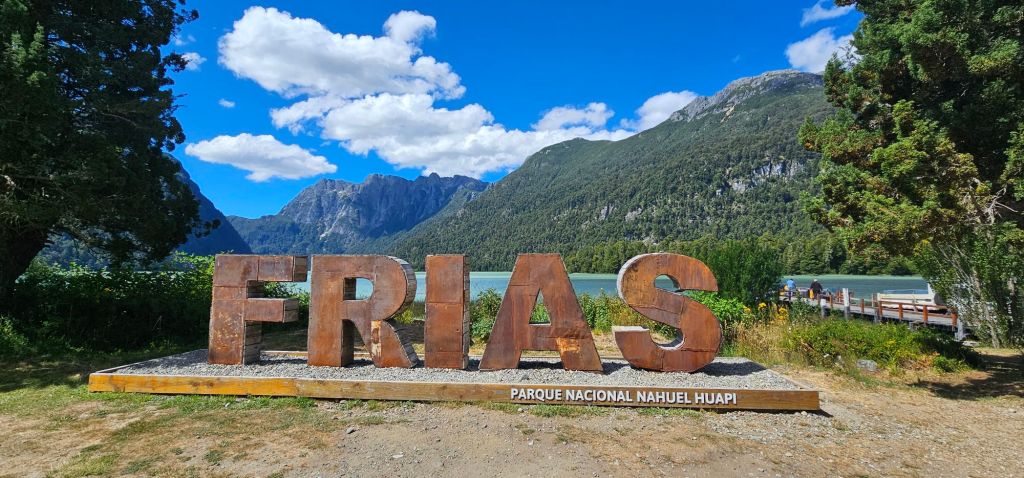

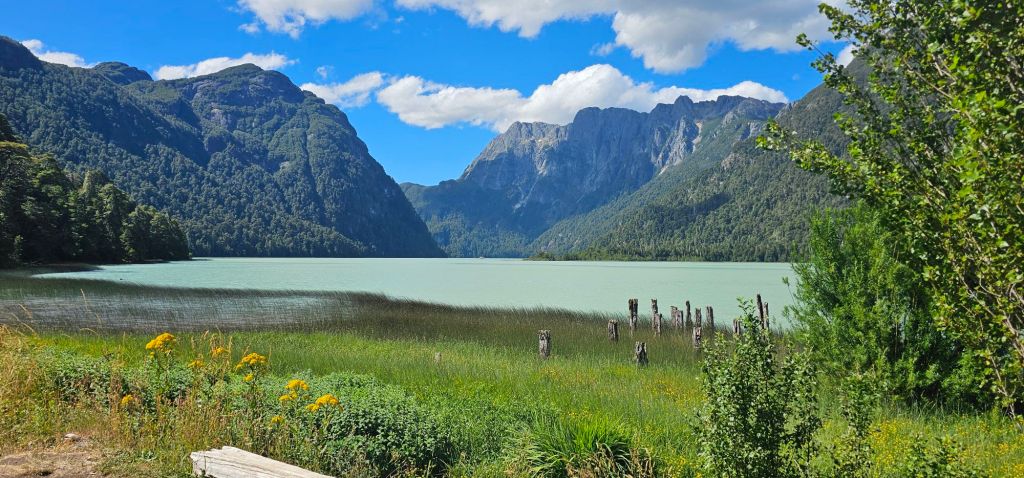
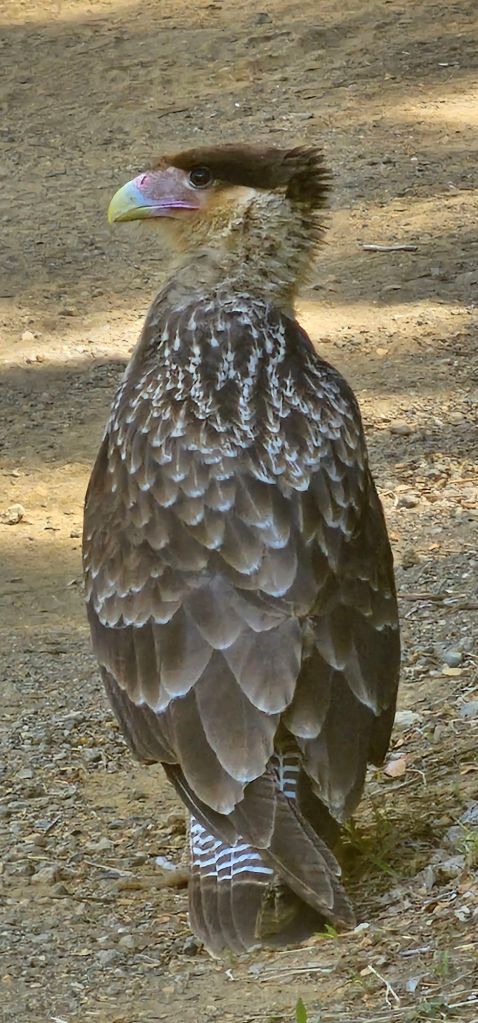
I hopped onto the next ferry to cross the lake to Blest.
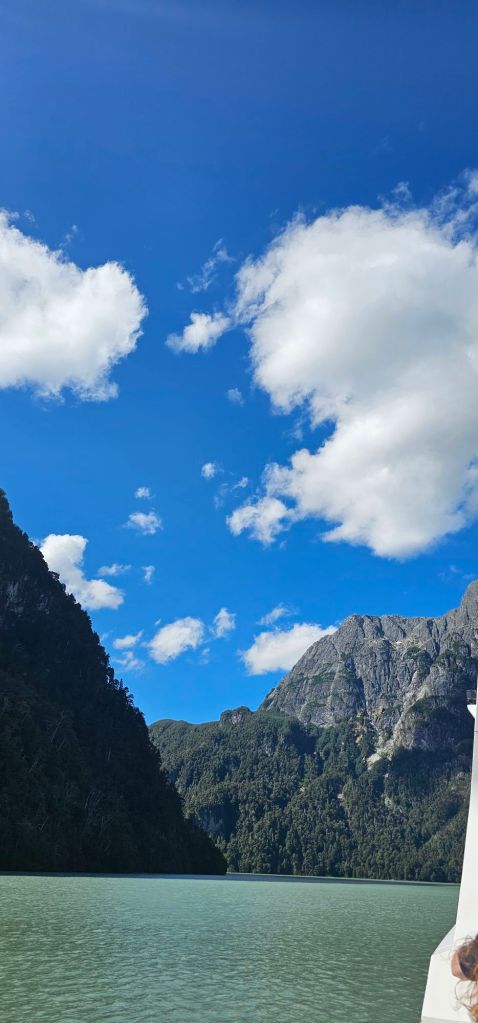
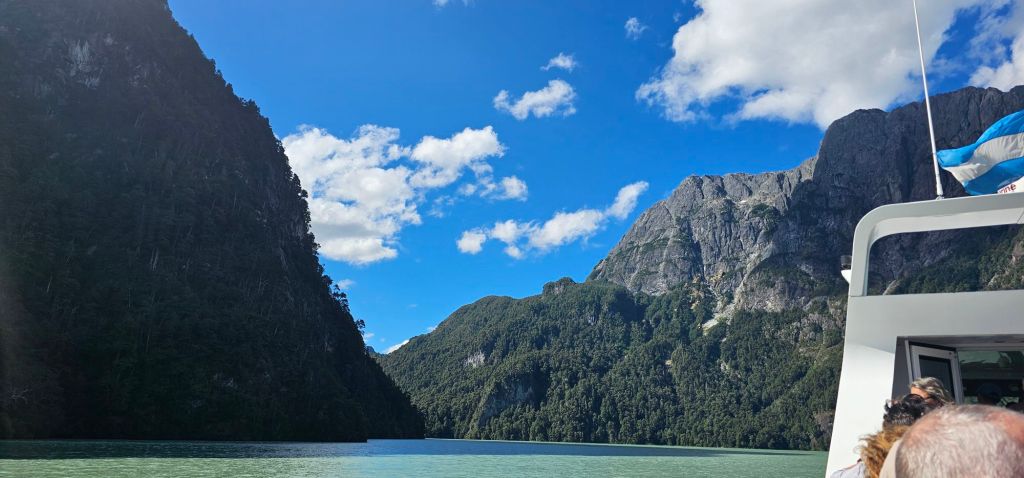
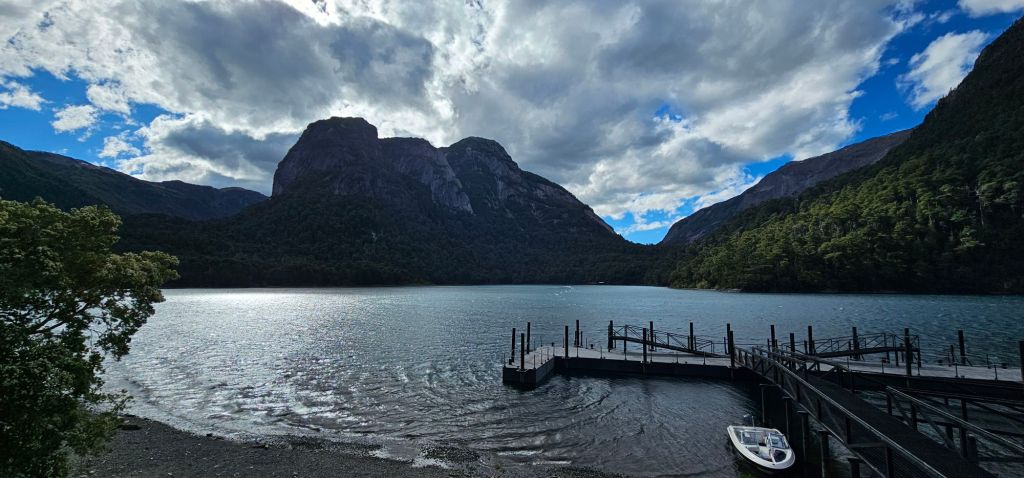
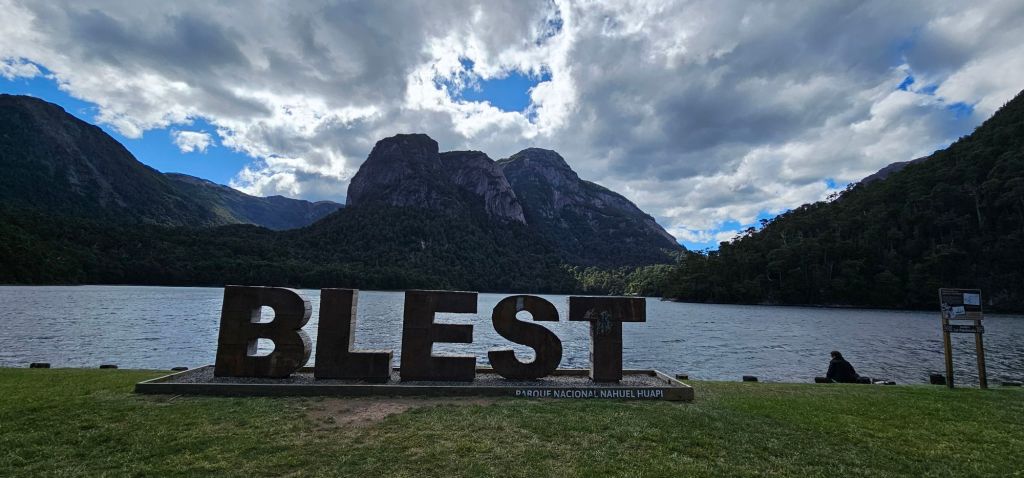
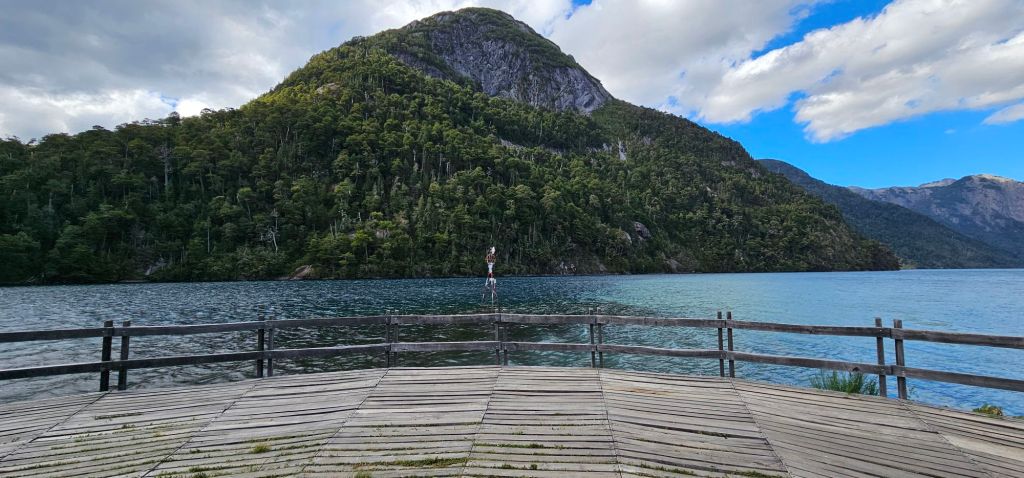

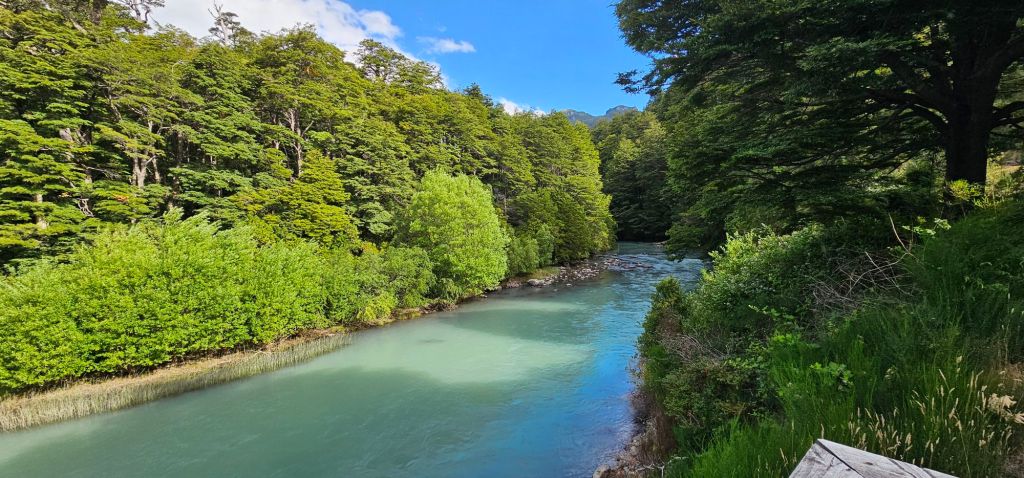
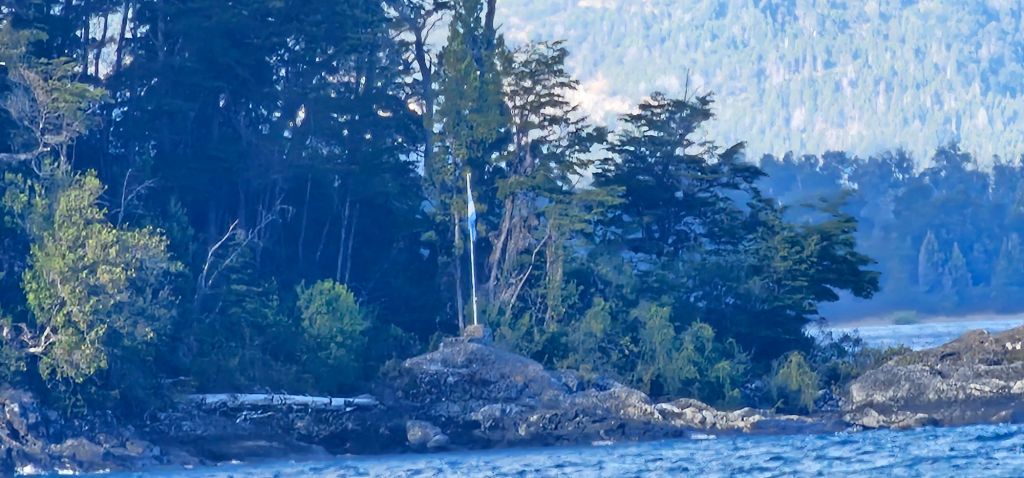
Our final ferry brought us to Puerto Panuelo. Along the way, we passed the resting place of Francisco ‘Perito’ Moreno, the man who made the trip possible by donating the land back to Argentina to be made into a national park.

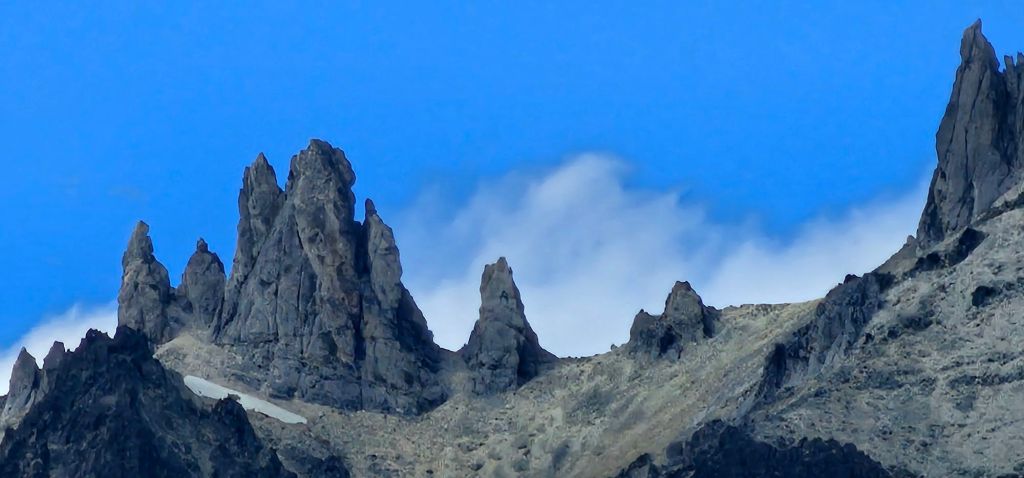
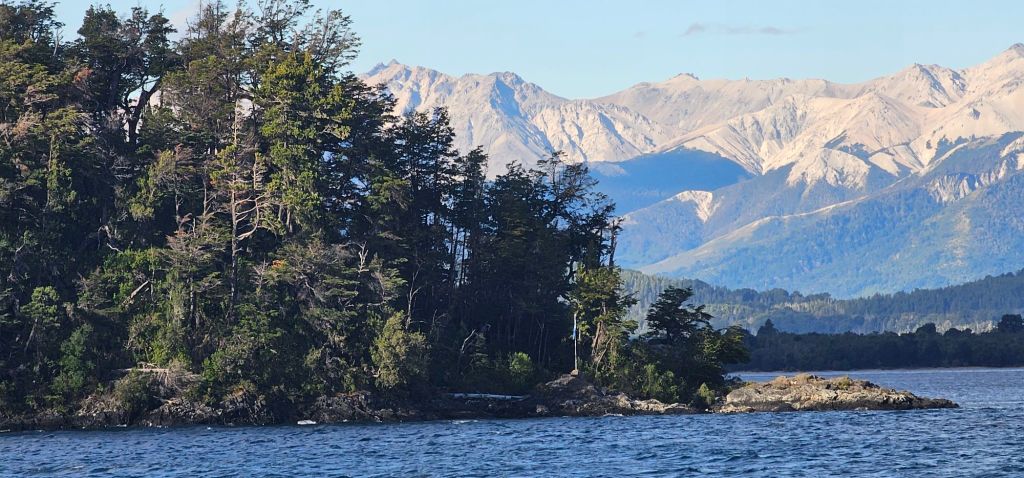

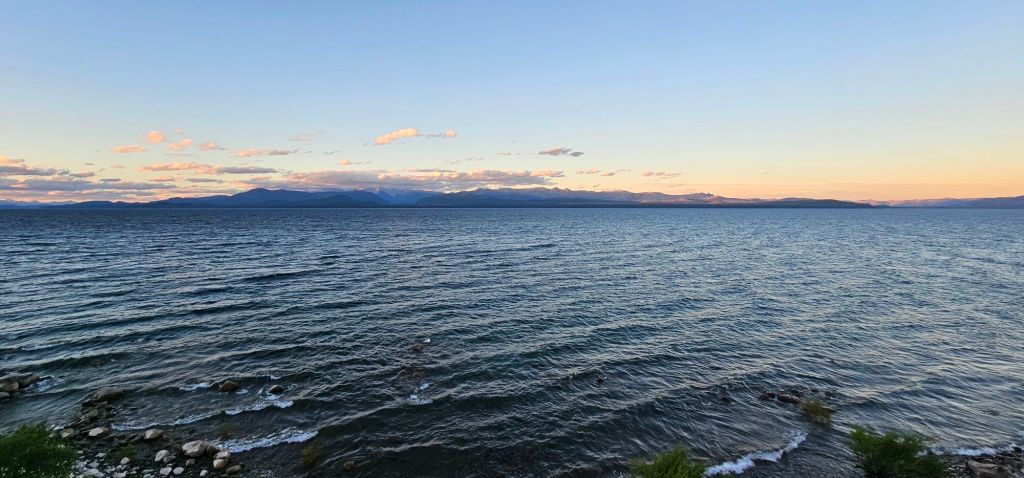
I finally boarded the final bus to transfer from the harbor to Bariloche. The bus travels along a very busy road that follows Lake Nahuel Huapi, a favorite summer destination for Argentinian, Chilean, and Uruguayan families.
 Chasing Summer -
Leave a comment